
Best cat beds for kittens usually come down to one thing: matching the bed to your kitten’s age, sleep style, and your cleaning tolerance, not whatever looks cutest in the cart.
If your kitten keeps avoiding the bed you bought, it’s rarely “they’re picky.” More often it’s a warmth issue, the walls feel too open, the fabric traps odors, or the bed slides around so it never feels secure.
This guide walks through what matters in 2026 shopping (materials, washable design, safety), a quick self-check to narrow your options, and a practical shortlist of bed types that work for most U.S. homes.
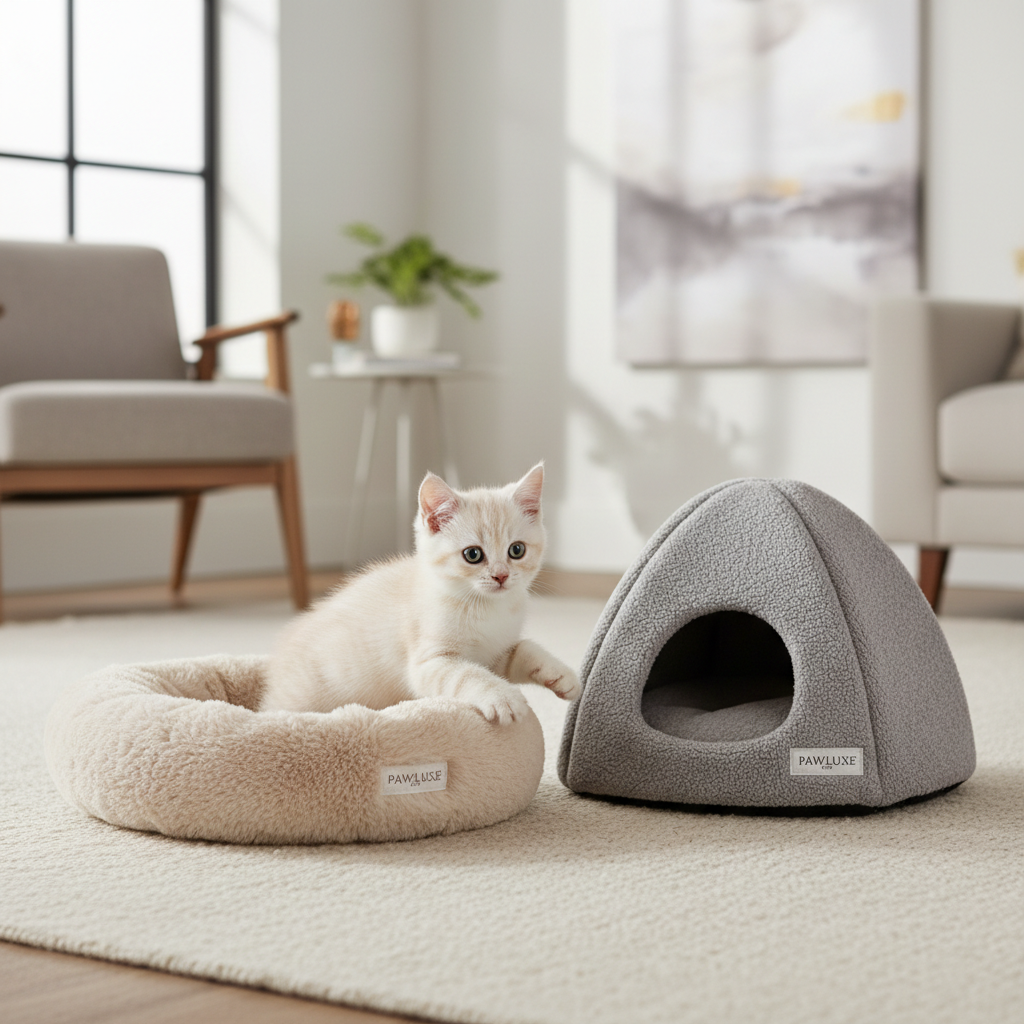
What actually makes a kitten bed “the best”
Kittens sleep a lot, but they also run hot-and-cold fast, get startled easily, and have occasional accidents. A good bed handles all three without turning into a linty, smelly project.
- Warmth without overheating: plush is great, but breathable layers matter in warmer homes.
- Security: raised bolsters or a covered option helps many kittens settle, especially in new homes.
- Washability: removable covers beat “spot clean only” in real life.
- Grip and stability: non-slip bottom or weight so the bed doesn’t skid when they pounce in.
- Low-risk construction: minimal loose strings, sturdy seams, no easy-to-chew foam edges.
According to the American Veterinary Medical Association (AVMA), a new pet should have a safe, comfortable space at home; bedding is part of that “secure zone,” especially during the first weeks.
Quick self-check: which bed type fits your kitten?
This is the part most people skip, then end up buying twice. Pick the description that sounds most like your kitten and your house.
- Clingy cuddler: kneads blankets, sleeps in your hoodie, seeks corners → try a donut/bolster bed or a cave bed.
- Heat-seeker: always on laptops, vents, sunny spots → consider a warming pad (low-temp) under a bed, or self-warming liners.
- Sprawler: sleeps belly-up, long stretches → a flat mat or low-wall lounger.
- Chewer/scratchy phase: attacks tassels and zippers → avoid dangling toys, choose tight-weave fabrics and hidden zippers.
- Multi-pet household: dog, older cat, kids → a covered bed or crate-compatible mat for a protected retreat.
Best cat beds for kittens by category (what to buy and why)
Instead of listing random “top 10” product names that change weekly, here are the bed categories that tend to work, plus what to look for so you can compare brands confidently.
Donut / bolster beds (the safe default)
For many kittens, a donut bed hits the sweet spot: snug, warm, and simple. Look for a washable cover and bolsters that keep shape after a month of zoomies.
- Buy if: your kitten likes curling up or pressing against something.
- Look for: machine-washable cover, non-slip base, dense fill that doesn’t pancake.
- Avoid: long shag that mats easily if your kitten gets messy.
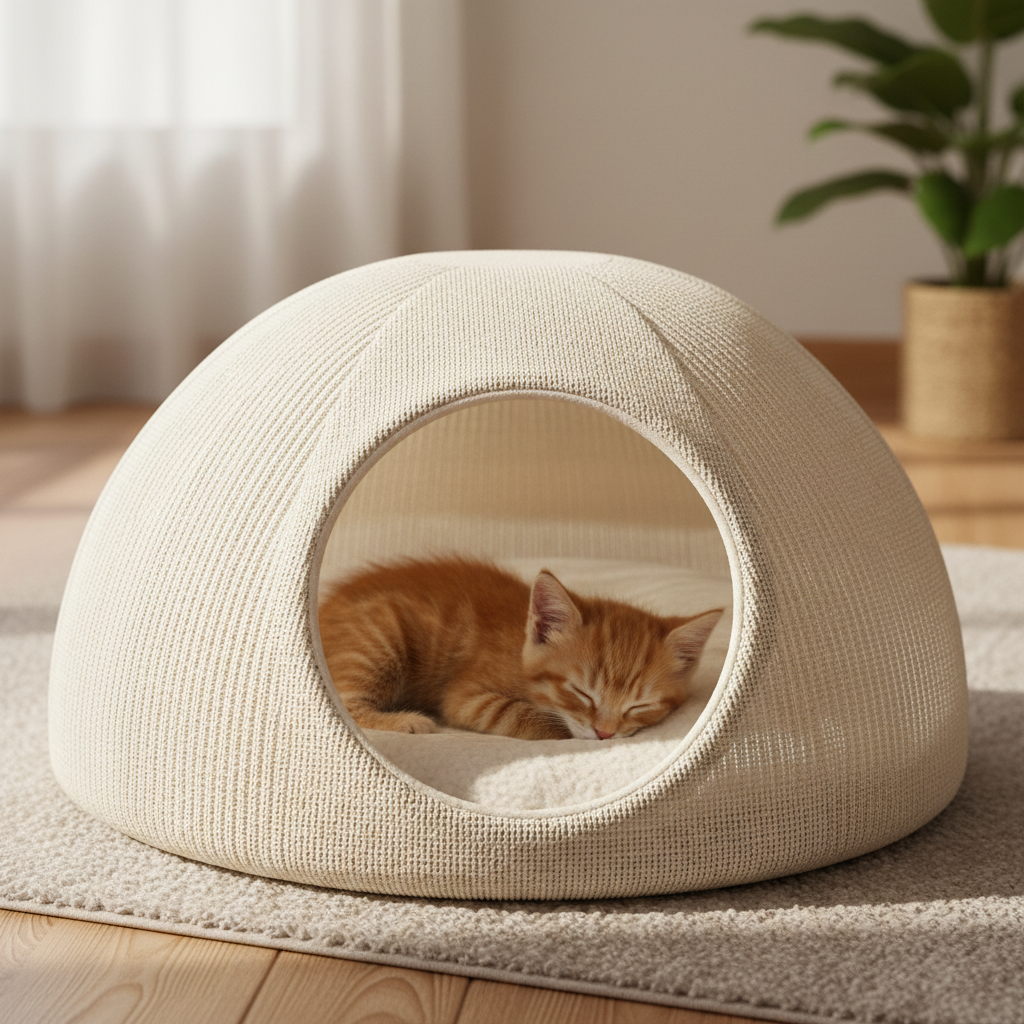
Covered “cave” beds (for anxious or easily startled kittens)
Cave beds can be magic for timid kittens, but the opening must stay open enough that they don’t feel trapped. In warmer climates, choose lighter fabrics.
- Buy if: your kitten hides under furniture or burrows under blankets.
- Look for: flexible hood support, washable interior, stable base.
- Heads-up: some kittens need a few days; place a worn T-shirt inside to make it familiar.
Flat mats and crate mats (practical, easy to rotate)
These aren’t “cute,” but they’re the easiest to wash, the easiest to place, and often the easiest for kittens to accept. They also work well as a layer inside carriers or crates.
- Buy if: you want something low-maintenance or you’re crate-training.
- Look for: quilted stitching, grippy bottom, quick-dry materials.
- Pro tip: keep two so one can be in the wash without leaving your kitten bedless.
Self-warming beds and safe warming pads (for chilly homes)
Some kittens do better with extra warmth, especially in drafty rooms. “Self-warming” liners reflect body heat and avoid cords, which many people prefer for safety.
- Buy if: your home runs cool or your kitten hunts heat sources.
- Look for: low-voltage, chew-resistant cord design if using an electric pad, and a cover you can wash.
- Safety note: if you use any heated product, follow manufacturer guidance and ask a veterinarian if your kitten has any health concerns.
Comparison table: pick the right style fast
If you just want the “tell me what to do” view, this table helps you decide without overthinking it.
| Bed type | Best for | Biggest downside | What to check before buying |
|---|---|---|---|
| Donut / bolster | Most kittens, everyday naps | Can trap hair/odors | Removable cover, non-slip base |
| Covered cave | Anxious, shy, burrowing kittens | May run warm | Ventilation, hood holds shape |
| Flat mat | Easy cleaning, carriers/crates | Less “nest” feeling | Quilted build, quick-dry fabric |
| Self-warming | Cool homes, heat-seekers | Not all are washable | Wash instructions, lining durability |
| Window perch (later) | Older kittens that climb confidently | Fall risk if installed poorly | Weight rating, secure mounting |
How to size and place a kitten bed (this affects success more than brand)
A bed can be “perfect,” but if it’s oversized or in the wrong spot, your kitten may ignore it. Kittens usually like small spaces that feel predictable.
- Size: choose a bed that lets them curl with a little extra room, not a giant open crater.
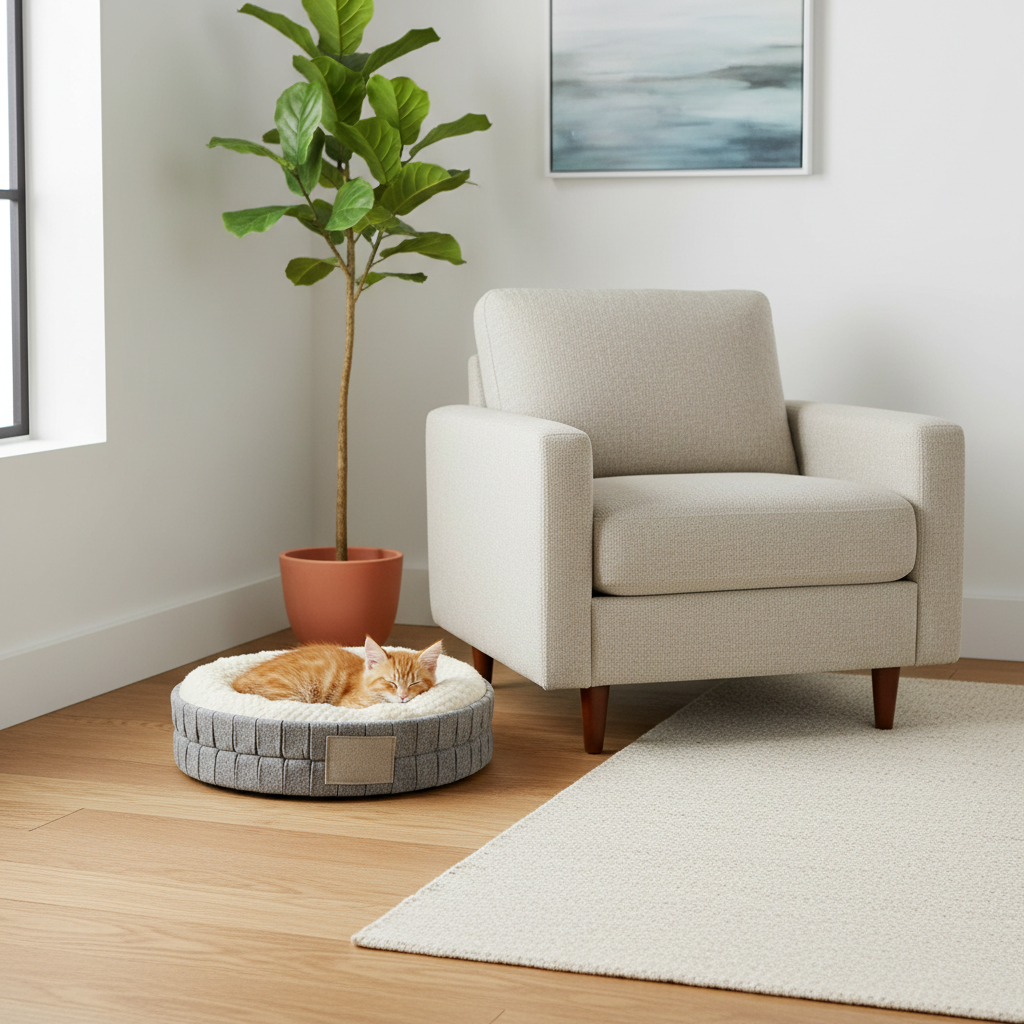
- Location: quiet corner first, then you can add a second bed in a social area once they settle.
- Height: floor-level is safest early on; elevated perches can wait until climbing feels steady.
- Stability: put the bed on carpet or a rug if your floors are slick.
According to the American Association of Feline Practitioners (AAFP), cats benefit from having safe resting places; for kittens, that “safe” part often means predictable, low-traffic zones.
Materials and safety: what I’d avoid buying for most kittens
People tend to focus on softness, but kittens interact with bedding like it’s a toy, they bite, they bunny-kick, they drag it around. A few material choices create headaches.
- Loose tassels, ribbons, or weak pom-poms: fun until they’re chewed off. If you already own one, trim dangling parts.
- “Spot clean only” cushions: this becomes a smell problem fast, especially during early litter training.
- Very long faux-fur: can mat, hold litter, and get gross; shorter pile is often easier.
- Exposed foam edges: some kittens chew them, and it’s hard to keep clean.
Also, keep the bed away from the litter box and food bowls. It sounds obvious, but lots of small apartments end up with everything in one area, then the kitten chooses your couch instead.
Practical setup: getting your kitten to actually use the bed
Here’s the realistic playbook that usually works, without turning bedtime into a battle.
- Make it smell familiar: place a soft cloth that smells like you, or rub a blanket gently on their cheeks (scent glands) and set it inside.
- Reward curiosity: treat or praise when they step in, then back off. Hovering can make it “your idea,” not theirs.
- Use two zones: one quiet sleeping spot, one “hangout” bed near where you work or watch TV.
- Rotate, don’t force: if they reject a cave bed, try using it as an open lounger for a week by folding the hood back.
Key takeaway: comfort plus predictability wins. The best cat beds for kittens become “their place” when nothing scary happens there and it stays clean.
When it’s worth asking a vet or behavior pro
If your kitten never settles, cries at night for weeks, or avoids sleeping areas completely, a bed change may not be the real issue. Stress, parasites, pain, or temperature discomfort can show up as restless sleep.
- Check in with a veterinarian if you see low appetite, diarrhea, repeated vomiting, coughing, limping, or obvious discomfort when lying down.
- Consider a feline behavior professional if anxiety behaviors escalate, like constant hiding or panic when approached, especially after you’ve provided a quiet safe zone.
It’s not about overreacting, it’s about not trying to “shop” your way out of a health or stress problem.
Conclusion: what I’d buy for most kittens in 2026
For most homes, a washable donut/bolster bed plus a simple flat mat covers nearly every situation, and you can add a covered cave later if your kitten clearly prefers hiding and burrowing.
If you want one action to take today, pick a bed with a removable cover and put it in a quiet corner with a familiar-smelling cloth, then give it three days before judging. Kittens change fast, your setup should be easy to adjust.
FAQ
- What size bed should I get for a kitten?
Most kittens do better with a smaller bed that lets them curl up and touch the sides. If you’re between sizes, lean slightly smaller unless your kitten sprawls. - Do kittens prefer covered beds or open beds?
It depends on confidence and sleep style. Shy kittens often like covered options, while social kittens may nap anywhere and accept an open lounger right away. - How many beds should a kitten have?
Two is a practical number: one in a quiet sleeping area and one near where your household spends time. It reduces the chance they “claim” your laundry basket. - Are self-warming cat beds safe for kittens?
Many are fine because they reflect body heat without electricity. For heated pads, follow product instructions closely and ask a vet if your kitten is very young or has health issues. - Why won’t my kitten sleep in the bed I bought?
Common reasons include the bed sliding, the spot feeling too exposed, or the fabric smelling like packaging. Try moving it to a quieter corner and adding a familiar cloth before replacing it. - How often should I wash a kitten bed?
In many homes, weekly works, but during litter training or if your kitten has accidents, you may need more frequent washing. A removable cover makes this manageable. - Is it okay if my kitten sleeps in my bed instead?
Often yes, if everyone is comfortable and your kitten is safe. Still, having a dedicated kitten bed helps during travel, vet visits, or nights when you need boundaries.
If you’re trying to pick the best cat beds for kittens without buying three options to “test,” a simple approach is to choose one washable bolster bed plus a backup mat, then adjust after you see where your kitten naturally likes to nap.