
Best pet travel crates for cars are the ones that fit your vehicle, fit your pet, and stay stable when you brake or swerve, not just the ones with the most padding or the cutest color.
If you’ve ever heard a crate shift on a turn, watched your dog brace with every stoplight, or tried to wedge a “perfect” crate into a back seat that suddenly feels tiny, you already know why this topic matters. In a car, the crate is part comfort item, part safety tool, and part logistics puzzle.
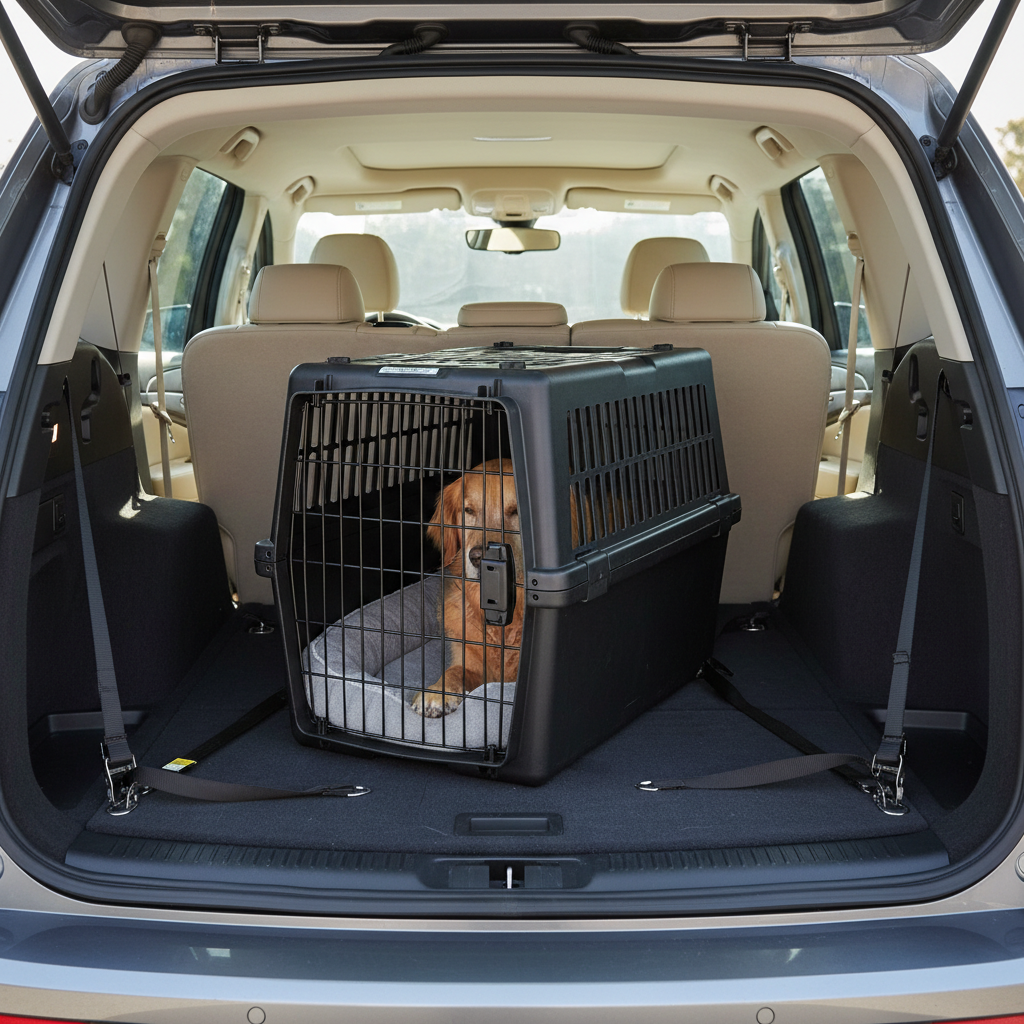
This guide stays practical: what to prioritize in 2026, how to choose the right crate type for your driving habits, and a quick checklist so you don’t end up returning a bulky box after one frustrating test-fit.
What “car-safe” really means for a travel crate
A crate can be “great for home” and still be a bad match for car travel. For vehicles, you’re typically balancing three things: restraint, ventilation, and stress reduction.
- Stability under force: The crate should resist sliding and tipping, and it should have clear points where you can route a seat belt or straps.
- Structure that matches your pet: Too big means your pet can get tossed around inside; too small creates pressure points and anxiety.
- Heat and airflow: Cars warm quickly, and some crate materials trap heat. Airflow matters more than it seems on longer rides.
According to the American Veterinary Medical Association (AVMA), pets should be properly restrained in vehicles to help reduce distractions and injury risk. That doesn’t mean one single crate style is “the” answer, but it does mean “loose in the back” is a gamble.
Crate types for cars: which style fits which driver
When people search for the best pet travel crates for cars, they often assume there’s a universal winner. In reality, the right type depends on where the crate rides (back seat vs cargo area), how often you travel, and how your pet handles confinement.
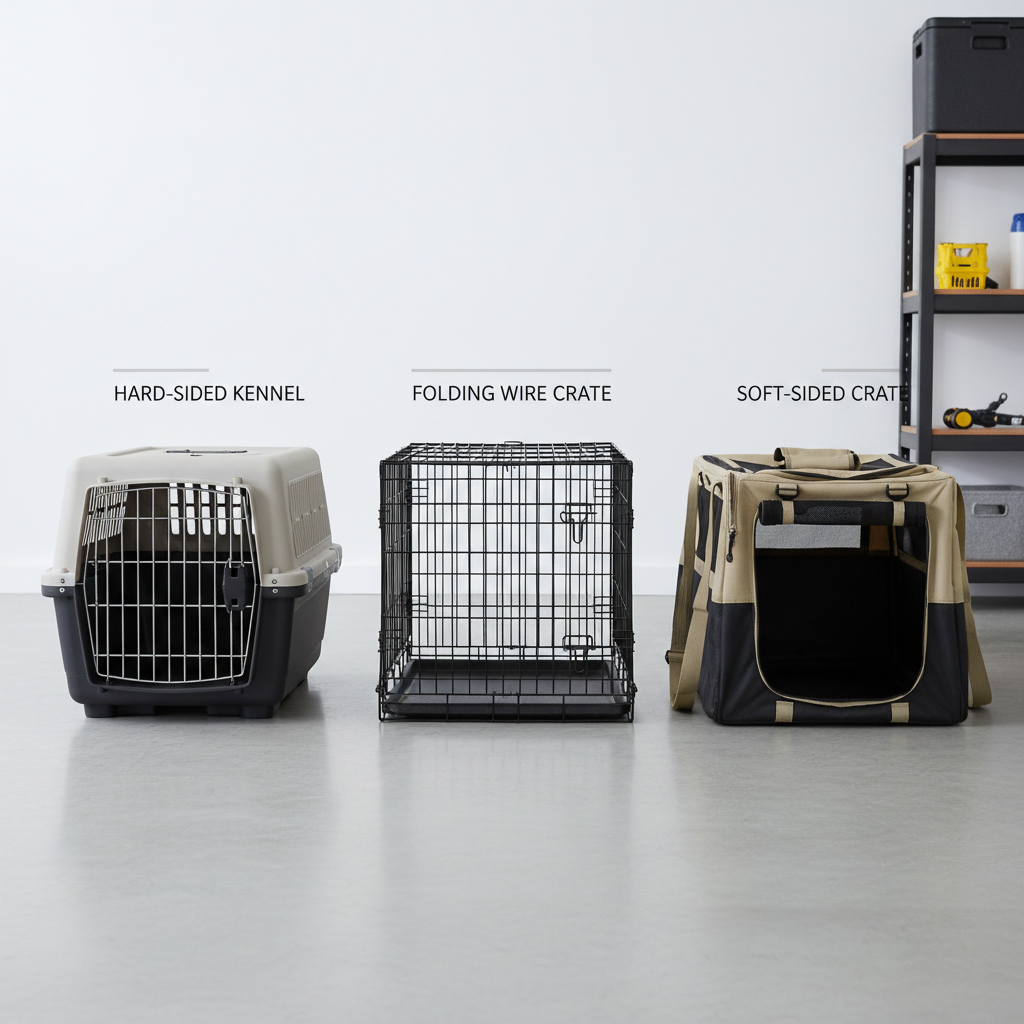
Hard-sided plastic kennels
- Good for: most everyday trips, moderate chewers, pets that like a den-like feel
- Watch-outs: fewer tie-down options unless the model includes them, bulkier fit in tight cars
These are the familiar airline-style kennels. They’re often easier to clean after a muddy hike, and they tend to feel “quiet” inside, which can help nervous dogs.
Wire crates (folding)
- Good for: short rides, pets already crate-trained at home, quick setup for multi-stop days
- Watch-outs: can rattle, can pinch interiors, may shift unless secured carefully
Wire crates can work in SUVs and vans, especially if you add a fitted crate cover for calm and secure it so it can’t slide. In sedans, they can be awkward unless you’ve measured carefully.
Soft-sided crates
- Good for: calm dogs, smaller pets, limited-space vehicles, people who carry the crate often
- Watch-outs: not ideal for determined chewers or high-anxiety scratchers, structure can collapse if not supported
Soft crates win on convenience and fit, especially in back seats. But if your dog panics, claws, or tries to “escape,” you can end up with torn panels fast.
Heavy-duty aluminum or reinforced composite crates
- Good for: frequent road-trippers, working dogs, escape artists, people who want high durability
- Watch-outs: cost, weight, and the need to confirm vehicle fit before buying
These often provide the cleanest tie-down solutions and rigid structure. If your 2026 plan includes lots of miles, they’re worth considering, as long as you can secure them correctly in your specific vehicle.
Quick fit check: measure your car and your pet (without overthinking it)
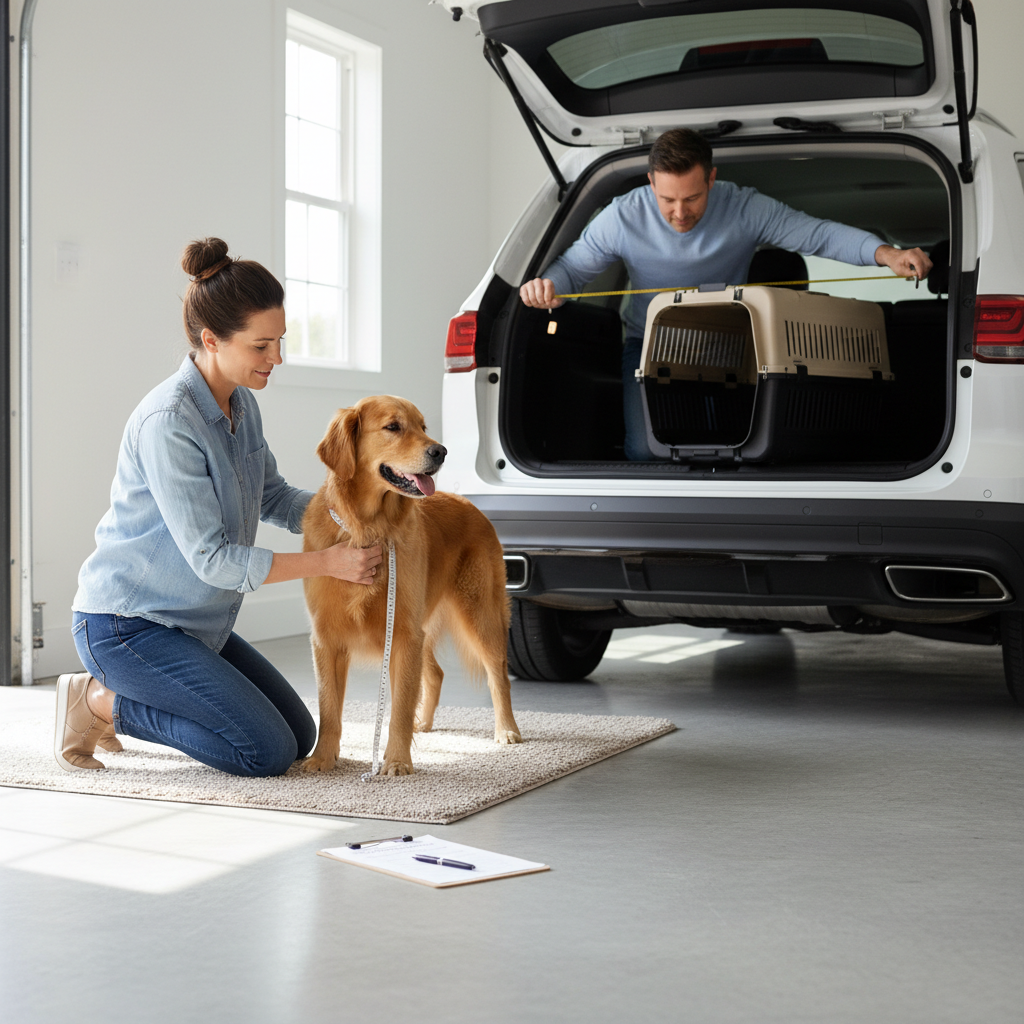
Most crate regret comes from sizing mistakes, not “bad quality.” Before you shop, decide where the crate will live: back seat, cargo area behind second row, or cargo area with seats folded.
- Vehicle measurements: width between wheel wells (SUVs), cargo opening height, usable depth with seats in your normal position
- Pet measurements: standing height at shoulder, nose-to-base-of-tail length, and “turn-around room” comfort
A common rule of thumb is enough space for your dog to stand, turn, and lie down naturally, but in a moving car you generally don’t want a crate so roomy that your pet slides inside it during hard braking.
Features that matter more in 2026 than they used to
Some features are timeless, but a few have become more relevant as cars and travel habits change.
- Real tie-down compatibility: look for built-in strap slots or frame points that don’t crush the door or block ventilation.
- Quieter hardware: rattle adds stress for pets and drivers, especially on rough roads.
- Vent placement that works in cars: vents that face a seat back can be less effective than you expect.
- Modular sizing or collapsible frames: useful if you switch cars or need to store the crate between trips.
- Easy-clean surfaces: seams and fabric corners trap odor; smooth interiors save time.
One more: if you travel in very hot or very cold regions, consider how your car’s airflow actually reaches the crate location. A “breathable” crate still won’t help if it sits in a dead-air pocket behind stacked luggage.
Comparison table: choosing the right crate for your car trips
Use this as a shortcut, then confirm sizing and securing options before you commit.
| Crate type | Best for | Main drawback | Car placement tip |
|---|---|---|---|
| Hard-sided plastic | Everyday driving, easy cleaning | Can be bulky; tie-down points vary | Use non-slip mat under it, strap through handle areas only if sturdy |
| Wire (folding) | Short trips, crate-trained dogs | Noise and shifting if unsecured | Anchor it to cargo hooks, add cover to reduce visual stress |
| Soft-sided | Small dogs, tight spaces | Not ideal for chewers/escape attempts | Best on back seat with seat-belt routing designed for the model |
| Aluminum/reinforced | Frequent travel, escape artists | Higher cost and weight | Confirm cargo opening clearance, use rated straps and stable base |
Self-check: are you picking the right crate for your situation?
Before you buy, answer these honestly, it saves money and stress.
- Does your dog settle or escalate in confinement? If they escalate, durability and training matter more than “cozy.”
- Do you drive highways, back roads, or stop-and-go city routes? Stop-and-go exposes weak stability quickly.
- Will luggage share the same space? If yes, you need a plan so bags can’t shift into the crate.
- Can you secure the crate to something solid? If you can’t, choose a style designed for seat-belt routing or rethink placement.
- Do you need portability? Apartment stairs and heavy crates do not mix well.
If you’re stuck between two sizes, your car measurements usually decide it, but your pet’s stress behavior is the tie-breaker. A slightly smaller crate can be calmer for some dogs, while others need a bit more space to relax.
Practical setup steps: how to make a crate work in your car
Even the best-built crate can disappoint if it’s installed like a loose suitcase. This is where most “it didn’t work” stories come from.
1) Place the crate where it stays level
Level matters because your pet will brace less. In many SUVs, that means using a cargo liner or a firm platform if the trunk floor slopes.
2) Add friction before you add straps
- Put a non-slip mat under the crate.
- Avoid thick, squishy pads under the crate itself, they can increase wobble.
3) Secure with the right anchor points
Use cargo tie-downs, seat belt paths designed by the crate maker, or anchor points meant for loads. If you’re improvising, go slow: straps that crush a door frame or block ventilation can backfire.
4) Control the “stuff flying around” problem
- Pack heavy items low and away from the crate.
- Use a barrier or cargo net if luggage rides in the same area.
5) Make comfort simple, not fussy
Use a thin, washable pad that doesn’t bunch. Skip dangling toys that can become distractions. For anxious pets, a light cover can help, but watch temperature and airflow.
Common mistakes that make people hate their travel crate
- Buying by breed alone: two dogs with the same label can have totally different proportions.
- Ignoring door direction: a crate that fits on paper might be impossible to load if the door hits your bumper or seat back.
- Over-padding: thick beds can reduce usable interior height and increase motion sickness.
- Assuming “crash-tested” is universal: claims vary by brand and test method, read what was actually tested and for which size.
- Skipping acclimation: a new crate on a long drive can trigger panting, drooling, or panic even in a crate-trained dog.
According to the American Kennel Club (AKC), crate training works best when the crate is introduced gradually and associated with calm routines. That advice applies to car crates too, even if your dog is “fine at home.”
When it’s smart to ask a pro (vet or trainer)
If your dog shows intense drooling, vomiting, frantic escape behavior, or sustained panic in the car, a crate change alone may not solve it. A veterinarian can help rule out motion sickness or pain, and a qualified trainer can help with a step-by-step desensitization plan. In some cases, medication may be discussed, but that’s a medical decision, not a gear decision.
Key takeaways and a simple next step
The best pet travel crates for cars are usually the ones you can secure confidently, fit into your real-world vehicle layout, and keep comfortable without overheating or rattling. If you do one thing today, measure your cargo area or back seat and decide placement, that single decision narrows your options fast.
After that, pick a crate type that matches your pet’s temperament, then do a short test drive before your first long trip, ten minutes of feedback can save you a miserable three-hour ride.