
How to train a cat to sit comes down to two things most people skip: timing and choosing a reward your cat actually cares about, not what you wish they liked.
If you have tried “Sit” a dozen times and your cat just stares, walks off, or flops on the floor, that is normal, cats do not respond to pressure the way many dogs do. The good news is sitting is one of the easier cues to teach because many cats already sit naturally, you just need to capture it and attach a word and hand signal.
This guide keeps it simple, you will learn a short setup that makes practice smoother, a step-by-step method that usually works in a few short sessions, plus fixes for the common hiccups like biting the treat, walking backward, or refusing to work.
What “sit” training really means for cats
When people picture training, they often imagine repeating the word until the pet gives in. With cats, repetition without reward usually teaches the opposite lesson: “ignore that sound.” A better mindset is communication, not compliance.
According to the ASPCA, positive reinforcement is a preferred approach for training animals, rewarding behaviors you want to see again rather than punishing mistakes. In plain terms, your cat learns sit because it predicts something good, not because they fear being wrong.
- Cue: your word “Sit” and a consistent hand signal
- Behavior: the cat’s rear touches the floor
- Consequence: treat, praise, or play that your cat values
That is the whole loop, your job is to keep it clean and predictable.
Before you start: set up for fast wins
The setup matters more than people expect. If your cat is distracted, overstimulated, or not hungry enough to care, training turns into a standoff.
Pick the right reward
- Soft, tiny treats you can deliver fast, think pea-sized
- Freeze-dried meat treats if your cat ignores crunchy options
- For some cats, a quick toy chase works better than food
If your cat has diet restrictions or health issues, treat choices can matter, it may be worth asking your veterinarian what is appropriate.
Choose the right place and timing
- Quiet room, minimal foot traffic
- Non-slip surface, many cats dislike sitting on slick floors
- Train when your cat is calm and slightly hungry, not right after a big meal
Optional but helpful: a marker word
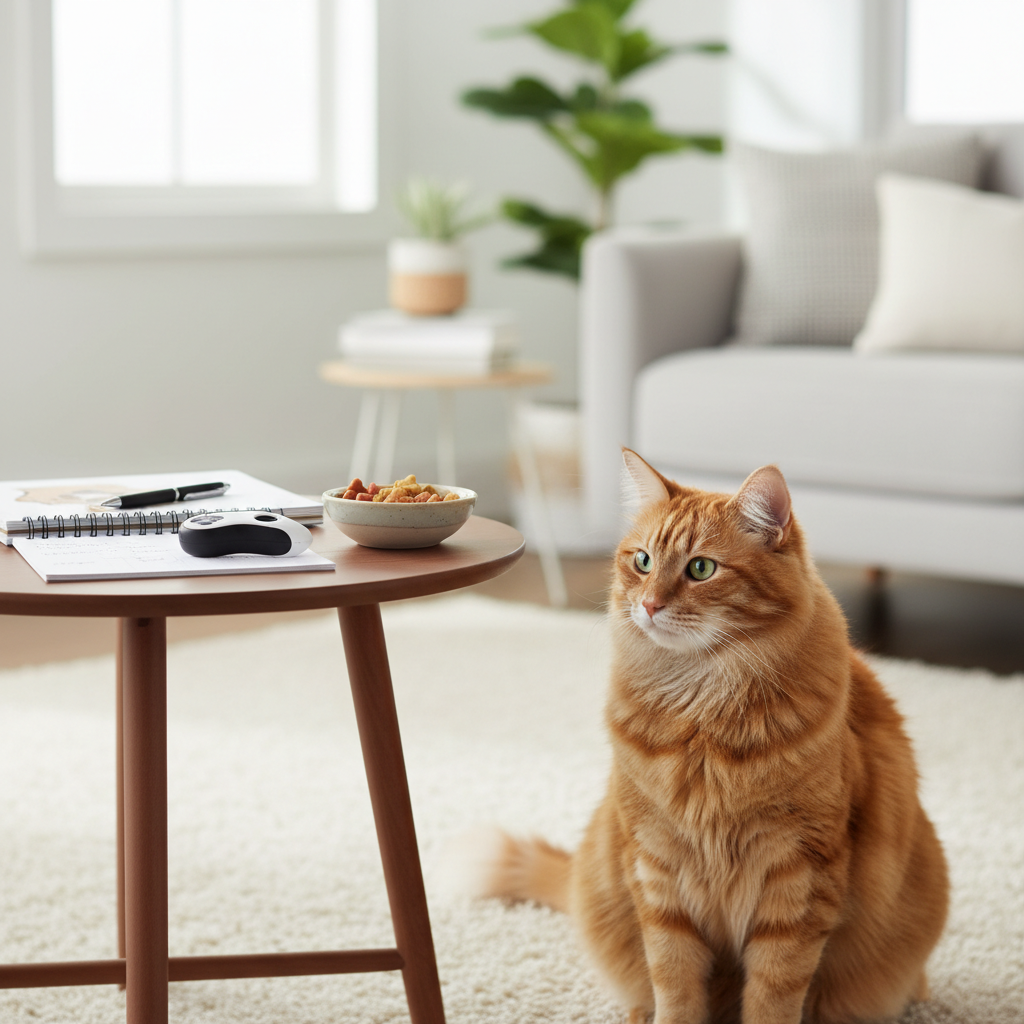
A clicker works, but you can also say “Yes” in a crisp tone. The point is to mark the exact moment your cat did the right thing, then reward.
Simple steps: how to train a cat to sit
If you only follow one section, follow this one. Keep sessions short, think 1 to 3 minutes, a few times per day.
Step 1: start with a natural sit (capture)
Wait for your cat to sit on their own, the instant their rear hits the floor, say your marker (“Yes”) and give a treat. Do this a few times so your cat starts thinking, “sitting makes treats happen.”
Step 2: add the lure (guide into position)
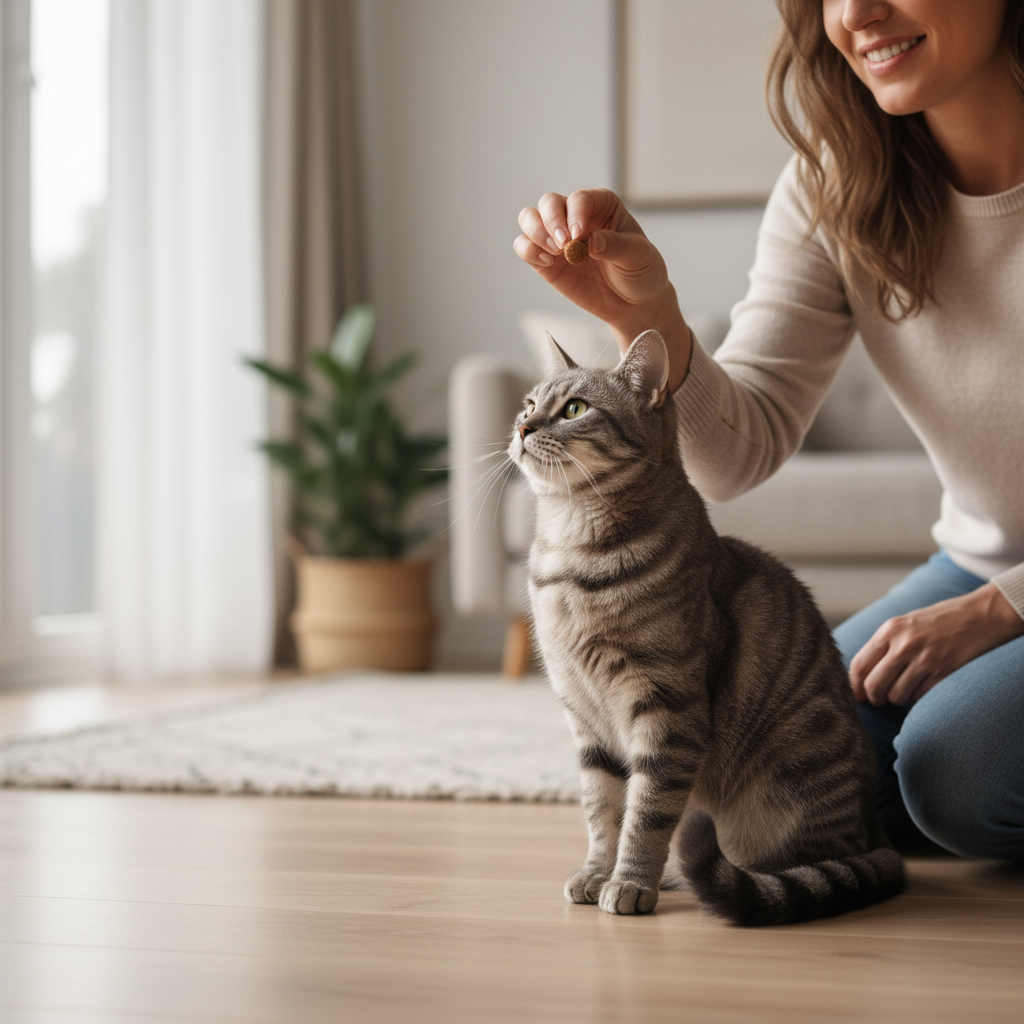
Hold a treat close to your cat’s nose, then slowly move it up and slightly back over the head. Many cats will tip their chin up, shift weight back, and sit. The moment they sit, mark and reward.
- If your cat jumps, your hand might be too high or moving too fast
- If your cat backs up, try a corner or stand near a wall so backing away is less rewarding
Step 3: add the cue (word + hand signal)
Once the lure reliably produces a sit, say “Sit” one second before you move your hand. Keep the cue calm and consistent, one word, same tone.
Your hand motion becomes the signal your cat can easily read, the word catches up with repetition.
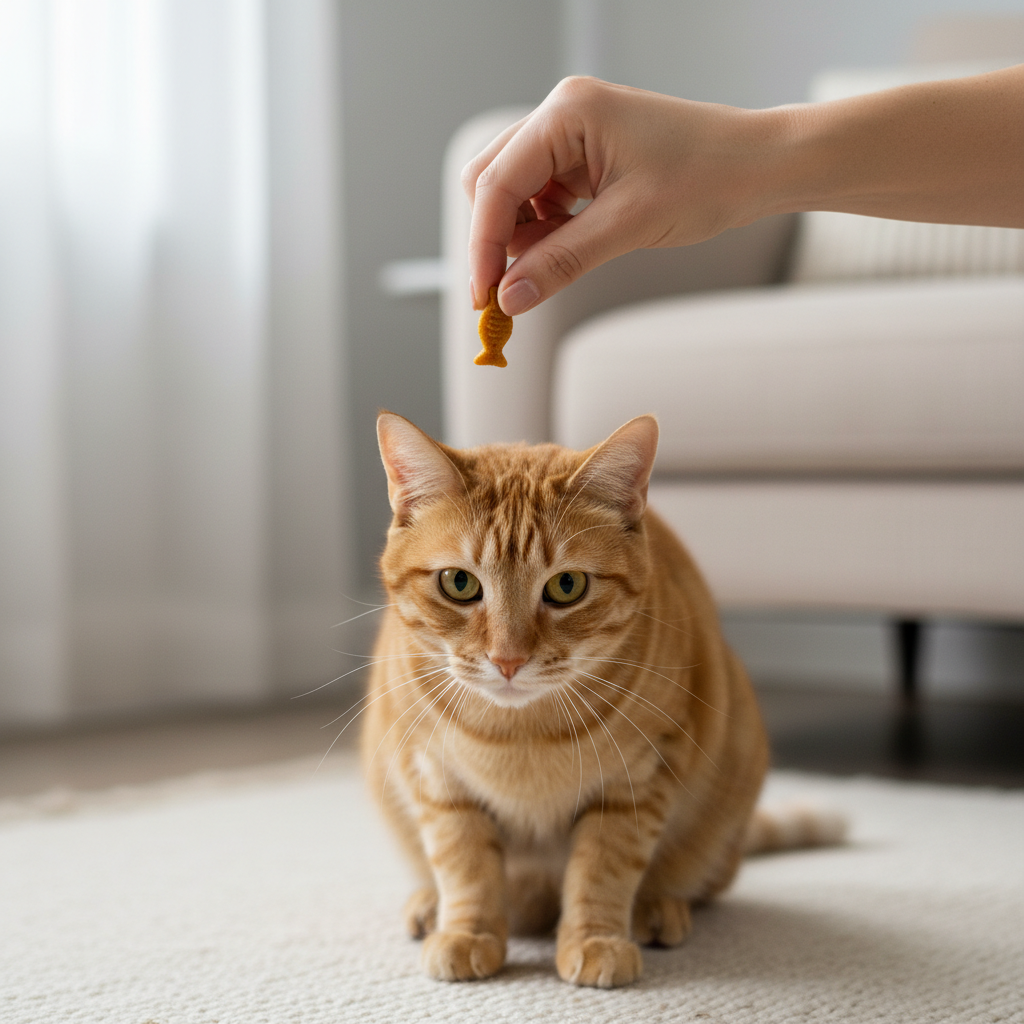
Step 4: fade the lure (so your cat responds without seeing food first)
This is where many people get stuck. If your cat only sits when the treat is obvious, you have trained “follow food,” not “sit.”
- Make the same hand motion, but keep the treat in the other hand
- Mark the sit, then deliver the reward from your other hand
- Gradually make the hand motion smaller, keep success high
Step 5: build duration and real-life reliability
After your cat sits on cue, wait half a second before marking, then one second, then two. Mix easy wins into the session so it stays fun.
Train in a second room later, then a third. Cats do not generalize as automatically as people expect, so a cue learned in the kitchen may not “count” in the hallway yet.
Quick self-check: what type of “sit problem” do you have?
Use this list to diagnose what is actually happening, then you can fix it without guessing.
- My cat won’t approach me: reward is too weak, session too long, or cat feels pressured
- My cat grabs the treat and leaves: reward delivery timing is off, your cat never got paid for staying near you
- My cat stands on hind legs: lure is too high, you are shaping a “beg”
- My cat lies down instead: lure path too far back, or surface is uncomfortable for sitting
- My cat sits only sometimes: distractions, inconsistent cue, or you are asking when they are not ready
If you recognize your situation, jump to the troubleshooting section below, it saves time.
Troubleshooting: common mistakes and fixes that actually help
Most training “fails” are really unclear communication, your cat is not being stubborn, they are being practical.
Mistake: repeating the cue
Saying “Sit, sit, sit” teaches your cat that the first two do not matter. Say it once, pause, then reset. If nothing happens, lure once, reward, and try again.
Mistake: rewarding too late
If you fumble for treats after your cat stands back up, you may reward standing. Keep treats ready in a pouch or a cup on the counter.
Mistake: long sessions
For many cats, 60 to 180 seconds feels about right. End while your cat still wants more, not when they start swatting your hand.
Mistake: practicing when your cat is overstimulated
If your cat has zoomies or pupils are wide and they are nippy, switch to play, then try a calm training moment later. Forcing it usually backfires.
If your cat bites your fingers for treats
- Use longer, flat treats, or place the treat on the floor after marking
- Keep your fingers curled, present treat on a flat palm if safe
- If biting persists, pause training and consider asking a professional for help, safety comes first
A simple 7-day practice plan (and when to slow down)
People like a schedule, but your cat sets the pace. This plan gives structure without pretending every cat learns on the same timeline.
| Day | Goal | Session idea (1–3 minutes) |
|---|---|---|
| 1 | Capture sits | Mark and reward any natural sit near you |
| 2 | Lure into sit | 5–10 reps, treat moves up and slightly back |
| 3 | Add cue | Say “Sit,” then lure, reward quickly |
| 4 | Reduce lure | Same hand motion, treat in other hand |
| 5 | More reps, fewer prompts | Wait 1–2 seconds after cue before helping |
| 6 | New location | Practice in a different room, keep it easy |
| 7 | Short duration | Reward after 1–3 seconds of holding sit |
If your cat stops engaging, shorten sessions and increase reward value. If your cat is showing signs of stress, such as hiding, growling, or frequent swatting, it may be better to pause and reset your approach.
Safety, comfort, and when to ask for help
Training should look boring in a good way, calm cat, calm human, tiny rewards. If sitting seems physically uncomfortable, do not push through it.
- If your cat avoids sitting, limps, or seems sore, joint pain or another issue is possible, consider checking with a veterinarian
- If your cat gets aggressive around food, a certified trainer can help you set safer mechanics
- If your cat is very fearful, prioritize trust-building, sit can wait
According to the American Association of Feline Practitioners (AAFP), low-stress handling and creating a sense of safety are central to working successfully with cats. In practice, that means you adjust the environment and your expectations instead of escalating pressure.
Key takeaways (so you can start today)
- Mark fast, reward faster, timing matters more than saying “Sit” perfectly
- Teach the behavior first, then attach the cue
- Fade the lure early so your cat does not depend on seeing food
- Keep sessions short, leave your cat wanting one more rep
If you want a simple next step, do three mini-sessions today: capture one natural sit, lure five sits, then stop, that tiny routine often builds momentum.
If you are already practicing and feeling stuck, try changing just one variable, reward value, floor surface, or session length, and see what your cat tells you.