
Pet odor neutralizer for carpet and fabric is usually the fastest way to make a home feel normal again, but it only works well when you match the product and the process to what’s actually causing the smell. If the odor keeps “coming back,” it’s often because the residue is still in the padding, the fabric backing, or a spot you didn’t realize was involved.
Most people don’t mind a little “dog smell” or “cat smell,” they mind that stale, sour note that shows up after humidity, a rainy day, or when you sit down on the couch and suddenly notice it. That’s why choosing any random spray can feel disappointing: the problem is chemistry plus material, not just perfume.
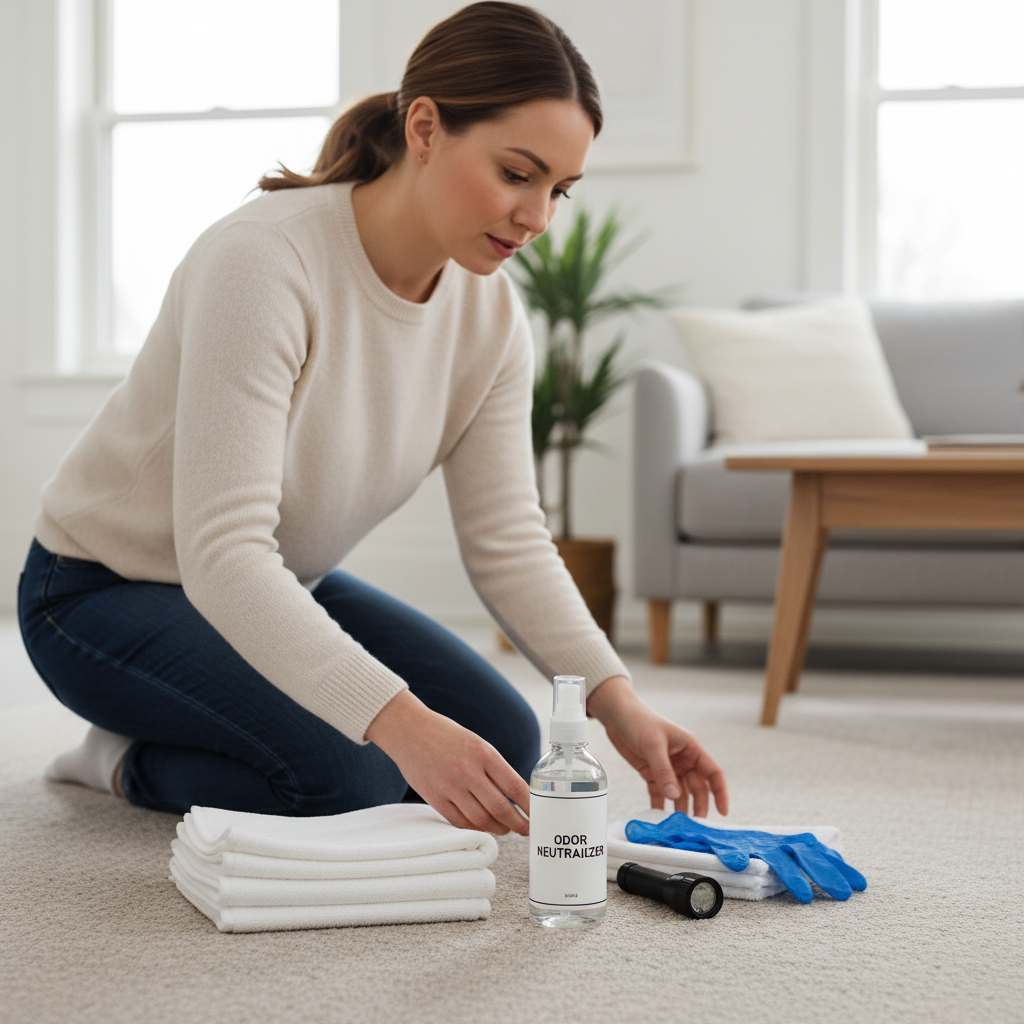
In this guide, you’ll get a practical way to diagnose where odor sits, what to look for in a neutralizer, and how to treat carpet and fabric without turning it into a bigger cleaning project. I’ll also flag the common mistakes that waste money, like over-wetting, mixing cleaners, or relying on fragrance as “proof” it worked.
Why pet odors cling to carpet and fabric (and why they return)
Pet smells linger because carpets and upholstery behave like sponges, they trap liquid and microscopic residue below the surface where air fresheners can’t reach. Even when a stain looks gone, odor molecules can stay embedded in fibers, backing, and underlayment.
Common sources that behave differently:
- Urine: can soak deep and leave salts that reactivate with humidity.
- Feces/vomit: adds proteins and fats that cling to fabric and create a strong, persistent note.
- Dander and body oils: slowly build up in rugs, pet beds, and couch arms where pets rest.
- Anal gland and “wet dog” odors: often live in upholstery and blankets, not just carpet.
According to the U.S. Environmental Protection Agency (EPA), indoor air quality can be affected by pollutants and moisture conditions, and controlling sources is typically more effective than masking odors. In plain terms, if moisture and residue remain, smells often rebound.
Quick self-check: what kind of odor problem do you have?
Before you buy anything, spend five minutes figuring out whether you’re dealing with a surface smell, a deep spot, or a whole-room buildup. This decides whether a pet odor neutralizer for carpet and fabric will work as a “spray-and-done” or needs a soak-and-extract routine.
A fast diagnosis checklist
- Does the smell spike on humid days or after steam? That often points to urine salts or deep moisture.
- Is the odor localized to one area? Likely a spot treatment issue, not whole-room.
- Do you smell it more when you sit or lie down? Upholstery, cushions, throws, or pet beds can be the main source.
- Do you see repeat marking in the same zone? You’ll need both cleaning and prevention.
- Have you used multiple fragranced products already? You may be smelling layered perfume plus residue.
If you have a UV flashlight, it can help locate older urine spots on many surfaces, but it’s not perfect on all carpets and dyes. Use it as a clue, then confirm with your nose close to the surface.
Choosing the right neutralizer: what labels really mean
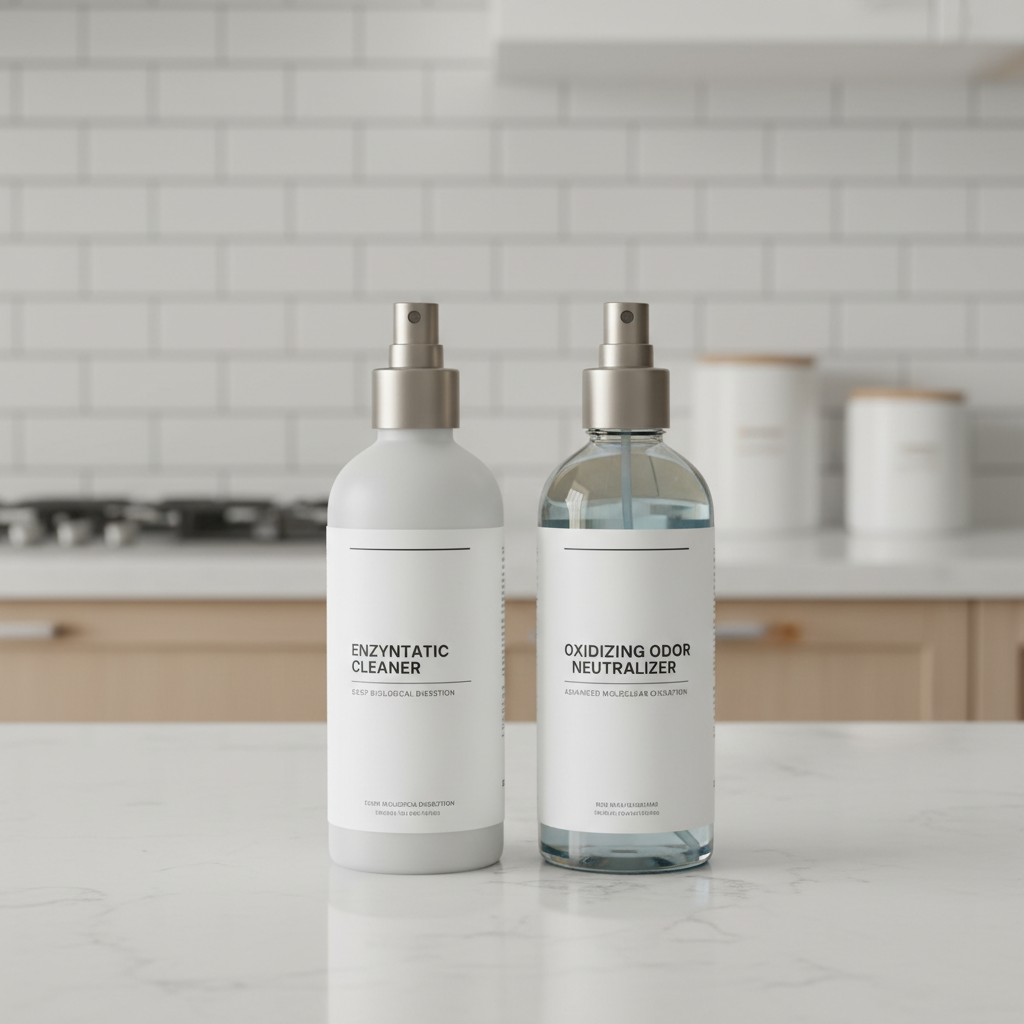
Not all “odor eliminators” neutralize, many just cover. When you’re buying for carpet and upholstery, you’re mostly choosing between enzymatic cleaners, oxidizers, and absorption-style products.
Common types and when they fit
- Enzymatic cleaners: use enzymes to break down organic material (urine proteins, feces residue). Often a good first choice for accidents, but they usually need enough dwell time and moisture to work.
- Oxidizing formulas: react with odor compounds and can reduce stubborn smells. These can be effective, but you’ll want to spot-test for colorfastness on fabric and rugs.
- Absorbers (charcoal, baking soda blends): best for general mustiness or as a follow-up after cleaning, less reliable for deep urine in padding.
- Disinfectants: not automatically odor removers, and some are not intended for porous surfaces or may require specific contact time. If you’re unsure, follow the label and consider asking a cleaning professional.
A practical label checklist (carpet + fabric)
- States it’s safe for carpet, upholstery, and fabric (not just “hard surfaces”).
- Clear instructions for dwell time and blotting/extraction.
- Mentions “enzyme” or “bio-enzymatic” for accident odors, if that’s your scenario.
- Low added fragrance if you’re sensitive, fragrance can make “success” hard to judge.
- Compatibility notes for wool, silk, natural fibers if you have rugs or specialty upholstery.
How to use a pet odor neutralizer on carpet (step-by-step)
This is the part most people rush, and it’s why results vary. The goal is to move from “remove solids and excess liquid” to “treat what soaked in,” then to “dry fully.” A pet odor neutralizer for carpet and fabric can’t do much if you leave damp padding under the carpet.
1) Blot, don’t scrub
- Use paper towels or a white cloth to blot up as much moisture as possible.
- Avoid aggressive scrubbing, it can push residue deeper and rough up fibers.
2) Apply enough product to reach the odor source
- For fresh urine, you typically need to lightly saturate the area to the same depth the accident reached.
- If you’re not sure how deep it went, assume “deeper than you think,” especially on plush carpet.
3) Give it real dwell time
- Follow the label, many enzyme products need time to work before blotting.
- Keep pets away during the dwell period so the area stays undisturbed.
4) Blot or extract, then dry completely
- Blot until towels come up mostly dry.
- If you have a wet/dry vacuum approved for liquids, extraction often improves results.
- Dry with airflow, a fan aimed at the area helps a lot.
If odors persist after drying, the residue may be in the pad or subfloor. That’s when repeating the treatment or calling a pro often makes more sense than stacking more products.
How to treat upholstery, rugs, and pet beds without damage
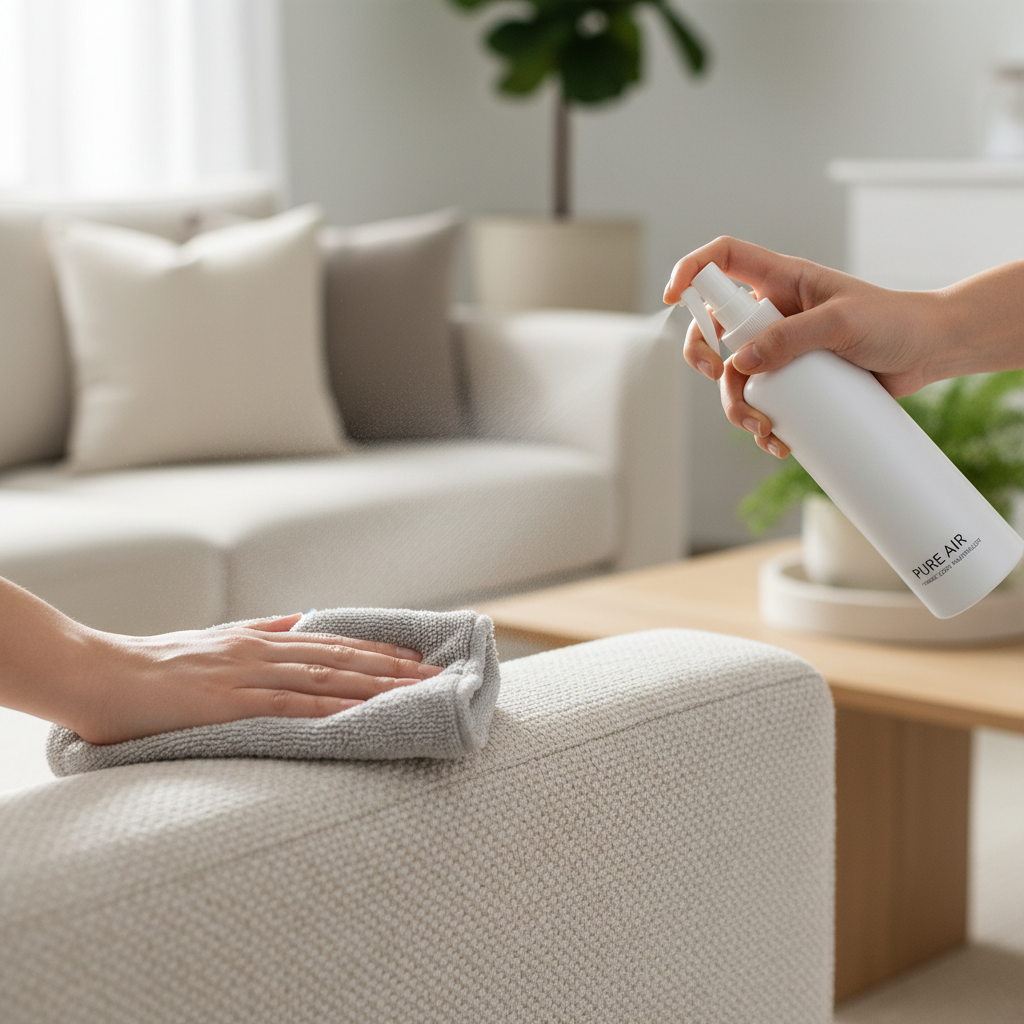
Fabric and upholstery add a wrinkle: too much moisture can create water rings, loosen adhesives, or push odor into cushion foam. Still, you can do a lot with careful application.
Fabric-safe routine that works in many homes
- Spot-test first on a hidden seam for color transfer and texture change.
- Mist evenly rather than drenching, then blot from the outside edge toward the center.
- For removable covers, washing plus a compatible odor neutralizer can outperform sprays.
- For pet beds, focus on the inner cushion too, smells often live in the foam.
For delicate materials like wool rugs, vintage textiles, silk blends, or unknown dyes, caution is smart. Many homeowners choose a professional cleaner for these because one wrong chemical or too much water can create an expensive problem.
Carpet vs. fabric: what works best (quick comparison table)
Different materials reward different tactics. Use this as a reality check before you commit to a method.
| Surface | Most common odor source | What usually works | Watch out for |
|---|---|---|---|
| Wall-to-wall carpet | Urine reaching pad | Enzyme treatment + extraction + full dry | Over-wetting, lingering damp in pad |
| Area rugs | Accidents + trapped dander | Spot treat, then deep clean as needed | Dye bleed, shrinkage, backing damage |
| Upholstery | Body oils, repeated lounging spots | Light mist + blot + airflow | Water rings, foam holding odor |
| Pet beds/blankets | Body oils + saliva | Washable cover + treat inner insert | Foam core staying damp |
Mistakes that make odors worse (or waste your time)
Some mistakes are common because they feel “clean,” but they keep odor in place or create new problems.
- Masking with heavy fragrance: you lose your ability to tell if neutralization happened, and the mix can smell worse.
- Mixing products: bleach, ammonia, and some cleaners can create dangerous fumes. If you’re changing products, rinse and dry first.
- Not letting it dry: damp carpet or cushions can smell musty even if the accident is gone.
- Using too little product: a light spritz rarely reaches the layer where urine sits.
- Skipping the padding reality: if the pad is saturated repeatedly, replacement can be the only lasting fix.
According to the American Lung Association, some cleaning products can irritate airways, especially for people with asthma or sensitivities. If anyone in the home reacts to scents or aerosols, consider low-fragrance options, good ventilation, and consulting a medical professional if symptoms persist.
When to call a professional (and what to ask for)
DIY makes sense for small, fresh accidents and mild buildup. Professional help becomes more reasonable when odor is deep, widespread, or tied to the subfloor.
- Repeated marking in one room and odor returns after every cleaning cycle.
- Odor after carpet cleaning because moisture reactivated old deposits.
- Large-area contamination in rental move-out situations or multi-pet homes.
- Health concerns such as respiratory issues, or if you suspect mold from chronic dampness.
Questions worth asking:
- Will you do pad/subfloor assessment if odor persists?
- Do you use enzyme treatments or specialty urine decontamination?
- How do you control drying time and airflow to prevent musty smells?
Key takeaways (so you don’t overthink it)
- Neutralizing beats masking, but only if the product reaches the residue.
- Drying is part of cleaning, especially for carpet padding and cushion foam.
- Match chemistry to the mess: enzymes for organic accidents, careful oxidizers for stubborn odor, absorbers for general freshness.
- If odor keeps returning, the source is likely deeper than the surface fibers.
Conclusion: a simple plan that usually gets results
Most odor problems improve when you treat the source instead of chasing the smell around the room. Pick a pet odor neutralizer for carpet and fabric that fits your situation, apply it with enough contact time, extract what you can, then let everything dry fully before you judge the outcome.
If you want one action today, do this: locate the true hot spots, treat one area correctly from start to dry finish, and see whether the “humid day” test still triggers odor. That single test saves a lot of trial-and-error shopping.
FAQ
What’s the difference between an odor neutralizer and an air freshener for pet smells?
An air freshener mainly adds fragrance or temporarily covers odor. A neutralizer aims to change or break down the odor source, which is why it tends to perform better on carpet and fabric when used with proper dwell time.
Can I use a pet odor neutralizer for carpet and fabric on wool rugs?
Sometimes, but it depends on the formula and dye stability. Spot-test in a hidden area, avoid over-wetting, and consider a professional cleaner for valuable or delicate rugs.
Why does pet urine smell come back after shampooing the carpet?
Moisture can reactivate urine salts left in the pad or backing. If shampooing adds water without fully removing residue and drying fast, the odor can feel stronger for a day or two, and sometimes it persists.
How long should an enzyme cleaner sit on carpet?
It varies by product, so the label matters. Many enzyme formulas need several minutes at minimum, and some work better with longer dwell time as long as the area doesn’t dry too quickly.
Is it safe to mix baking soda with an enzymatic cleaner?
Mixing can reduce effectiveness or create a mess that’s hard to extract. If you want to use baking soda, it often works better as a dry follow-up after the treated area is fully dry.
Do I need a blacklight to find pet urine in carpet?
No, but it can help locate older spots you might miss. It’s not foolproof on all fibers and colors, so treat it as a guide, then confirm by smell and targeted testing.
What if my couch cushions still smell after I spray them?
Cushion foam can hold odor inside even when the surface smells better. Light, repeated treatments with thorough drying may help, but in some cases deep cleaning, insert replacement, or professional upholstery care is the more realistic fix.
How do I prevent repeat marking after I remove the odor?
Full odor removal helps, but behavior and routine matter too. Cleaning the exact spot thoroughly, blocking access temporarily, and discussing repeat marking with a veterinarian or behavior professional can be worth it if it keeps happening.
If you’re dealing with recurring smells and you’d rather not guess, a simple approach is to map the hot spots, choose one product type that matches the source, and treat a small test area properly before scaling up, it’s the quickest way to confirm you’re on the right track.