
Senior dog bed with raised sides can be a surprisingly big deal when your dog starts moving slower, slipping on floors, or waking up stiff and a little unsure.
A good bolstered bed does two things at once, it cushions sore joints and it gives your dog a boundary to lean into, which often helps older dogs settle faster and sleep longer. The tricky part is that “raised sides” can mean anything from a soft cuddle rim to a firm orthopedic bolster, and the wrong style can make getting in and out harder.
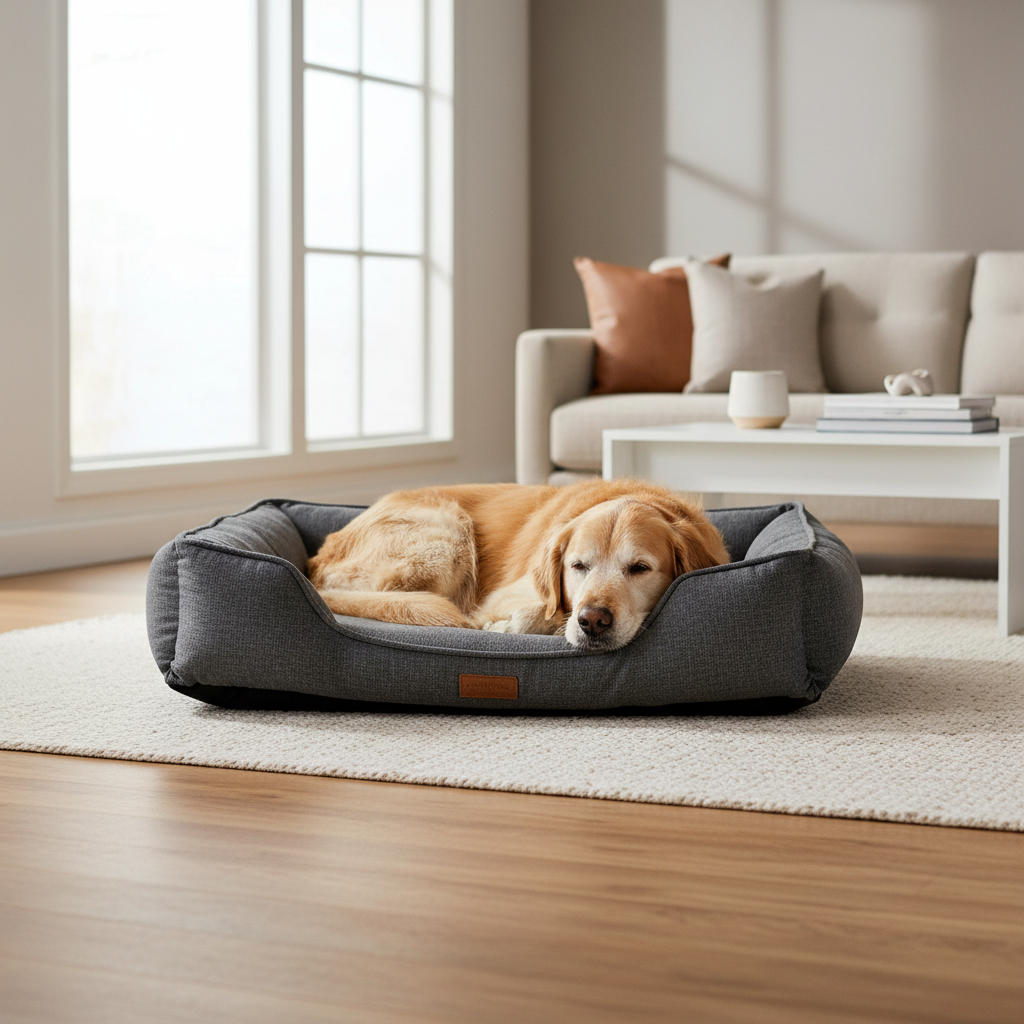
This guide breaks down what raised sides really support, how to choose firmness and height for aging bodies, and what to watch for if your dog has arthritis, hip dysplasia, or occasional incontinence. You’ll also get a quick checklist and a practical sizing table so you can buy once, not twice.
Why raised sides matter more for senior dogs than you think
Raised sides aren’t just “cute” bolsters. For many older dogs, they become a functional support point, kind of like a pillow plus a guardrail.
- Head and neck support, older dogs often nap with their head elevated; a bolster can reduce awkward neck angles.
- Joint-friendly positioning, leaning against a side can help a dog stabilize hips or shoulders while resting.
- Security and reduced startle, some seniors get more anxious as hearing or vision changes; a boundary can feel safer.
- Draft blocking, small seniors in particular may benefit from the “nesting” effect in cooler rooms.
According to the American Kennel Club (AKC)... senior dogs commonly experience mobility changes and joint wear, so sleep surfaces that reduce pressure points can be part of an overall comfort plan, alongside vet guidance.
Common problems the wrong bed causes (real-world issues)
People usually shop for a senior dog bed with raised sides after a rough night, their dog paces, can’t get comfortable, or gets up stiff. But some “supportive” beds create new friction.
- Bolsters too tall, stepping over a high wall can stress wrists, shoulders, and hips.
- Too soft overall, the dog “bottoms out,” so hips and elbows press into the floor.
- Slippery base, the bed slides when the dog tries to stand, and confidence drops fast.
- Heat buildup, memory foam plus plush fabric can run warm for thick-coated seniors.
- Hard seams, raised edges with stiff piping can irritate bony elbows in skinny seniors.
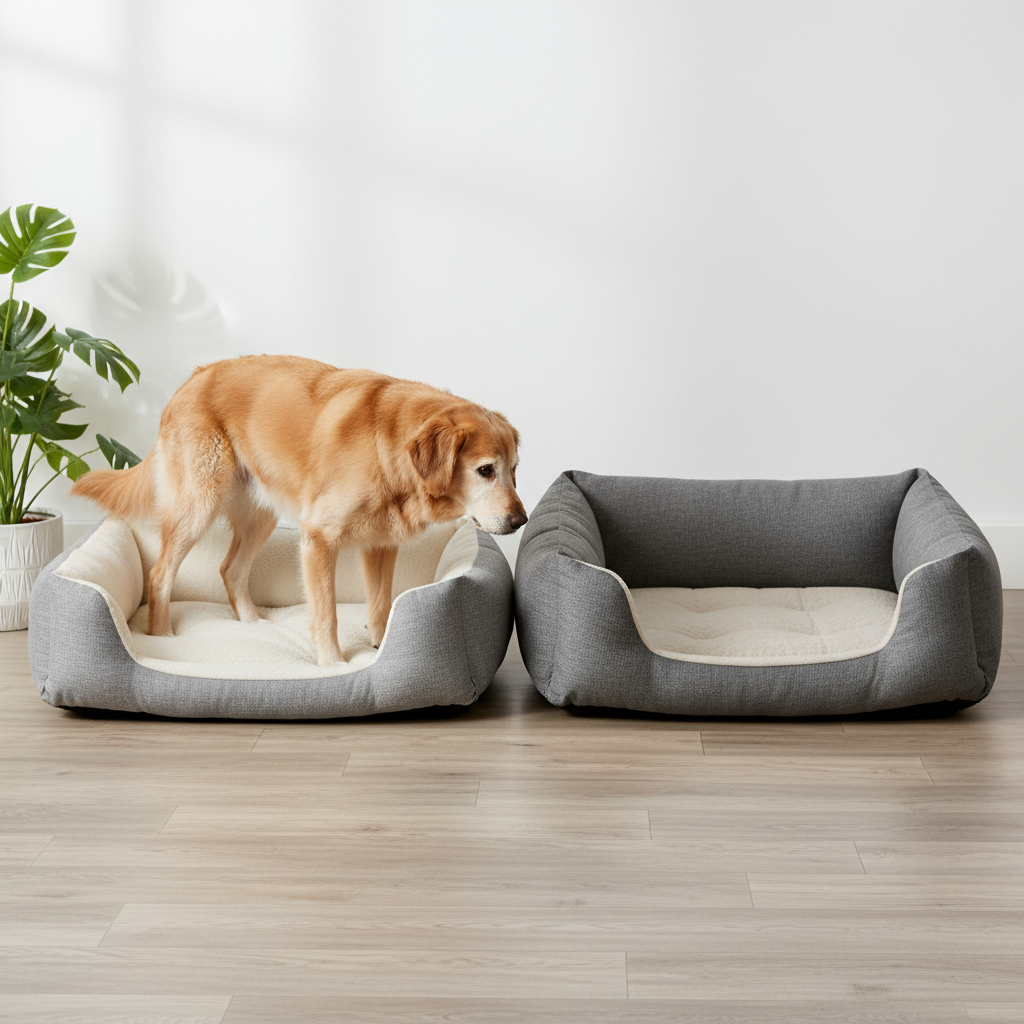
If your dog has arthritis or a neurological issue, even small design choices matter. According to the American Animal Hospital Association (AAHA)... pain and mobility changes can show up as restlessness, trouble rising, or avoiding stairs, so comfort products help most when they reduce strain rather than add obstacles.
Quick self-check: is your dog a good candidate for raised sides?
If you’re on the fence, use this simple read. You don’t need to “diagnose” anything, just watch patterns for a week.
- Your dog sleeps with their head on the couch edge, a pillow, or your foot.
- They press their back against walls or furniture when lying down.
- They change positions often at night, then seem stiff in the morning.
- They avoid cold floors or seek rugs and soft spots.
- They startle more easily, or seem unsettled in open spaces.
If two or more fit, raised sides are often worth trying, but keep the “entry height” low so comfort does not come at the cost of access.
What to look for in a senior dog bed with raised sides (features that actually help)
Marketing copy tends to blur together. Here’s what usually matters in day-to-day use.
1) Low-entry design, not a tall wall
Many seniors do best with three raised sides and one lower front so they can step in without lifting legs high. It’s a small detail that saves joints.
2) Supportive base foam (and enough thickness)
For older dogs, “orthopedic” generally means a foam base that distributes weight. As a rough rule, thicker beds help larger dogs more, but firmness matters as much as thickness.
3) Bolster firmness: soft to lean on, not floppy
A raised rim should keep its shape when your dog rests their head, otherwise it becomes decorative and collapses flat.
4) Non-slip bottom
If the bed slides, seniors hesitate. Look for a grippy base, especially on tile or hardwood.
5) Washability and waterproofing (if needed)
For seniors with occasional accidents, consider a removable cover plus an internal waterproof liner. That combo often stays more comfortable than a crinkly waterproof outer shell.
Sizing and bolster height: a practical table you can use
Fit is where most returns happen. Measure your dog from nose to base of tail while sleeping, then add a little room if they sprawl. If they curl tightly, you can size closer.
| Dog size (typical) | Sleeping style | Bed interior length guidance | Suggested bolster height | Entry style |
|---|---|---|---|---|
| Small (under ~25 lb) | Curl or mix | Dog length + 2–4 in | 3–5 in | Low front cut |
| Medium (~25–60 lb) | Mix | Dog length + 4–6 in | 4–6 in | Low front cut |
| Large (~60–90 lb) | Sprawl | Dog length + 6–10 in | 5–7 in | Low front cut, grippy base |
| Giant (90+ lb) | Sprawl | Dog length + 10–14 in | 6–8 in (not too tall) | Extra-low entry, thick foam |
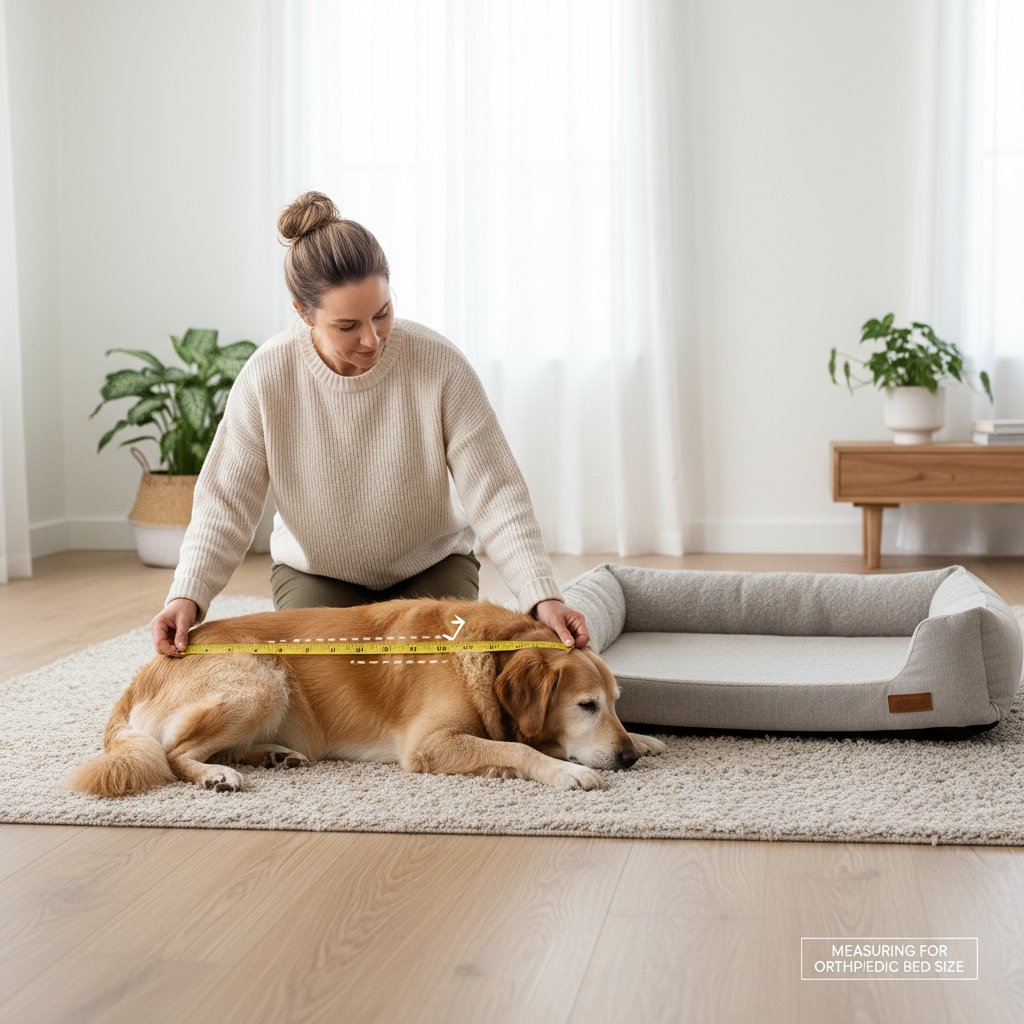
If your dog struggles to lift a leg, err on the side of a lower entry rather than taller bolsters. You can still get the “hugged” feeling with firmer side cushions.
Step-by-step: how to transition your senior dog to a new raised-side bed
Older dogs can be picky, not because they’re stubborn, but because unfamiliar textures and heights feel risky.
- Place it where they already rest, don’t make them “choose” a new corner across the room.
- Make the first week easy, keep the bed on a rug or non-slip mat so it stays put.
- Add a familiar scent, toss in a well-worn (clean) blanket or your dog’s usual small towel.
- Reward calm contact, treat when they step in, circle, or rest their head on the bolster.
- Watch the exit, if stepping out looks awkward, rotate the bed so the lowest side faces their usual path.
If pain seems to spike during the transition, pause and talk with your vet. A bed can support comfort, but it can’t replace medical care when a joint issue progresses.
Mistakes to avoid (and what to do instead)
These are the issues that come up most in homes with senior dogs, and they’re fixable.
- Mistake: choosing plushness over support. Try: a supportive foam base with a softer top layer.
- Mistake: tall bolsters for a dog that drags toes. Try: a low-entry design with firmer side cushions.
- Mistake: ignoring floor type. Try: non-slip bottom plus a rug pad if your floors are slick.
- Mistake: sizing too small to “feel cozy.” Try: enough interior space for their favorite stretch.
- Mistake: skipping cover care. Try: washable cover, and a spare cover if accidents happen.
Key takeaways: prioritize low entry, real support under hips and shoulders, and bolsters firm enough to lean on without creating a hurdle.
When to get professional help (because a bed can’t fix everything)
If your dog avoids lying down, cries when standing, or suddenly changes gait, treat that as a health signal, not a bedding problem. According to the American Veterinary Medical Association (AVMA)... changes in mobility or behavior can indicate pain or illness, and veterinary evaluation helps clarify what’s going on.
- New limping, knuckling, or dragging feet
- Rapid muscle loss, especially in back legs
- Frequent accidents that are new for your dog
- Confusion at night, pacing, or vocalizing that increases
A senior dog bed with raised sides can still be part of the plan, but you’ll want the plan to be led by a professional when symptoms escalate.
Conclusion: what “support” should feel like at home
The right bed is the one your dog uses without hesitation, where getting in feels easy, and where they wake up a little less stiff. If you’re shopping today, start with low entry plus a supportive base, then dial in bolster height based on how your dog actually sleeps.
If you only do two things this week, measure your dog while they rest, and pay attention to how they rise from the floor. Those details usually point you toward a raised-side style that supports comfort without turning bedtime into an obstacle.
FAQ
Is a raised-side bed good for dogs with arthritis?
Often, yes, especially when the base foam reduces pressure on hips and elbows and the bolsters give a place to brace. If your dog struggles to step over edges, choose a low-entry version and consider asking your vet what height is realistic.
How high should the bolsters be for a senior dog?
High enough for your dog to rest their head without slipping off, but not so high it becomes a barrier. In many homes, medium bolsters plus one lowered side work better than a “deep nest” wall.
What’s the difference between orthopedic foam and memory foam?
“Orthopedic” is usually a performance claim about support, while memory foam is a material that molds with heat and pressure. Some beds combine layers, which can feel supportive yet comfortable, but very soft foam may not suit heavier seniors.
My dog overheats easily, can they still use a bolstered bed?
Usually, yes, but pick cooler cover fabrics and avoid overly plush, heat-trapping tops. If panting at rest is common, it’s worth discussing with a professional to rule out health causes.
Should I choose three-sided or four-sided raised bolsters?
Three-sided designs are often easier for older dogs because they offer support without forcing a high step every time. Four-sided beds can work if one side is noticeably lower or your dog remains very mobile.
What if my senior dog has accidents at night?
A washable cover helps, but the bigger win is a waterproof liner under the cover so foam stays clean and odor doesn’t linger. If accidents increase suddenly, a vet visit is a good idea since causes vary.
How do I keep the bed from sliding on hardwood?
Look for a non-slip bottom, and add a rug pad or rubber mat underneath if needed. Seniors gain confidence fast when the bed stays planted as they stand up.
Can a raised-side bed help with anxiety in older dogs?
It can, mainly because the boundaries feel predictable and cozy, but it’s not a treatment for severe anxiety or cognitive decline. If nighttime restlessness grows, professional advice helps you separate comfort needs from medical ones.
If you’re trying to choose a more supportive setup without turning your home into a rehab clinic, a well-designed raised-side bed is a practical start, and if you tell us your dog’s size, sleep style, and mobility limits, we can help narrow options that make everyday rest simpler.