
Aquarium live plants low maintenance setups work best when you stop chasing “perfect” plant growth and instead pick species that tolerate beginner mistakes, average lights, and inconsistent schedules.
If you’ve tried live plants before, you might recognize the cycle, buy a “beginner plant,” it melts, algae takes over, and the tank looks worse than when it was bare. The good news is that most of that frustration comes from mismatched expectations, the wrong plant for your conditions, or skipping a couple of small setup steps that matter a lot.
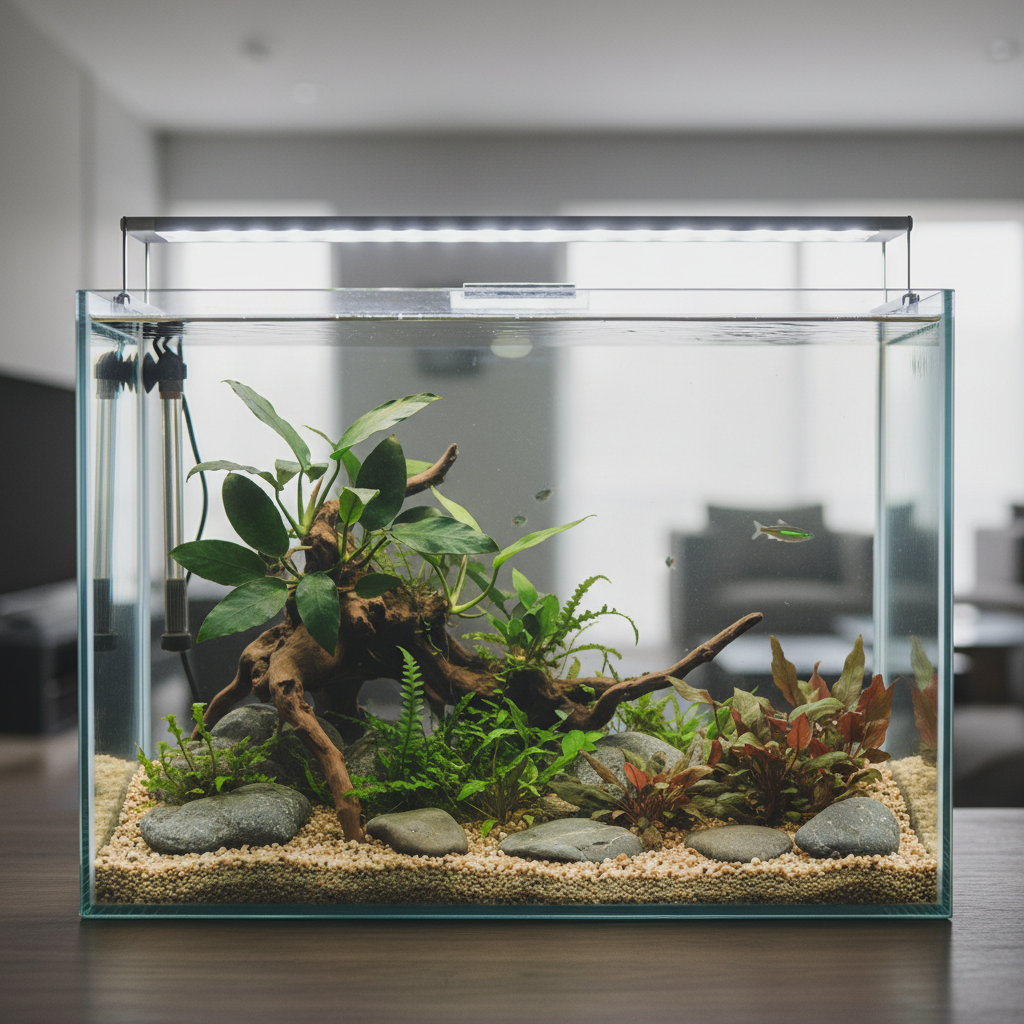
This guide focuses on plants that usually do well in typical U.S. home aquariums, plus a simple way to diagnose why plants struggle. You’ll get a short shopping list, a quick-start routine, and a few “don’t bother” traps that waste money.
What “low maintenance” actually means in a planted tank
Low maintenance doesn’t mean zero work, it means you can keep plants healthy without pressurized CO2, expensive lights, or daily dosing. In practice, you’re aiming for three things, stable water, moderate light, and plants that feed slowly.
- Slow growers need less trimming and are less likely to explode into algae problems when conditions swing.
- Hardy root or rhizome plants tolerate beginner planting mistakes and variable fertilization.
- “Good enough” lighting beats “maximum brightness,” too much light is one of the fastest ways to grow algae in a new tank.
According to the U.S. Fish & Wildlife Service, invasive aquatic plants can spread through dumping aquarium contents into natural waterways, so “low maintenance” should also include safe disposal and never releasing plants outdoors.
Why beginners struggle with live plants (and it’s not always your fault)
Most plant failures come from a small set of patterns. If you recognize yours, the fix is usually straightforward.
Common causes that look like “my plants hate me”
- Too much light for the tank’s maturity, new tanks with bright lights often invite algae before plants root in.
- Planting rhizomes, Anubias and Java fern die back when the rhizome gets buried.
- Not enough nutrients, “low maintenance” still needs some feeding, especially in inert gravel.
- Melt after transplant, many plants shed old leaves while adapting; it’s ugly but not always fatal.
- Fish or snails nibbling, some “plant-eating” behavior is actually hunger or missing minerals.
- Hard vs. soft water mismatch, certain plants tolerate a wide range, others sulk in very hard or very soft water.
One thing that trips people up, stores often label plants “easy,” but “easy” may assume CO2, stronger light, or nutrient-rich substrate. For aquarium live plants low maintenance choices, you want plants that are forgiving in plain setups.
Quick self-check: is your tank a good match for low maintenance plants?
Before you buy anything, run this 60-second checklist. It prevents the classic mismatch where you buy the right plant, but the tank environment pushes it into constant decline.
- Light: Is your light on 6–8 hours per day (not 10–12)? Do you have a timer?
- Substrate: Gravel/sand only, or nutrient-rich planted substrate? Both can work, but it affects plant selection.
- Livestock: Any goldfish, large cichlids, or known plant-nippers?
- Maintenance rhythm: Can you do a weekly water change and quick plant check?
- Water parameters: Do you roughly know if your water is hard, moderate, or soft? (Test strips are fine for a start.)
If you answered “no idea” to most items, that’s not a deal-breaker, it just means you should stick to the most tolerant species and avoid high-light carpeting plants for now.
Best aquarium live plants low maintenance for beginners (with a simple comparison table)
These are the plants that, in many home tanks, keep going even when you’re still learning. Think of them as the “reliable used car” category, not flashy, but dependable.
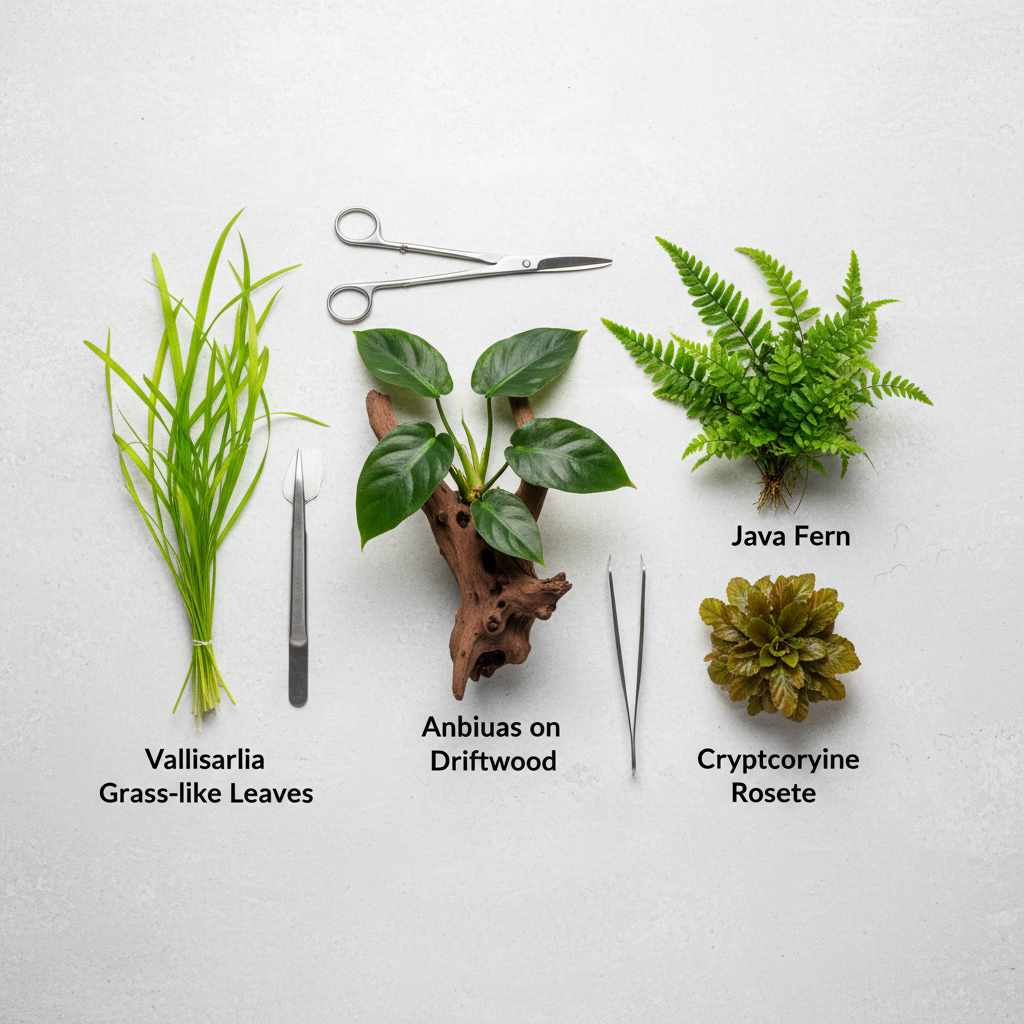
| Plant | Why beginners like it | Where it grows | Light | Beginner watch-out |
|---|---|---|---|---|
| Anubias (nana, barteri) | Slow, tough leaves, low demand | Attached to wood/rock | Low | Don’t bury rhizome |
| Java fern | Tolerates a lot, easy to place | Attached or wedged | Low–medium | Black spots can be normal spores |
| Cryptocoryne (wendtii, lutea) | Great “set and forget” once settled | Planted in substrate | Low–medium | Expect initial melt |
| Amazon sword | Big impact, hardy in many tanks | Root feeder in substrate | Medium | Often needs root tabs in gravel |
| Vallisneria | Fast background fill, helps compete with algae | Planted in substrate | Low–medium | Can send runners everywhere |
| Water sprite / Water wisteria | Quick growth, forgiving | Planted or floating | Low–medium | May need trimming weekly |
| Hornwort (floating) | No planting, nutrient sponge | Floating | Low–medium | Sheds needles if unhappy |
Key takeaway: mix slow growers (Anubias/Java fern) with one faster grower (wisteria, vallisneria, hornwort) to stabilize the tank. That balance is a quiet secret behind many “effortless” aquascapes.
A simple setup that makes low maintenance plants actually stay low maintenance
You can keep this minimal. The goal is to reduce swings and give plants a predictable routine.
1) Light: shorten before you brighten
- Start at 6 hours/day for the first few weeks, then adjust slowly.
- Use a timer, consistency beats “remembering.”
- If algae appears, reduce duration before buying stronger chemicals or snails.
2) Substrate: match plant type to what you have
- Gravel/sand tanks do well with rhizome plants (Anubias, Java fern) plus occasional root tabs for swords/crypts.
- Planted substrates help root feeders, but they’re optional for aquarium live plants low maintenance goals.
3) Fertilizer: keep it boring
- For most beginner tanks, a weekly all-in-one liquid fertilizer works better than five separate bottles.
- For swords and crypts in inert substrate, add root tabs every 6–10 weeks, brand instructions vary.
According to the U.S. Environmental Protection Agency (EPA), many household chemicals can harm aquatic life, so avoid “DIY” dosing with random products and stick to aquarium-labeled fertilizers.
Planting and placement: small details that prevent weeks of headaches
A lot of “plant care” is really “plant placement.” Do this right once, and you stop re-buying the same plant every month.
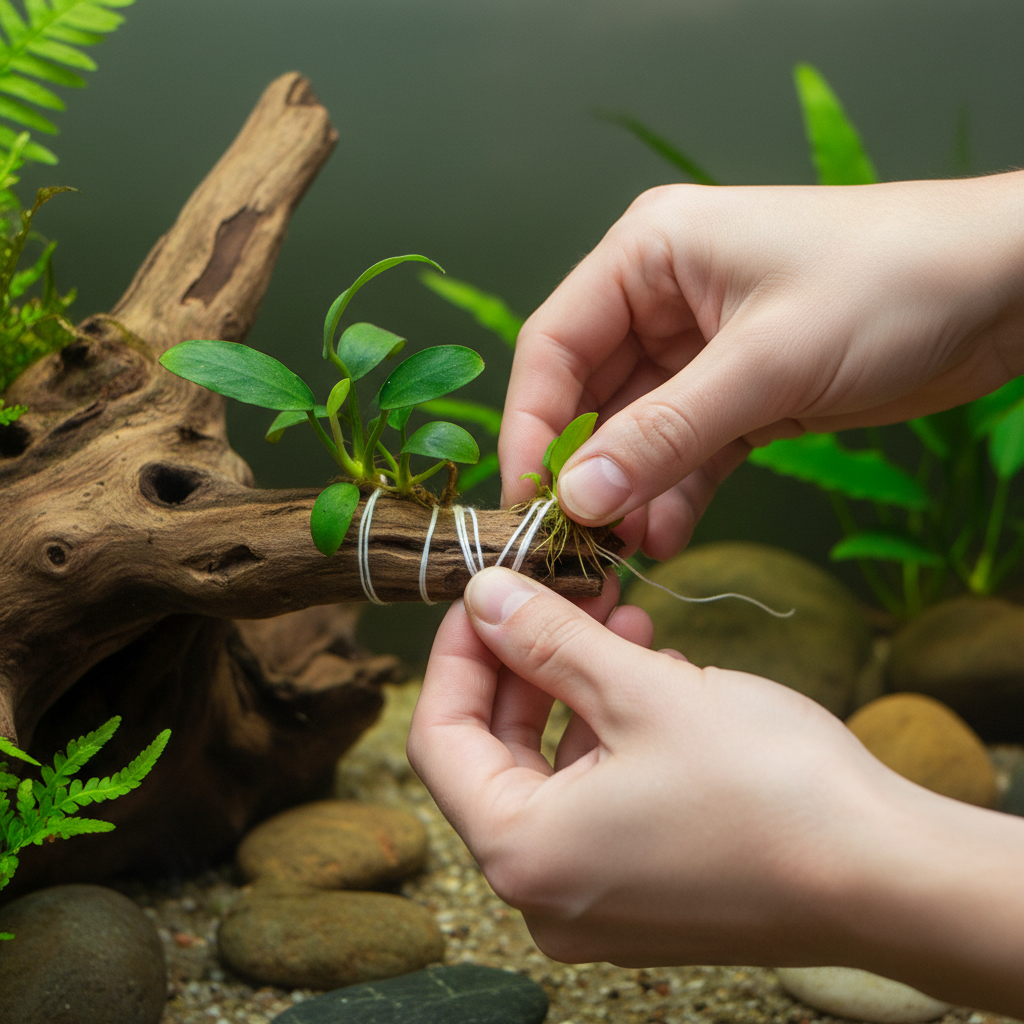
Rhizome plants (Anubias, Java fern)
- Attach to rock/wood with cotton thread or gel cyanoacrylate (aquarium-safe super glue).
- Keep the thick rhizome exposed, roots can hang or tuck into cracks.
Rooted plants (crypts, swords, vallisneria)
- Plant just deep enough that roots are covered, but the crown stays above the substrate.
- Give swords space, crowded swords often look “deficient” even when fertilizer is fine.
Floaters and floating stems (hornwort, sprite)
- Rinse well and remove dead sections, they foul water fast.
- Keep some surface agitation for oxygen, but not so much that floaters get constantly dunked.
A realistic weekly routine (10–20 minutes) that keeps plants steady
When people say planted tanks are work, they usually mean they’re making constant corrections. A simple routine reduces that urge.
- Once a week: water change, wipe front glass, remove decaying leaves, lightly swish plant tops with your hand to dislodge debris.
- Every 1–2 weeks: trim fast growers, replant tops if you like a fuller look, or toss extras.
- Monthly-ish: check filter flow, clogged filters reduce circulation and plants can stagnate in “dead spots.”
If you want aquarium live plants low maintenance results, keep changes small, big swings in light time, fertilizer, or cleaning intensity often trigger algae blooms.
Common mistakes and how to avoid wasting money
These are the traps that show up again and again, especially in the first 60 days.
- Buying “carpeting” plants first: many carpets want higher light and CO2, they can be discouraging early on.
- Overlighting a small tank: brighter isn’t always better; algae uses extra light faster than slow plants do.
- Ignoring melting leaves: remove mushy leaves so the plant can redirect energy, and so decay doesn’t feed algae.
- Assuming algae means “more cleaners”: adding snails or shrimp can help, but algae is usually a light/nutrient balance issue.
- Switching products too quickly: give plants 2–4 weeks to respond before changing multiple variables.
Also worth saying out loud, “low maintenance” plants still look better when you feed them consistently. Starving plants and blasting light is the classic recipe for algae, not lush growth.
When to get more help (store, local club, or a pro)
If your plants keep failing after you’ve simplified light, fixed planting, and added basic nutrition, it may be time for outside input. A good local fish store or aquarium club can often spot a mismatch in two minutes.
- Persistent fish gasping or deaths: stop troubleshooting plants and focus on water quality, consider advice from a qualified professional.
- Unknown pesticides on new plants: if shrimp/snails react badly, ask a shop about plant sourcing and safe quarantine options.
- Extreme tap water issues: very hard/soft water can limit options; a specialist can suggest plants that fit your parameters.
According to the American Veterinary Medical Association (AVMA), unusual pet health signs warrant consultation with a veterinarian, that can apply to fish when issues persist and basic husbandry checks don’t resolve them.
Conclusion: a calmer way to “win” with plants
The easiest planted aquariums usually look that way because the owner chose tolerant species, kept lighting modest, and stuck to a simple routine long enough for the tank to settle. You don’t need rare plants to get a natural look.
If you want one practical next step, pick two slow growers (Anubias + Java fern) and one fast helper (wisteria or hornwort), set your light to 6–8 hours, and give it a month before you judge it. That combination solves a surprising amount of beginner frustration.
FAQ
What are the easiest aquarium live plants low maintenance options for a 10-gallon tank?
Anubias, Java fern, and Cryptocoryne wendtii are common picks because they stay compact and tolerate lower light. Add a small floating plant or hornwort if nutrients run high.
Do I need CO2 for low maintenance aquarium plants?
Usually not. Many beginner-friendly species grow acceptably without CO2, especially under moderate light. CO2 can speed growth, but it also raises the “tuning” required.
Why are my new plants turning brown and melting?
Transplant melt is common, especially with crypts. Trim dying leaves, keep conditions stable, and watch for new growth from the center; that’s the sign the plant is adapting.
How long should I keep the aquarium light on to avoid algae?
Many tanks do well at 6–8 hours daily. If algae ramps up, reduce duration before increasing clean-up crew or adding extra products.
Can I plant Anubias or Java fern in gravel?
You can anchor them in gravel, but the rhizome should stay above the substrate. If it’s buried, rot becomes likely and the plant declines slowly.
What fertilizer is safe for beginner planted tanks with shrimp?
Aquarium-labeled all-in-one fertilizers are commonly used, but ingredients vary, especially copper content. If you keep sensitive inverts, start with lower doses and confirm compatibility with the manufacturer or a trusted aquatic specialist.
Are live plants safe with goldfish or cichlids?
Sometimes, but it’s hit-or-miss. Goldfish often uproot or nibble softer plants, and some cichlids redecorate. Try tough rhizome plants attached to hardscape, and expect some trial and error.
Should I quarantine aquarium plants before adding them?
It’s a good idea when possible, especially if you want to avoid hitchhiking snails or reduce pest risk. Some hobbyists use dips, but methods vary and can harm delicate plants, so read carefully and err on the gentle side.
If you’re building your first planted tank and you’d rather avoid the trial-and-error shopping cart, a curated starter bundle from a reputable aquarium plant seller or local store can be a calmer route, you get compatible species and can ask for guidance that matches your light and substrate.