
Dog frisbee toy soft rubber is usually the safer pick when you want a disc your dog can actually catch without getting jabbed in the gums or scraping teeth on a hard rim.
A lot of dogs love to chase, but the “wrong” frisbee turns the game into something else: split lips, hesitant catching, or a chewed-up disc that sheds little bits. In many homes, the problem is not training, it’s the toy.
This guide breaks down what “soft rubber” really means, what to avoid (even when labels look reassuring), and how to match a disc to your dog’s mouth, bite style, and play space so fetch stays fun.
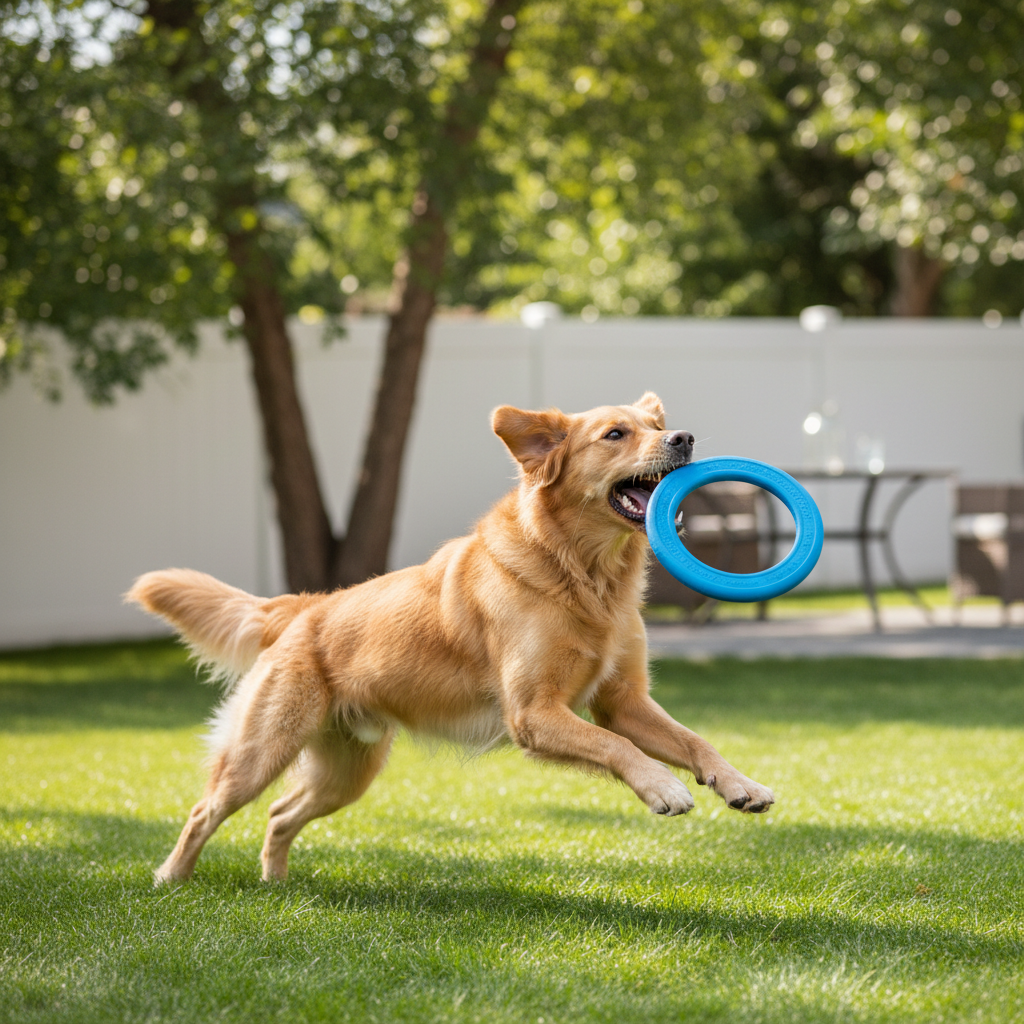
Why a soft rubber frisbee can be easier on teeth and gums
Dogs don’t “catch” like people do. Many clamp down while the disc still moves, or they grab the rim at odd angles, especially younger dogs and enthusiastic chasers.
Soft rubber tends to help in a few practical ways:
- More give on impact, so the rim is less likely to jab the gums during a fast catch.
- Better grip for dogs that slip off smooth plastic, which can reduce frantic snapping.
- Less shatter risk than brittle plastic in cold weather, though “soft” does not mean indestructible.
That said, softness alone does not guarantee safety. A very soft disc that tears easily can create swallowable chunks, and a thick rigid rim can still hit hard even if the center flexes.
Materials and design: what “soft rubber” really means
Product pages use “rubber” loosely. What matters is how the disc behaves when bent, chewed, and thrown.
Common material types you’ll see
- Natural rubber: often grippy and flexible, sometimes smells “rubbery,” usually a solid all-around option if your dog isn’t a power chewer.
- TPR (thermoplastic rubber): a rubber-like plastic blend, can range from nicely flexible to surprisingly stiff depending on formulation.
- Silicone: very soft and gentle, but many silicone discs sacrifice flight distance and may tear for heavy chewers.
According to the American Veterinary Dental College, fractured teeth are a common issue in pets, and hard chew objects can be a contributing risk. A dog frisbee toy soft rubber may reduce impact harshness compared with rigid plastic, but chewing style still matters.
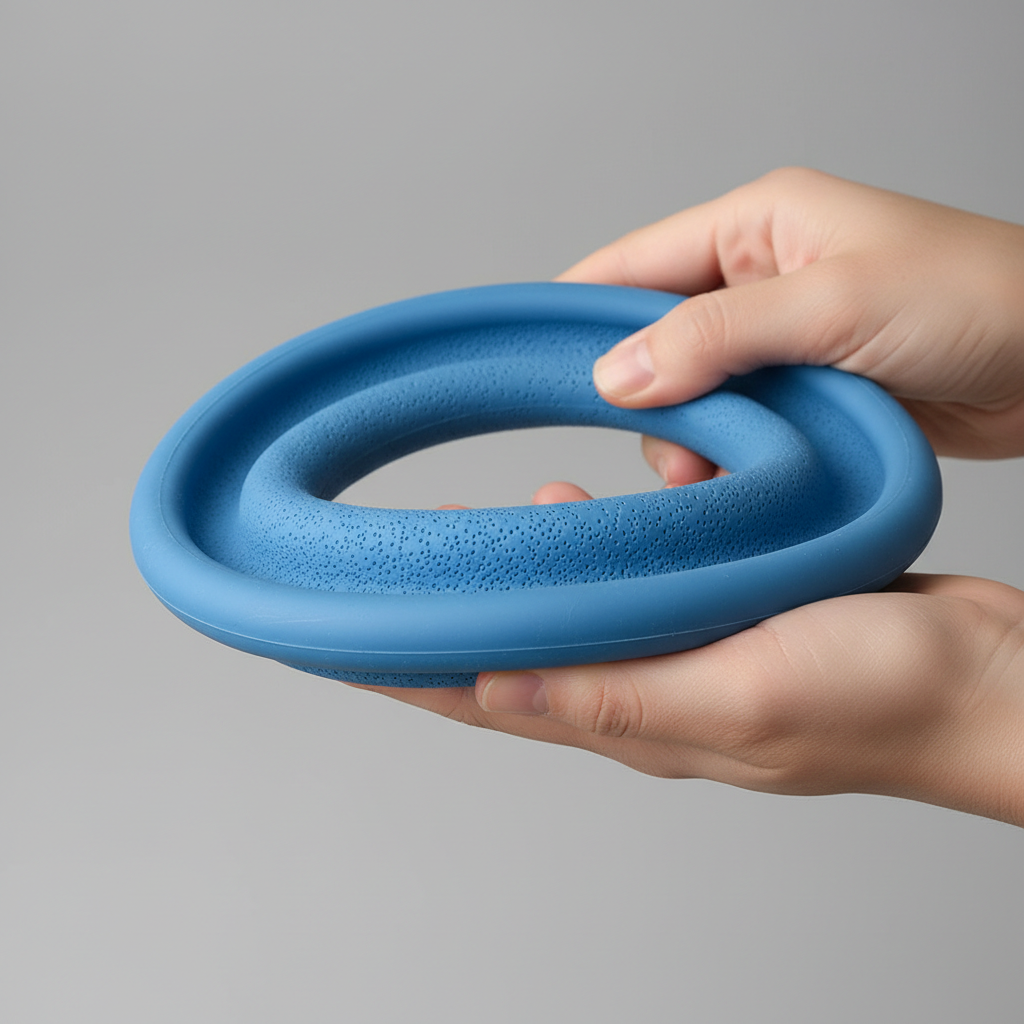
Design details that matter more than marketing
- Rounded rim: reduces sharp contact points during catches.
- Moderate thickness: too thin slices gums, too thick hits like a puck.
- Reinforced edge vs. chew points: some “tough” rims encourage chewing and tearing at the lip.
- Textured top: helps grip, but deep grooves can trap saliva and dirt if you rarely wash it.
Quick self-check: is your dog a good match for a soft rubber disc?
If you want to choose quickly, use this checklist. It’s not scientific, but it matches what typically goes wrong in real play.
- Your dog catches in the air (not just picks up from the ground)
- Your dog snaps at the rim or collides with the disc often
- Your dog has young/adult teeth and you want to limit mouth knocks
- You play on grass or sand, not rocky ground
- Your dog does not shred rubber toys fast
If your dog routinely destroys rubber toys in minutes, a dog frisbee toy soft rubber might turn into a “pieces” problem. In that case, your best move may be changing the game style (rollers, short tosses, tug-safe rings) rather than hunting for a miracle disc.
How to choose the right size, flexibility, and weight
The most common buying mistake is sizing by breed alone. Mouth size, bite pressure, and how your dog carries toys are more useful.
Use this table as a starting point
| Dog size (general) | Disc diameter | Flex level | What to watch |
|---|---|---|---|
| Small (under ~20 lb) | 6–7.5 in | Softer | Too large can force awkward jaw angles |
| Medium (~20–55 lb) | 7.5–9 in | Medium | Look for a rounded rim and stable flight |
| Large (55 lb+) | 9–11 in | Medium-firm | Too soft may fold on catches and frustrate the dog |
Weight matters more outdoors than many people expect. Lighter discs flutter in wind, heavier discs fly straighter but can hit harder. For tooth comfort, aim for stable flight without “brick-like” weight.
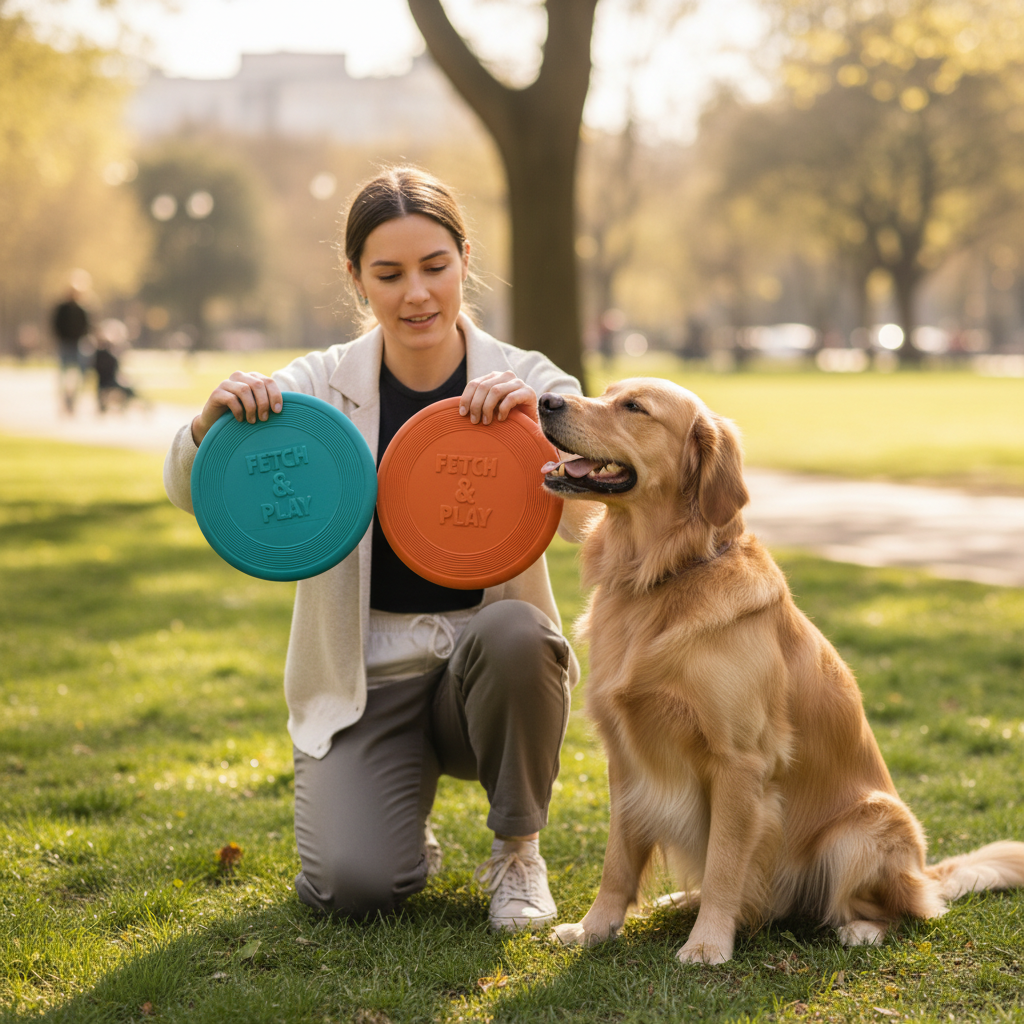
Practical play tips to keep catching safer
Even the best disc can cause mouth knocks if throws are unpredictable. A few small changes usually make the biggest difference.
- Start with low, flat throws so the dog learns clean approaches before jumping catches.
- Use “rollers” for intense chewers: roll the disc on edge so the dog chases without snapping mid-air.
- Avoid hard surfaces when possible, discs pick up grit and the rim becomes abrasive.
- Don’t play tug with a disc unless the product is designed for tug, twisting can crack rigid blends.
- Set a time limit: 10–15 minutes of focused catches beats 45 minutes of frantic biting.
One more thing people overlook: saliva plus sand turns any toy into sandpaper. Rinse the disc after beach days, it helps both teeth comfort and toy lifespan.
Safety notes and common mistakes (what to avoid)
If you’re buying a dog frisbee toy soft rubber to protect teeth, these are the traps that tend to waste money.
- Assuming “soft” means “chew safe”: soft discs can tear, and torn pieces can be a choking or GI risk.
- Choosing a disc with a sharp inner edge: some designs hide a hard inner ring for flight stability.
- Using cracked or nicked discs: once the rim has jagged spots, retire it.
- Throwing too high too soon: dogs miss, then clamp hard on the rim while landing.
- Letting unsupervised chewing happen: a frisbee is a game tool, not a long-duration chew toy for many dogs.
According to the ASPCA Animal Poison Control, intestinal blockage is a serious risk with swallowed foreign material. If you notice missing chunks from any rubber disc, pause play and monitor your dog, and consider calling your veterinarian if you suspect ingestion.
When it’s time to ask a professional
Most toy decisions are simple trial-and-error, but a few signs deserve a more careful approach.
- Your dog has broken teeth, bleeding gums, or persistent bad breath after play
- Your dog avoids catching or yelps when grabbing toys
- You suspect your dog swallowed part of a disc
- Your dog has orthodontic issues, senior dental disease, or a history of tooth fractures
In those cases, it’s reasonable to consult your veterinarian or a veterinary dentist for guidance on safer play toys and intensity, because the right answer depends on your dog’s mouth health and habits.
Key takeaways and a simple buying decision
If your goal is safer catching, pick a disc with a rounded rim, moderate flex, and the right diameter for your dog’s mouth, then keep throws low and consistent until your dog catches cleanly.
- Good fit beats “toughest material” for many dogs.
- Replace discs when the rim roughens or chunks go missing.
- Adjust the game if your dog is a shredder, use rollers and shorter sessions.
If you want one next step, do this: check your current disc’s rim for hard edges and nicks, then measure its diameter against your dog’s mouth width, it’s a fast way to spot why catches look messy.
FAQ
What is the safest dog frisbee material for teeth?
Many dogs do well with flexible rubber-like materials because they reduce harsh impact, but safety still depends on thickness, rim shape, and how aggressively your dog chews. If your dog fractures teeth easily, a vet can help you pick lower-risk play options.
Is a soft rubber frisbee safe for puppies?
Often it can be, especially for gentle catching practice, but puppies also chew and tear more unpredictably. Supervision matters, and it’s smart to stop if you see fraying edges or missing pieces.
Why does my dog’s mouth bleed after playing frisbee?
Common causes include rim impact, abrasive grit on the toy, or pre-existing gum irritation. If bleeding repeats or looks more than minor, it’s worth pausing the game and asking a veterinarian to check teeth and gums.
How do I know if a disc is too hard?
If you can barely flex the rim with your hands, it’s likely on the hard side for close-range catching. In real play, signs include your dog hesitating to catch, snapping at the disc, or coming back with sore-looking gums.
Can dogs swallow pieces of rubber frisbees?
Yes, especially with discs that tear easily or with dogs that “saw” at the rim. If chunks go missing, remove the toy and monitor closely, and contact your veterinarian if you suspect swallowing.
What size dog frisbee should I buy for a medium dog?
Many medium dogs do well with a 7.5–9 inch disc, but mouth width and bite strength matter more than weight alone. If the dog struggles to carry it comfortably, size down even if the label says “medium.”
How long should a soft rubber dog frisbee last?
It varies by chewing intensity, surface, and how often you play. For many households, the lifespan ends when the rim roughens, cracks, or starts shedding small pieces, even if it still “throws fine.”
If you’re trying to pick a disc quickly and avoid trial-and-error, it helps to shortlist by rim shape, flex, and your dog’s chew style first, then compare a couple of well-reviewed options side by side, you’ll usually land on a safer match with fewer returns.