
dog puzzle bowl slow feed anti gulp products are designed to make meals take longer, which can help a dog who inhales food, spits it back up, or acts frantic around the bowl.
If you live with a fast eater, you already know the ripple effects: noisy gulping, hiccups, gassiness, messy “scarves and barfs,” and a dog who still seems keyed up after finishing. Slowing the pace usually changes the whole vibe of feeding time.
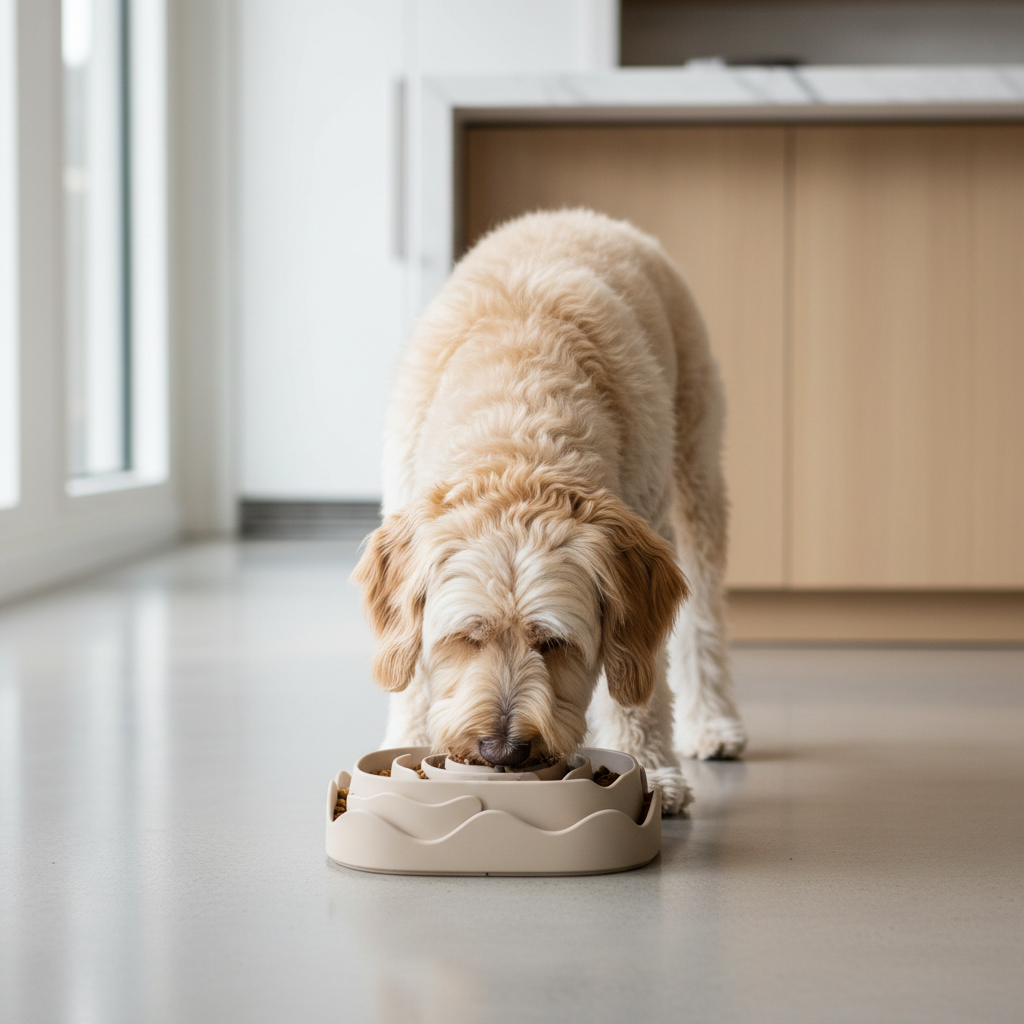
This guide breaks down why gulping happens, how puzzle bowls work, what to buy for your dog’s shape and habits, and how to introduce it without creating frustration. You’ll also get a quick comparison table and a practical setup checklist.
Why dogs gulp food (and why it matters)
Some dogs simply eat fast, but in real homes the “why” tends to fall into a few patterns, and that affects what bowl works.
- Competition mindset: multi-dog homes, past shelter history, or a dog who thinks food might disappear.
- High food drive + habit: they learned that faster equals more, even when food is consistent now.
- Meal schedule mismatch: long gaps between meals can make a dog frantic at the bowl.
- Boredom or arousal: some dogs “attack” food the same way they pounce on toys.
- Possible medical contributors: dental pain, nausea, endocrine issues, or medications may change appetite or eating speed, ask your veterinarian if anything seems off.
According to the American Kennel Club (AKC), eating too quickly can contribute to vomiting and gastrointestinal discomfort, and slow-feeding tools may help some dogs eat at a safer pace.
What a puzzle slow feeder actually does
A puzzle bowl is basically a speed bump system: ridges, mazes, or pockets force the tongue and lips to work for each bite. A true slow feeder is less about “harder” and more about repeating small pauses so the dog can breathe, swallow normally, and settle.
That’s why the best results usually come from matching the bowl style to the dog’s eating style. A deep maze can be great for a determined vacuum, but it can also frustrate a flat-faced dog or a senior with limited tongue mobility.
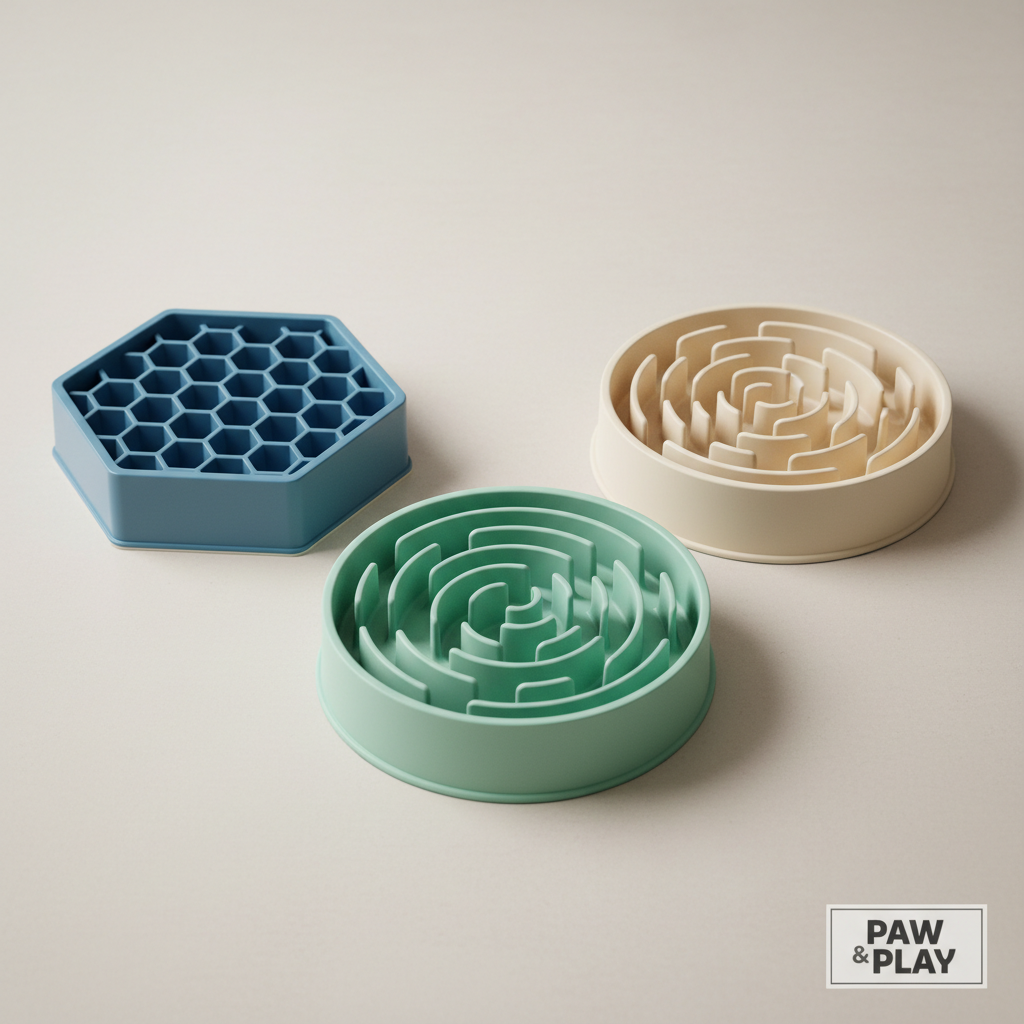
Also, “anti-gulp” should not mean “impossible to eat.” If your dog gives up, paws at it aggressively, or gets stressed, the design is too challenging for that stage.
Quick self-check: is a slow feeder the right move?
Use this as a fast filter before you spend money or overhaul your feeding routine.
- Yes, try it if your dog finishes meals in under 60–90 seconds, gulps audibly, or frequently regurgitates right after eating.
- Yes, with a gentle design if your dog is easily frustrated, has a short muzzle, or tends to quit puzzles.
- Maybe not the first step if your dog already eats slowly but still vomits, that can point to food sensitivity, portion size, or medical causes.
- Pause and ask a vet if you see repeated vomiting, weight loss, choking episodes, extreme thirst, or sudden appetite changes.
According to the American Veterinary Medical Association (AVMA), persistent vomiting or repeated regurgitation should be evaluated by a veterinarian because the underlying cause varies.
Types of dog puzzle bowls (with a comparison table)
Not all slow feeders slow in the same way. Here’s the practical difference most owners notice after a week.
| Type | Best for | Watch-outs | Typical difficulty |
|---|---|---|---|
| Shallow ridges | First-time slow feeders, seniors, flat-faced breeds | May not slow extreme gulpers enough | Easy |
| Maze / spiral channels | Determined fast eaters, medium to large kibble | Can frustrate anxious dogs, harder to clean | Medium |
| Pocket / cup design | Dogs who scoop with tongue, mixed kibble and toppers | Wet food can pack into corners | Medium |
| Silicone insert mats | Dogs who tip bowls, travel setups, easy cleaning | Chewers may damage edges | Easy–Medium |
| True puzzle feeder (covered compartments) | Mental enrichment meals, boredom management | Not ideal for every meal for impatient dogs | Medium–Hard |
Material and safety notes that actually matter
- Non-slip base reduces flipping and “chasing the bowl,” which can make gulping worse.
- Dishwasher-safe matters more than people think, dried food in grooves turns into a hygiene problem fast.
- Chew risk: if your dog bites plastic, choose thicker material and supervise early use.
How to choose the right slow feeder for your dog
Ignore the marketing names for a second and pick based on these real-life variables.
- Muzzle shape: short muzzles usually do better with wider, shallower patterns.
- Kibble size: tiny kibble can get “lost” in deep mazes, very large kibble may not fit narrow channels.
- Meal type: wet food and raw diets need smoother corners and easy-clean surfaces.
- Dog temperament: if your dog gets mad at puzzles, start easy and build up.
- House setup: hardwood floors benefit from grippy bases or a feeding mat to prevent sliding.
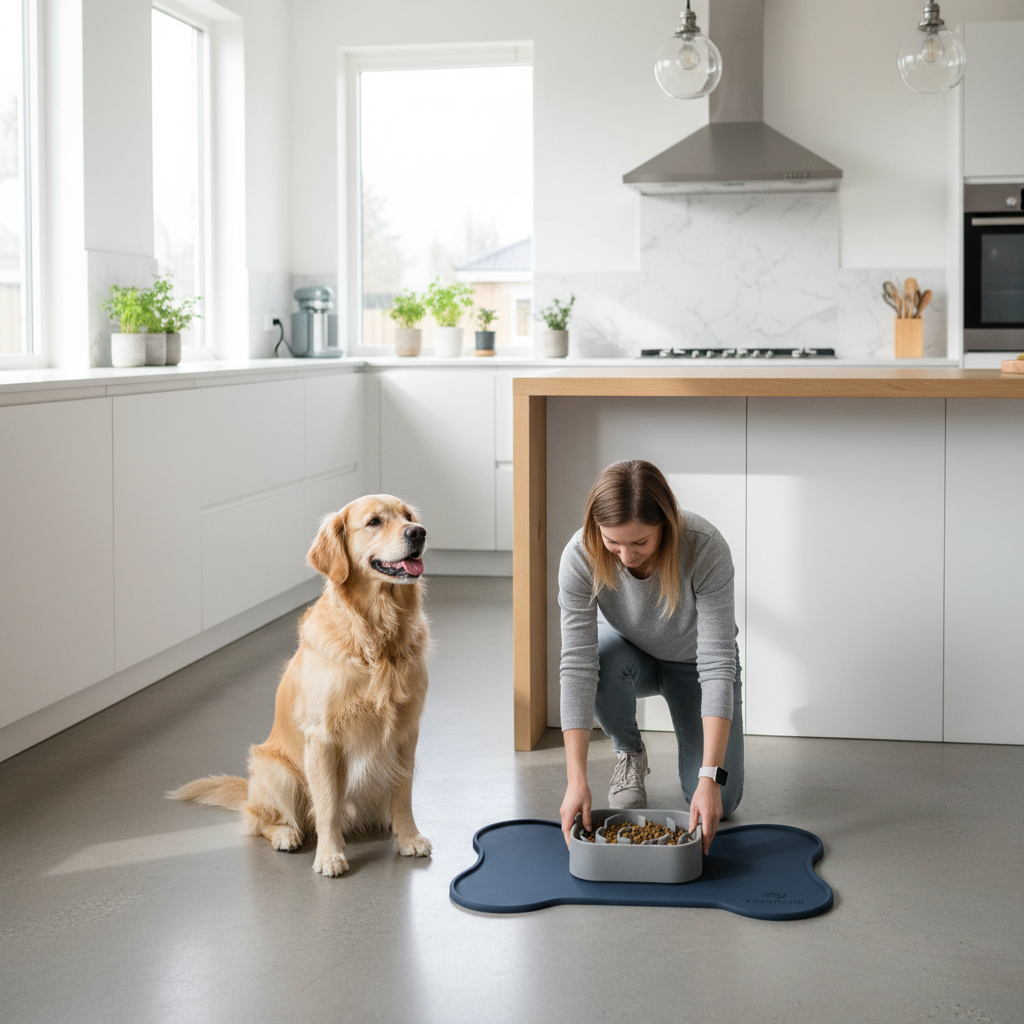
Key point: the “best” dog puzzle bowl slow feed anti gulp option is the one your dog will reliably eat from without stress, while still adding a couple minutes to the meal.
How to introduce it (so it slows eating without causing stress)
A lot of slow feeder “fails” are really introduction issues. Try this progression.
Step-by-step setup
- Day 1–2: use the slow feeder with only 25–50% of the meal, the rest in a normal bowl or as hand-fed rewards.
- Make it easier: spread kibble out, don’t pile it in one pocket, especially for maze designs.
- Control the environment: feed separately if another dog hovering increases urgency.
- Watch technique: if your dog slams teeth into plastic, move to a gentler pattern or softer insert.
If the goal is anti-gulp, you’re looking for calmer breathing and fewer frantic head movements, not just a longer time on the clock.
Practical add-ons that help fast eaters
- Split meals: two smaller meals often reduce desperation at the bowl.
- Use a topper strategically: a spoon of wet food smeared thinly across ridges slows licking, but avoid packing grooves so tight that your dog gives up.
- Try scatter feeding sometimes: for dogs who obsess over bowls, tossing kibble across a snuffle mat can change the pattern.
Common mistakes (and what to do instead)
- Going too hard too fast: if your dog paw-slaps the bowl and walks away, downgrade difficulty and rebuild confidence.
- Using it for every meal with an anxious dog: mix in easier meals, the goal is calmer eating, not a daily battle.
- Ignoring cleaning: food residue in tight channels can smell and irritate some dogs, wash frequently.
- Assuming it prevents bloat: slowing eating may help some risk factors, but it is not a guarantee, discuss individual risk with your veterinarian, especially for deep-chested breeds.
According to the American College of Veterinary Surgeons (ACVS), gastric dilatation-volvulus (bloat) is a serious emergency with multiple risk factors; feeding strategies are only one part of a broader prevention discussion.
When to get professional help
A dog puzzle bowl slow feed anti gulp approach is a tool, not a diagnosis. Get veterinary guidance if you notice:
- Repeated vomiting or regurgitation more than occasionally, especially after most meals
- Coughing, gagging, or signs that look like choking
- Sudden behavior change around food, refusal to eat, or weight change
- Severe anxiety or guarding that escalates during feeding
If guarding shows up, a qualified trainer or veterinary behaviorist can help you adjust routines safely, because “fixing it” with a tougher feeder sometimes backfires.
Conclusion: what to do next
If your dog eats like it’s a race, a well-matched slow feeder can be a simple, low-drama improvement: fewer gulping episodes, less mess, and a dog who finishes meals looking more satisfied than frantic.
Your next move is straightforward: pick an easy-to-clean design that matches muzzle shape and kibble size, introduce it gradually, and watch for comfort signals, not just slower time. If symptoms persist or feel intense, loop in your veterinarian.
Key takeaways
- Match difficulty to temperament, frustration defeats the purpose.
- Shallow patterns suit many dogs, deep mazes suit determined gulpers.
- Cleanability is a feature, not a bonus.
- Slow feeding supports better mealtime habits, it does not replace medical evaluation when symptoms repeat.
FAQ
Will a slow feeder stop my dog from vomiting after eating?
It can help when vomiting is tied to speed, swallowing air, or immediate overfilling. If vomiting continues even with slower eating, it may relate to portion size, diet, reflux, or other issues, a vet check is the safer call.
How long should my dog take to finish a meal?
There isn’t one perfect number, but many owners aim for meals to last a few minutes rather than seconds. The more important sign is calmer swallowing and less urgency, especially right after the bowl is empty.
Is a dog puzzle bowl safe for brachycephalic breeds like French Bulldogs?
Often yes, but choose wide, shallow patterns so they can access food without mashing their face into tight channels. If you see snorting stress or quitting early, switch to an easier design.
Can I use wet food in a puzzle slow feeder?
Usually, but pick a design with smoother corners and clean it promptly. Thick wet food packed into narrow grooves can make eating frustrating and makes hygiene harder.
My dog flips the bowl. What should I do?
Start with a heavier base or a suction/non-slip design, and place it on a grippy feeding mat. If flipping continues, a silicone insert in your existing bowl can be less “flippable.”
Is a slow feeder enough for a dog that guards food?
Sometimes it reduces intensity by slowing the rush, but guarding is behavior, not just speed. If you see stiff posture, growling, or snapping, get help from a qualified professional and manage feeding setups to keep everyone safe.
How do I know if the puzzle is too hard?
Look for stress behaviors: repeated pawing, biting the bowl, whining, or walking away with food left. A good level keeps your dog engaged and eating steadily, with short pauses, not escalating frustration.
If you’re trying to pick a dog puzzle bowl slow feed anti gulp option and want a more “set it up once and stop thinking about it” result, it can help to share your dog’s breed, muzzle shape, kibble size, and what the current feeding mess looks like, then choose a design that fits that reality instead of a trendy pattern.