
Ferret treat ball for food dispensing can turn a fast, messy snack into a few minutes of focused “hunt and solve” play, which is often what bored ferrets really need.
If your ferret inhales kibble, paws at cabinet doors, or starts “inventing” trouble around the house, adding a simple food-dispensing game can redirect that energy without you having to constantly entertain them.
That said, not every ball works for every ferret, some designs jam, some holes are too big, and a few materials are questionable if your pet chews. Below is a practical, no-drama guide to picking one, setting it up, and avoiding the common headaches.
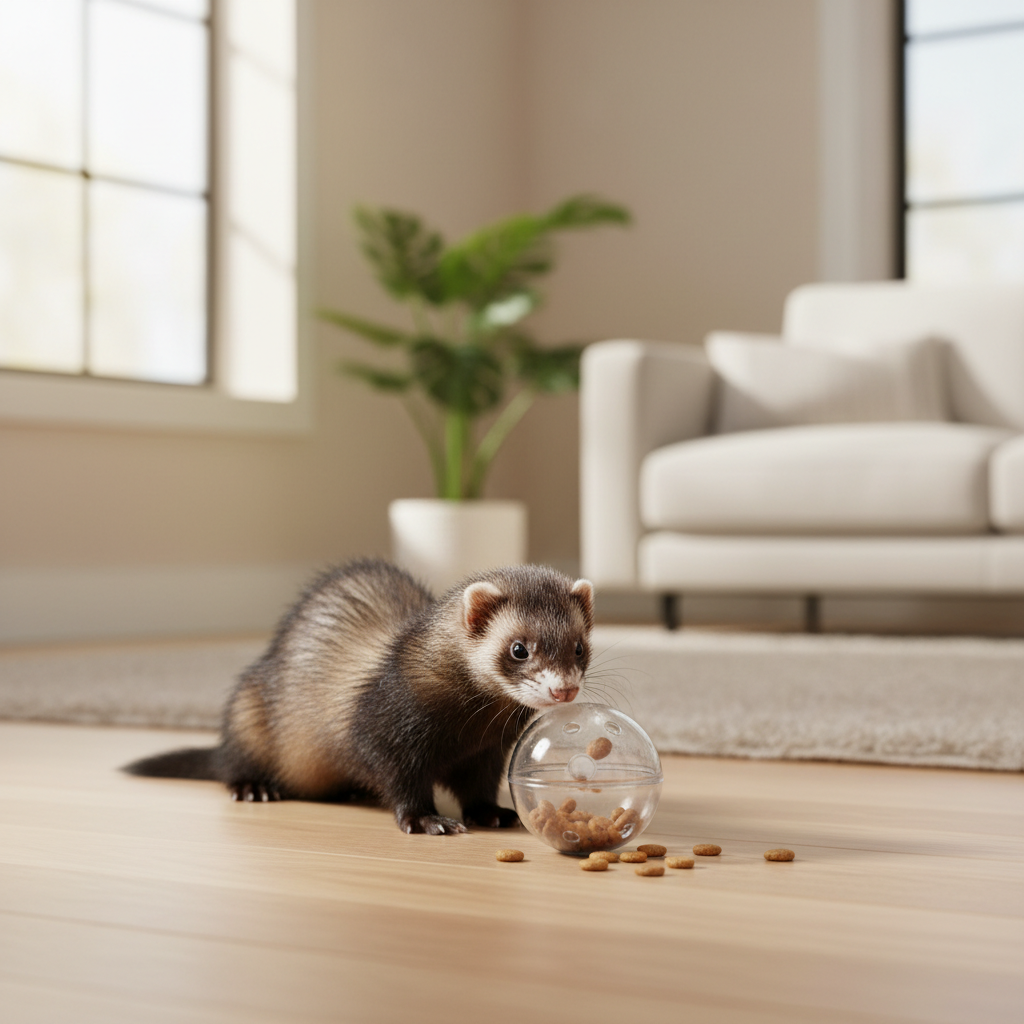
Why a food-dispensing treat ball works (and when it doesn’t)
Most ferrets don’t just want food, they want a reason to move. A dispenser ball adds friction: pushing, chasing, and problem-solving before a piece of kibble drops.
In many homes, this helps with three things at once: slower eating, more daily movement, and fewer “I’m bored, so I’ll bite the couch” moments. It’s not magic, but it often shifts the day in a better direction.
- Slows fast eaters, which can reduce scarf-and-barf situations for some ferrets.
- Adds enrichment, meaning your ferret has a job to do rather than roaming for trouble.
- Encourages natural foraging behaviors in a safe, indoor way.
When it may not be the right tool: if your ferret is recovering from illness or surgery, has significant dental pain, or becomes frantic and frustrated with puzzle toys, keep it simple and ask a qualified exotic vet for guidance. According to the American Veterinary Medical Association (AVMA), pet owners should consult a veterinarian when health concerns affect feeding or behavior.
Quick self-check: is your ferret a good candidate?
Before you buy anything, use a quick reality check. A treat ball should feel like a small daily upgrade, not a new source of stress.
- Your ferret likes to chase rolling toys, or already “digs” at objects.
- Meals disappear in under a minute, or you notice occasional regurgitation after eating too fast.
- You can supervise at least the first few sessions to confirm safe use.
- Your flooring can handle a little rolling noise, or you can confine play to a mat/pen.
If your ferret tends to chew plastic, stash rubber, or fixate until they melt down, you can still do food puzzles, just consider flatter snuffle-style options or supervised scatter feeding instead.
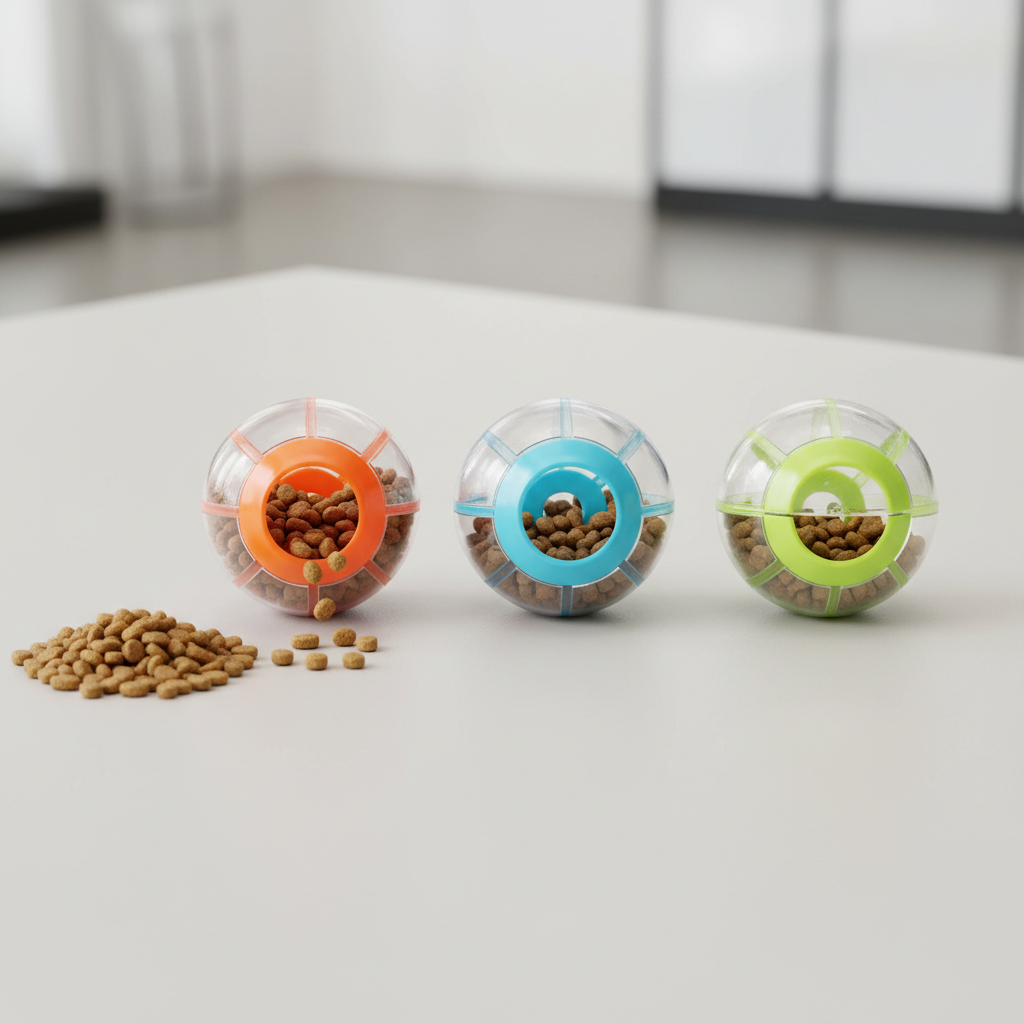
How to choose a ferret treat ball for food dispensing (what matters most)
You’ll see lots of “small pet” dispensers, but ferrets have a particular combo of traits: fast, clever, and sometimes mouthy. So the details matter.
Size and weight
Too light and it bounces wildly, too heavy and your ferret loses interest. Many households land on a ball roughly tennis-ball sized, but the best size depends on your ferret’s build and how aggressive they play.
Dispensing holes and adjustability
Adjustable openings are worth it. You want a setting that pays out often enough to keep motivation, but not so open that the ball becomes a fancy bowl. For mixed-size treats, wider openings jam less but can dump food fast.
Material and chew risk
Look for tough, smooth plastic with no brittle seams, and avoid soft rubbery parts if your ferret is a chewer. If you see tooth marks after a session, treat it as a supervision-only toy.
Easy cleaning
A ball that opens easily will actually get washed. If it’s a pain to disassemble, food oils build up, odors happen, and you’ll quietly stop using it.
Noise and floor friendliness
Hard plastic on tile at 6 a.m. is a lifestyle choice. If noise matters, test it on a mat, rug, or inside a playpen.
Setup that prevents frustration: portioning, difficulty, and “teaching” the game
Where people get stuck is the first day: they fill the ball, set the hole tiny, the ferret gets one piece and rage-quits. Make the first sessions easy on purpose.
A simple 3-step start
- Use part of the normal meal, not extra calories. Measure first, then load the ball.
- Start on the easiest setting so food drops with light nudges.
- Demonstrate once by rolling it a foot or two so a piece falls out, then let your ferret take over.
After your ferret “gets it,” tighten the opening gradually across days. The goal is steady engagement, not a 20-minute battle of wills.
If your ferret walks away after a minute, that’s information: either the payout is too low, the treat isn’t motivating, or the ball is annoying on that surface.
Practical scenarios: match the ball to your real life
A ferret treat ball for food dispensing works differently depending on what you’re trying to solve. Here are common use cases and what usually helps.
1) “My ferret eats too fast”
- Use kibble only, avoid sticky treats that can smear and clog.
- Keep the opening medium-easy so it slows eating without causing frustration.
- Do two shorter sessions instead of one long one if your ferret gets intense.
2) “My ferret is bored and destructive”
- Run the ball during predictable high-energy windows (often morning/evening).
- Add a second enrichment option nearby, like a dig box, so they can switch tasks.
- Rotate treats occasionally to keep novelty, but don’t change everything at once.
3) “Multi-ferret household chaos”
- Use two balls to reduce resource guarding.
- Spread them apart, or separate with a gate if one ferret steals the other’s ball.
- Supervise until you know everyone stays calm.
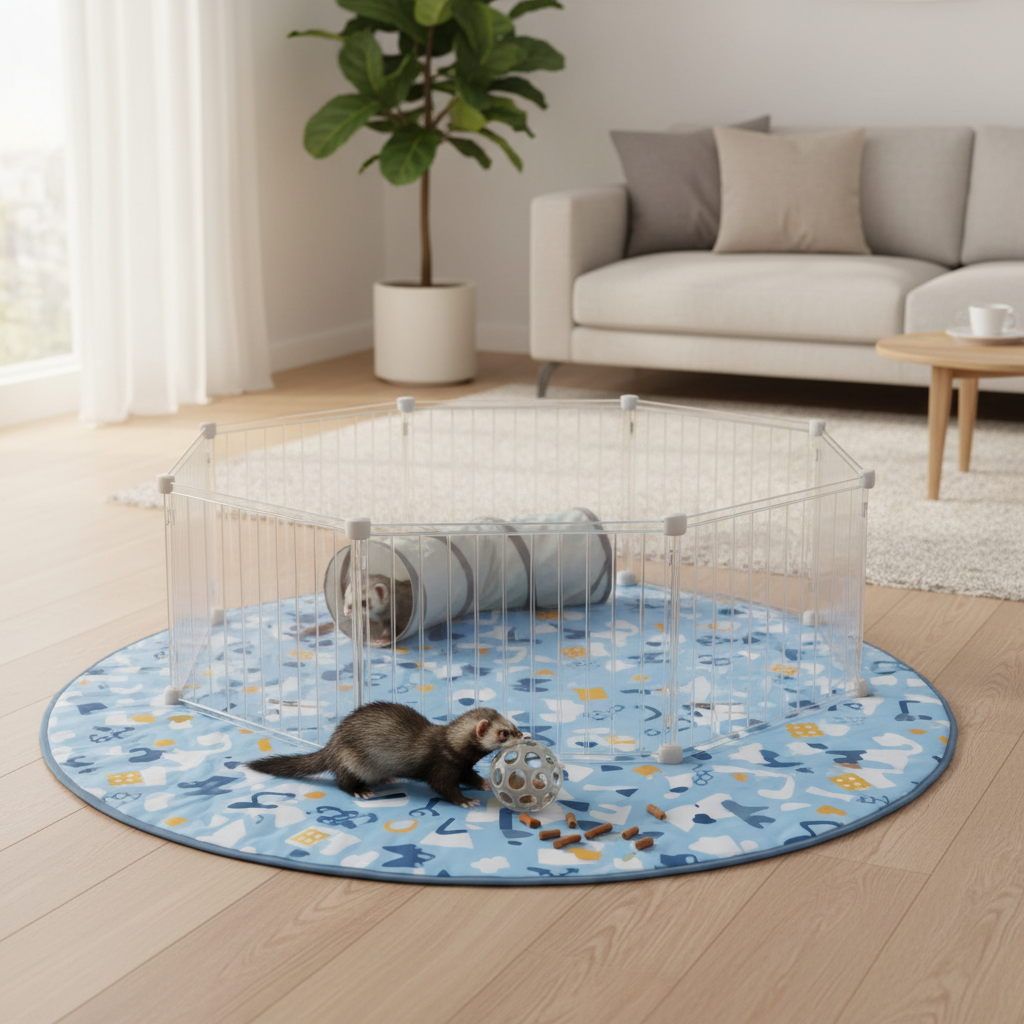
Safety notes and common mistakes (what experienced owners watch for)
This is the unglamorous part, but it’s the part that keeps the toy in your routine long-term.
- Choking and size mismatch: use kibble/treat pieces that cannot lodge in the opening or break into sharp chunks.
- Chewing and plastic fragments: if your ferret starts gnawing instead of pushing, remove the ball and reassess.
- Overfeeding by accident: it’s easy to “top it off.” Pre-measure a portion, then stop.
- Using it as the only enrichment: one tool gets stale; rotation keeps interest higher.
- Letting it roll under appliances: block off gaps or use a pen, otherwise the game becomes “lose the ball.”
Also watch for sudden appetite changes, pawing at the mouth, or repeated gagging. Those can have multiple causes, and a dispenser ball can reveal a problem rather than create it. According to the American Animal Hospital Association (AAHA), changes in eating habits can be a sign to seek veterinary advice.
Comparison table: what to look for before you buy
Different balls feel similar online, but a few features predict whether you’ll keep using it after week two.
| Feature | Why it matters for ferrets | What to look for |
|---|---|---|
| Adjustable opening | Controls frustration and pacing | Multiple settings that hold position |
| Seam strength | Ferrets push, pounce, and sometimes bite | Thick plastic, tight fit, minimal flex |
| Easy to wash | Food oils build up fast | Opens without tools, smooth interior |
| Noise level | Rolling can be loud on hard floors | Works well on a mat or rug, not overly rigid |
| Capacity | Portion control vs. convenience | Enough for part-meals, not a full-day hopper |
Key takeaways and a simple weekly routine
If you want this to stick, treat it like a small habit, not a one-time “toy purchase.”
- Make early sessions easy, then raise difficulty slowly.
- Measure portions so enrichment doesn’t turn into accidental weight gain.
- Supervise chewers and retire anything that cracks or sheds bits.
A realistic routine many owners can maintain: 3–5 sessions per week, 5–15 minutes each, using part of breakfast or dinner, then a quick rinse every couple uses and a deeper wash weekly.
Conclusion: use the ball to feed the brain, not just the belly
A ferret treat ball for food dispensing is most useful when you treat it as enrichment with calories attached, not just a cute gadget. Pick a durable, washable ball, start easy, watch how your ferret responds, and adjust the opening until engagement looks steady rather than frantic.
If you want one next step, do this: measure tomorrow’s meal, load a small portion, and supervise one short session on a mat. You’ll know quickly whether it’s a good fit, and your ferret will tell you the rest.
FAQ
- How do I introduce a food dispensing ball to a ferret that’s never used puzzles?
Start with the easiest opening and a high-value kibble or treat your ferret already likes, then “show” one quick roll so food drops immediately. Most ferrets need proof the toy pays out. - What if my ferret ignores the treat ball completely?
Try a quieter surface (mat or rug), open the hole wider, and shorten the session. Some ferrets dislike the sound or the effort-to-reward ratio more than the concept. - Can a treat ball replace a food bowl for everyday meals?
For some households it can replace part of a meal, but many people keep a bowl available as a backup, especially with multiple ferrets or tight schedules. If your ferret is underweight or has health concerns, ask an exotic vet. - Is it safe to put raw or wet food inside a dispensing ball?
Usually not ideal because it smears, spoils faster, and turns cleaning into a bigger issue. Dry kibble tends to work better; if you need wet food for medical reasons, get vet guidance on safer enrichment options. - How do I stop the ball from rolling under the couch and appliances?
Block gaps with foam or rolled towels during play, or run sessions inside a playpen. This keeps the game fun instead of a daily furniture rescue. - My ferret tries to chew the ball instead of rolling it—what should I do?
Remove it and switch to supervised use only, or choose a sturdier design with fewer edges to grip. Persistent chewing can create fragment risk, so don’t treat it as harmless. - How often should I clean a food dispensing toy?
Rinse every couple uses if you’re feeding dry kibble, and wash with pet-safe soap weekly or sooner if it smells or feels oily. Let it dry fully before refilling.
If you’re trying to reduce boredom behaviors, slow down meals, or add simple enrichment without turning your home into an obstacle course, a well-chosen dispenser ball can be a low-effort option, especially when you match hole size, portion, and floor setup to how your ferret actually plays.