
Ferret litter odor control usually comes down to two things people underestimate: how fast waste builds up in a small space, and how the “wrong” litter turns normal ferret musk into a smell that feels impossible to keep up with.
If you live in an apartment, work long shifts, or keep the cage in a main room, odor and dust stop being minor annoyances and start dictating your whole routine. The good news is that most ferret odor problems are fixable without perfume sprays or constant deep-cleaning.
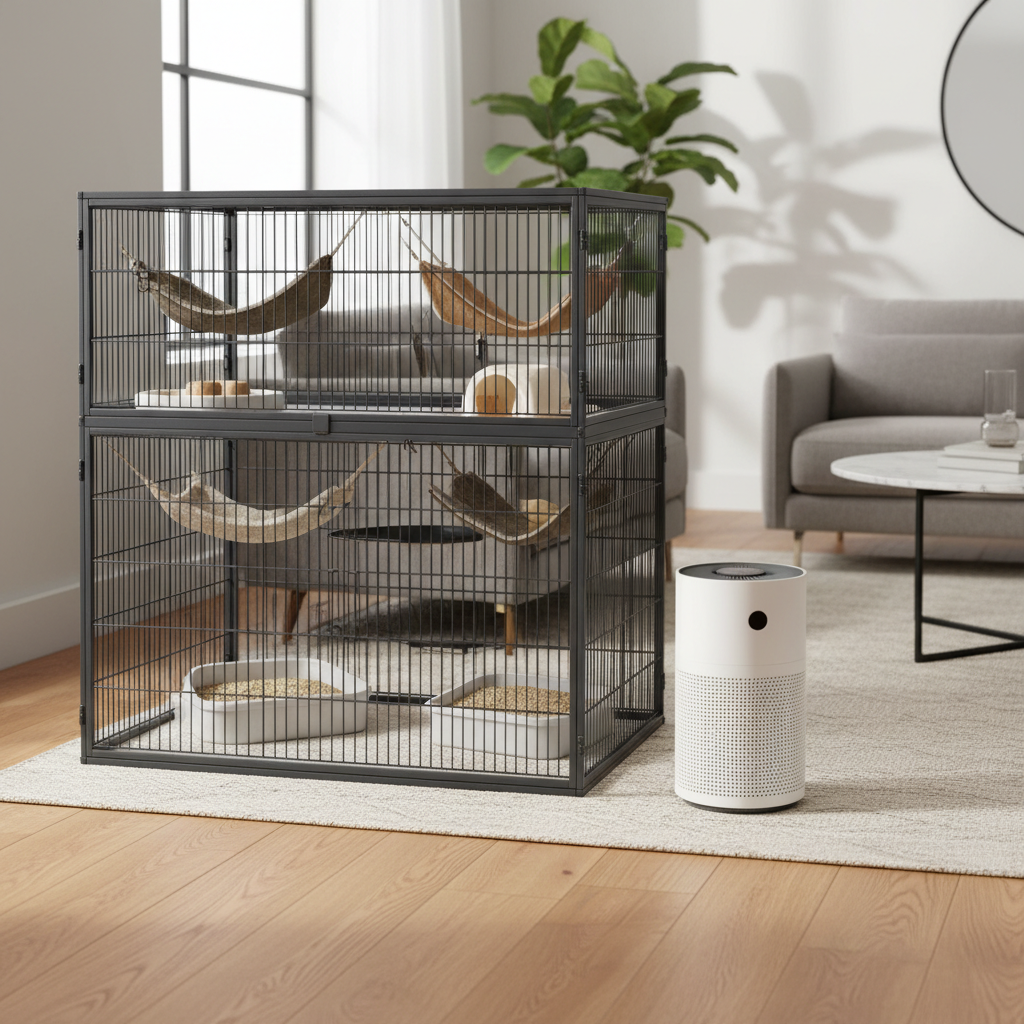
This guide focuses on low-dust choices, realistic cleaning schedules, and simple setup tweaks. I’ll also flag the few situations where “it’s the litter” is not the whole story, because sometimes a health issue or a diet change is the real culprit.
Why ferret litter smells fast (and why dust makes it worse)
Ferrets have a natural musky odor, but the sharp smell most people complain about is typically waste odor amplified by heat, humidity, and litter that fails at absorption or clumping.
- High-protein poop + small space: Ferrets digest fast, and their stool can be strong, especially in warm rooms.
- Ammonia buildup from urine: If urine sits, ammonia odor ramps up quickly, especially in enclosed cages.
- Litter tracking: Fine particles and tracked bits spread odor sources beyond the box, under blankets, and into corners.
- Dust overload: Dust can irritate respiratory systems; even if your ferret seems “fine,” dust often makes the whole area feel stale and dirty sooner.
According to the American Veterinary Medical Association (AVMA), good sanitation and appropriate housing are key parts of small-animal welfare, and for ferrets that means keeping waste areas dry and easy to clean rather than masking odor.
Low-dust litter types: what usually works for ferrets
There is no single perfect litter for every home, but some categories consistently do better for odor control with less airborne mess.
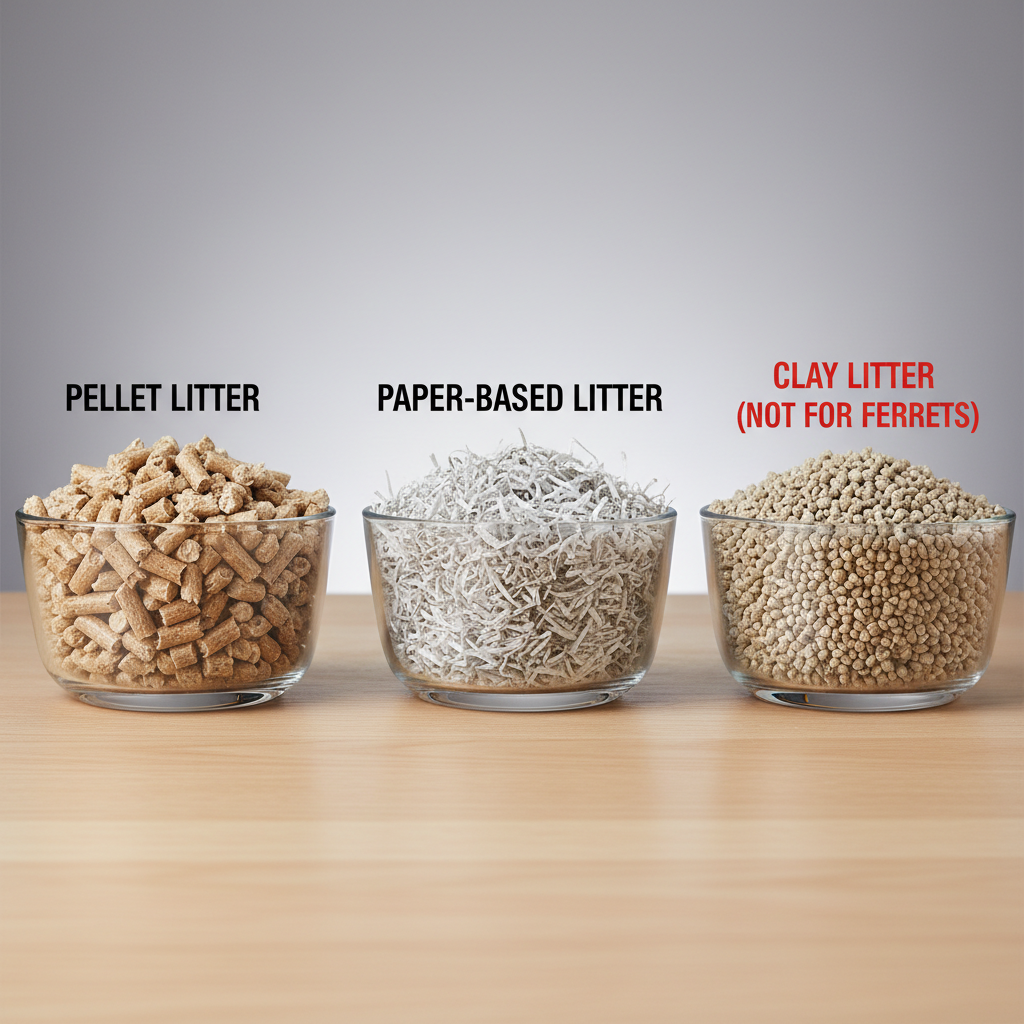
Pellet litters (paper or wood pellets)
Pellets are often the easiest path to low dust. They tend to stay in the box, and many absorb urine well. The tradeoff is comfort and training: some ferrets dislike the feel of hard pellets at first.
- Best for: low tracking, low dust, easier sweeping
- Watch for: scented versions, overly sharp wood pellets, or anything that splinters
Paper-based, non-clumping litter
Paper litter can be gentle and usually lower dust than clay, though quality varies. Some paper products break down into small bits that track, which can raise “smell spread” even if the litter itself is low-dust.
- Best for: sensitive households, softer feel
- Watch for: soggy bottoms if you don’t scoop often
What to avoid (most of the time)
- Clumping clay litter: dustier, can stick to paws, and clumps can be a risk if ingested.
- Strongly scented litter: scent rarely fixes the problem and sometimes creates a “perfume + ammonia” combo that feels worse.
- Cedar/pine shavings: aromatic oils can be irritating; many vets caution against them for small mammals.
According to the American Animal Hospital Association (AAHA), minimizing respiratory irritants in the home is a sensible general principle for pets, and dusty substrates can be a preventable irritant even when odor seems like the main issue.
Quick self-check: what’s actually causing your odor problem?
Before switching products, it helps to identify where the smell is really coming from. Most households fall into one of these patterns.
- “It smells within hours”: usually urine pooling, thin litter layer, or the box location traps humidity.
- “It’s fine, then suddenly awful”: often a missed corner, bedding that absorbed urine, or a dirty cage pan under the box.
- “The whole room smells dusty”: fine litter, overfilling the box, or shaking/scooping aggressively.
- “Poop smell is the main issue”: stool consistency, diet change, stress, or GI issues can play a role.
If you’re aiming for ferret litter odor control, this quick check matters because it tells you whether you need a better litter, a better routine, or a better setup.
A practical setup for better odor control (without constant scrubbing)
A clean-smelling ferret area is usually built on small, repeatable steps. Not heroic weekend cleanings.
1) Pick the right box style and size
- High-back corner or rectangular boxes help contain spray and missed aim.
- Go larger than you think; cramped boxes cause “half in, half out” accidents.
- If your ferret refuses the box, try a lower entry side to reduce hesitation.
2) Use an odor-friendly litter depth
- Pellets: typically a single, even layer works well, add more only if urine pools.
- Paper litter: enough depth to absorb without turning into wet paste.
Overfilling often increases tracking and dust; underfilling increases ammonia smell. You want “dry surface, absorbent underneath.”
3) Add a washable barrier around the box
- Use a machine-washable mat or towel around the box to catch stray bits.
- Swap it frequently; this is where odor hides while you blame the litter.
4) Improve airflow, not fragrance
Move the cage away from direct heat vents, keep the box out of tight corners, and consider a small HEPA air purifier nearby. Avoid blasting scented sprays into a pet area.
Day-to-day routine that keeps smell low (and dust lower)
Most people get better results from consistency than from buying the most “advanced” product. Here’s a routine that works in many homes.
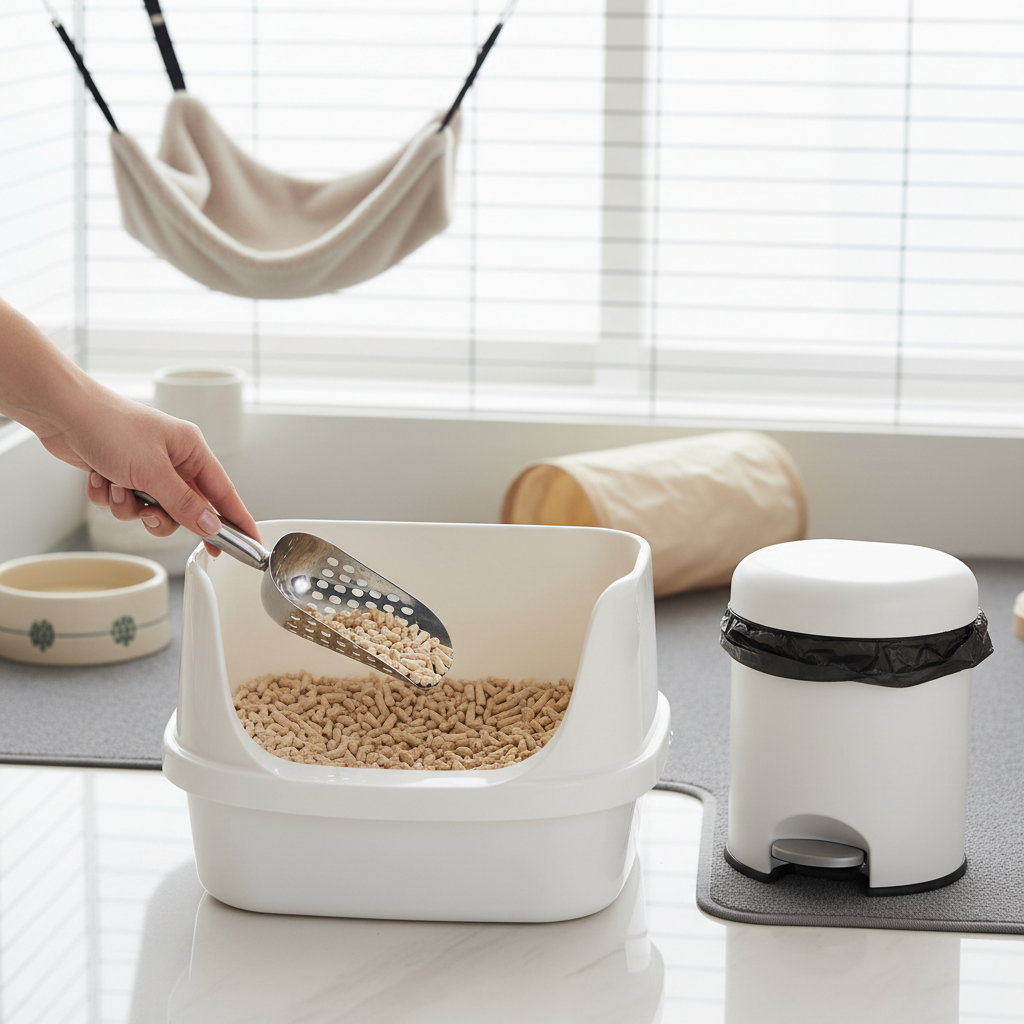
- 2–3 times daily: scoop poop, remove any soaked patches (especially with paper litter).
- Daily: wipe box edges and nearby cage bars with pet-safe cleaner or diluted vinegar solution, then rinse and dry.
- Weekly: empty box fully, wash with mild soap, rinse well, dry completely before refilling.
- Every 1–2 weeks: wash hammocks, blankets, and any fabric your ferret sleeps on; bedding holds odor longer than most people expect.
Key point: if your trash can sits open in the room, you’re fighting a losing battle. Use a lidded, lined bin and take waste out often.
Choosing litter: a quick comparison table
If you want a fast way to decide, this table is a good starting point. Real-world results still depend on your ferret’s habits and your cleaning rhythm.
| Litter type | Odor control | Dust level | Tracking | Notes |
|---|---|---|---|---|
| Paper/wood pellets | Good | Low | Low to medium | Often easiest for low dust; some ferrets need time to accept texture |
| Paper-based (non-clumping) | Medium to good | Low to medium | Medium | Comfortable, but can get soggy if not scooped frequently |
| Clumping clay | Medium | High | Medium | Usually not recommended for ferrets due to dust and ingestion concerns |
| Shavings (cedar/pine) | Low to medium | Medium | High | Aromatic oils can irritate; many households avoid for small mammals |
Common mistakes that keep odor around (even with “good” litter)
- Cleaning the box but not the cage pan: urine can seep under or around the box.
- Using too much deodorizing powder: powders can add dust and irritate airways.
- Chasing odor with fragrance: it masks for a moment, then rebounds.
- Ignoring corner potty spots: many ferrets pick a second location, you need a second box or training pads.
- Bathing too often: frequent baths can dry skin and sometimes make natural oils rebound; ask a vet what’s reasonable for your ferret.
According to the American Society for the Prevention of Cruelty to Animals (ASPCA), routine care and a clean environment matter more than quick fixes, and that idea maps well to odor control: remove the source, don’t perfume it.
When odor might signal a health or diet issue
Sometimes you do everything right and odor still spikes, especially if poop changes. That’s when it’s worth zooming out.
- Sudden diarrhea, very dark stool, or mucus: could be stress, diet intolerance, parasites, or other GI problems.
- Strong “fishy” or unusual smell: not typical, and worth asking a veterinarian.
- Straining, frequent urination, or accidents: can suggest urinary issues.
- Rapid change after a new food or treat: consider reverting and discussing diet with a professional.
According to the American Veterinary Medical Association (AVMA), noticeable changes in stool, urination, or behavior can be early signs of illness. If you’re unsure, a vet who sees ferrets regularly is the safest next step.
Practical takeaways you can apply this week
- Switch to a low-dust pellet or quality paper litter, avoid heavy fragrance.
- Keep waste dry: scoop multiple times a day, don’t rely on “one big clean.”
- Control tracking: use a washable mat, and clean the cage pan, not only the box.
- If odor spikes with poop changes, treat it as a diet/health clue, not just a cleaning failure.
Most homes get noticeable improvement from one or two changes, especially when the focus stays on dryness and airflow. If you want ferret litter odor control that lasts, consistency beats fancy add-ons almost every time.
FAQ
What is the best low-dust option for ferret litter odor control?
In many households, paper or wood pellets strike the best balance of low dust and decent absorption. The “best” still depends on whether your ferret accepts the texture and whether you scoop often enough.
How often should I change ferret litter completely?
If you scoop daily, a full dump-and-wash weekly is common. If your room is humid or you have multiple ferrets, you may need more frequent full changes to prevent ammonia smell buildup.
Why does my ferret area smell even when the litter box looks clean?
Odor often sits in bedding, the cage pan under the box, or a hidden corner potty spot. Check fabric items and the plastic base for urine residue before blaming the litter.
Is clumping cat litter safe for ferrets?
Many owners avoid clumping clay because dust can irritate and clumps can be risky if ingested. If you’re considering it for a specific reason, it’s smart to ask a veterinarian familiar with ferrets.
Do air fresheners help with ferret litter odor control?
They can cover smell temporarily, but they don’t remove the source and some fragrances may irritate sensitive pets or people. Better airflow and faster waste removal usually work better.
Why is my ferret suddenly pooping outside the box, and the smell is worse?
Common triggers include a dirty box, a box that feels too small, or a new litter texture. If accidents come with diarrhea or lethargy, consider a vet visit because health issues can drive both odor and behavior changes.
Can diet changes reduce litter box odor?
Sometimes, yes. Stool odor and consistency can shift with protein sources, treats, or sudden food transitions. Make changes slowly and consult a professional if stool stays abnormal.
If you’re trying to get the smell under control without turning your home into a cleaning project, a low-dust litter plus a simple scoop-and-wipe routine usually gets you most of the way there, and if you’d rather not guess, a vet or experienced ferret rescue can help you troubleshoot your exact setup quickly.