
Hamster sand bath dust is one of those things you notice the moment it becomes a problem: powder on the cage walls, a hamster that seems to sneeze after rolling, and a “clean bath” that somehow makes the room feel dirtier.
The good news, most of the time this comes down to product choice and setup, not you doing something wildly wrong. Hamsters need sand baths for coat care and enrichment, but the wrong sand or an overly dry, dusty batch can turn a healthy habit into an irritating one.
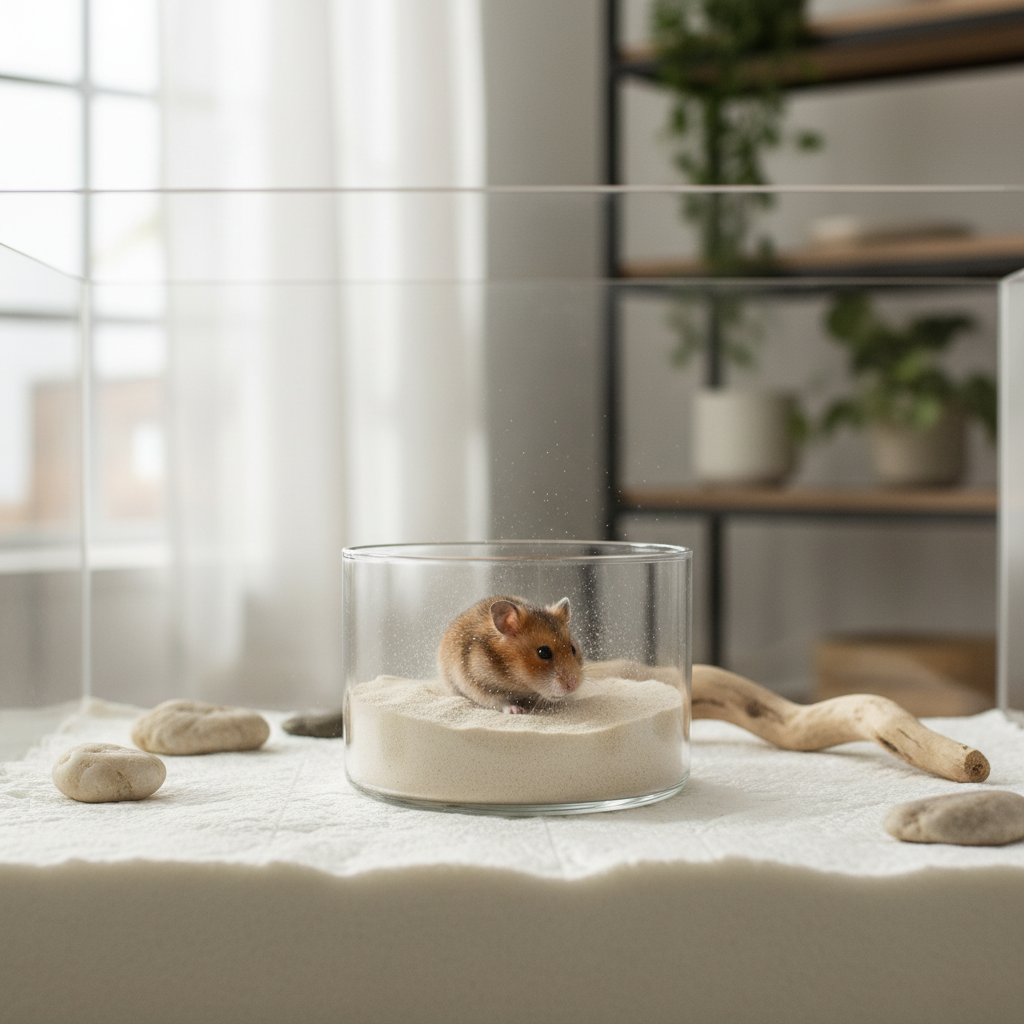
What we’ll do here is separate “normal sand tracking” from real dust issues, then get practical: how to pick safer sand, how to set up a cleaner bath station, and how to clean it without constantly dumping money into replacements.
Why sand baths get dusty (and when it matters)
Some mess is normal, hamsters kick sand, carry grains in their fur, and dig like it’s their job. Dust is different, it hangs in the air, coats surfaces like flour, and may irritate sensitive noses.
- Sand type and grain size: very fine “powdery” sand creates airborne particles more easily than slightly coarser, uniform grains.
- Brand/batch variability: even a trusted product can vary. A bag that traveled, broke down, or dried out more than usual may shed more dust.
- Shipping and handling: crushed grains from transport can increase fines (tiny particles) sitting at the bottom of the bag.
- Overfilled bath containers: deeper sand invites vigorous digging and big toss-outs, which looks like dust even when it’s mostly fine sand.
- Ventilation and airflow: strong fan drafts near the enclosure can lift fine particles and spread them across the habitat.
If your hamster uses the bath and comes out looking clean, but you’re wiping a light haze off nearby surfaces every day, you’re likely dealing with dust, not just “tracking.”
Quick self-check: is this normal mess, or a dust problem?
Use this quick checklist before you overhaul the setup. One “yes” can be random, several “yes” usually means you should change something.
- You see a visible puff when the hamster rolls or digs.
- Fine powder film builds up on glass, lids, or wheels within 24–48 hours.
- Sneezing increases soon after bath time (occasional sneezes happen, frequent bouts are a flag).
- Eyes look watery or the nose seems irritated.
- You smell “dusty” air near the enclosure, especially with a top-vented setup.
According to the American Veterinary Medical Association (AVMA), respiratory signs like persistent sneezing or nasal discharge warrant attention and may justify a veterinary visit, since small mammals can deteriorate quickly if there’s an underlying infection or irritant.
Choosing sand: what typically stays cleaner (and what to avoid)
This is where most “hamster sand bath dust” complaints are solved. The goal is sand that behaves like sand, not powder.
Usually safer, lower-dust options
- Chinchilla sand (not dust): some chinchilla sands are acceptable for hamsters, but labels vary, and “dust” products are the ones that cause trouble.
- Reptile sand without additives: look for calcium-free, dye-free options. Many keepers prefer sands marketed for reptiles because the grains can be more consistent.
- “Hamster bathing sand” with larger grain: if the brand clearly markets it as sand (not powder) and it feels gritty, not silky, it often performs better.
What I’d be cautious with
- Chinchilla dust: designed to be ultra-fine, it can be irritating for hamsters in many cases.
- Scented sand: added fragrance can be an irritant even when the sand itself looks fine.
- Calcium sand: marketed for reptiles, but it can clump when wet and may pose risks if ingested.
If you’re unsure about a specific product, a small-animal vet or an experienced rescue may help sanity-check ingredients and grain behavior.
Clean bath setup: small changes that reduce dust fast
A clean bath isn’t only about the sand, it’s also about containment. You want the hamster to roll and dig, but you also want the mess to fall back into the bath.
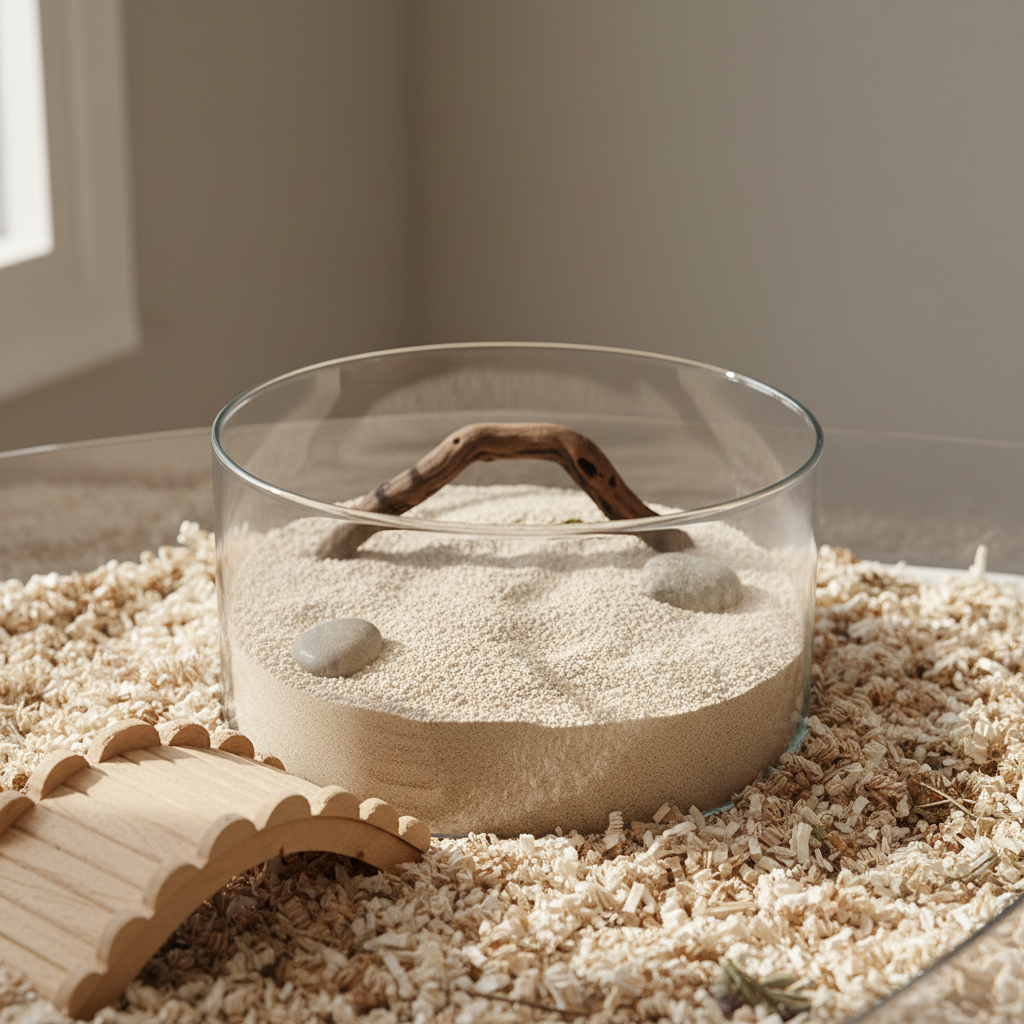
- Use a higher-sided container: ceramic, glass, or acrylic with taller walls usually keeps sand in place better than shallow trays.
- Don’t overfill: many setups do well with roughly 1–2 inches of sand for rolling, deeper is for dedicated digging areas.
- Place it away from the wheel: wheel airflow and vibration can spread particles and fling grains further.
- Add a “step-in” entry: a small cork flat or platform in front of the bath helps knock sand off feet.
- Keep it dry, always: water bottles that drip nearby turn sand into clumps, then clumps break down into fines later.
If the enclosure is near an AC vent or a fan, shifting the habitat just a couple feet can noticeably reduce airborne dust movement.
Cleaning routine: keep the bath hygienic without tossing all the sand
The cleanest sand bath is not the one you fully replace every other day, that gets expensive, and it can push people into “stretching” dirty sand too long. Instead, treat it like a litter box with a refresh cycle.
Daily or every-other-day (2 minutes)
- Spot-scoop clumps and any visibly soiled areas with a small spoon.
- Remove food the hamster cached in the sand, it goes stale and attracts moisture.
- Wipe the rim of the container to stop fine residue from spreading when the hamster hops out.
Weekly refresh (10–15 minutes)
- Top off with fresh sand after removing about 20–30% of the oldest sand.
- Rinse the container with hot water, dry fully before refilling.
- Check for “powder build-up” at the bottom, that’s where fines settle, and where dust problems often start.
Full replacement (as needed)
Swap all sand if it starts to smell, stays damp, shows repeated urination spots, or triggers a dust haze even after you remove the fines. Many households land somewhere between every 2–6 weeks, but it really depends on hamster habits and bath size.
How to reduce dust from a bag you already bought
If you’re stuck with a dusty batch, you still have options. The idea is to remove the finest particles without turning sand into wet clumps.
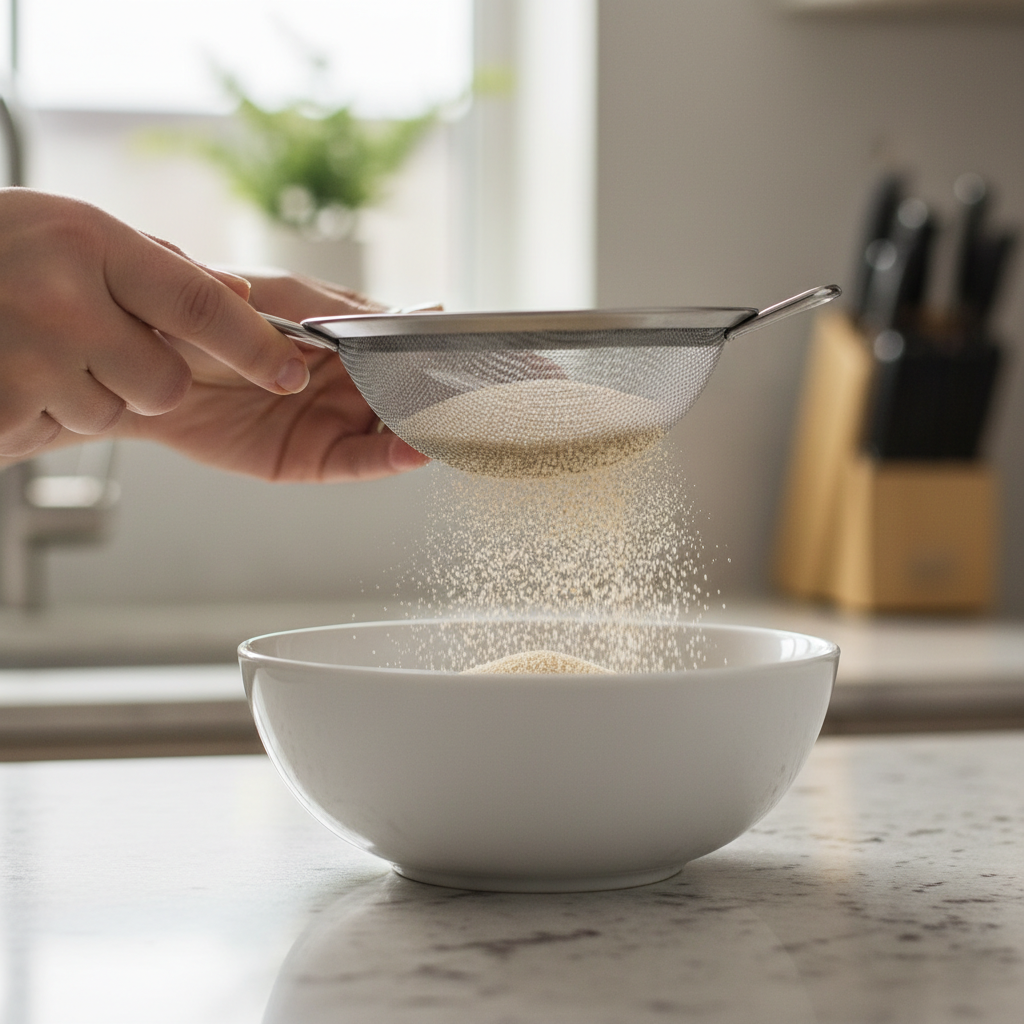
- Sift it: use a fine mesh kitchen sieve, shake gently, discard the powder that falls through first.
- Decant the bag: pour slowly into a bin and stop before the last “dusty” layer at the bottom, that bottom layer is often the worst.
- Don’t rinse unless you know the sand: some sands turn into sludge or leave residue when wet, and drying takes time and can introduce mold risk if rushed.
- Use less at a time: a thinner layer reduces the amount that can aerosolize during digging.
If your hamster shows any respiratory irritation, it’s usually smarter to replace the product rather than trying to “work through it.”
Sand options at a glance: dust risk vs. usability
This table won’t pick a brand for you, but it can help you choose categories that tend to behave better in a typical American home setup.
| Option type | Typical dust level | Best for | Watch-outs |
|---|---|---|---|
| Hamster bathing sand (gritty) | Low to medium | Most owners who want simple setup | Some batches still run fine, check texture |
| Chinchilla sand (not dust) | Medium | Hamsters that love rolling, owners who can sift | Label confusion, avoid “dust” versions |
| Reptile sand (additive-free) | Low to medium | People prioritizing consistent grain | Confirm no calcium/dyes, check ingestion risk with your vet if unsure |
| Chinchilla dust | High | Not recommended in many hamster setups | Can irritate eyes/airways |
When to stop troubleshooting and talk to a vet
It’s tempting to assume every sneeze is sand, but hamsters can also get respiratory infections, allergies, or irritation from bedding and ammonia buildup.
- Frequent sneezing that persists after you change sand and clean the enclosure.
- Wet nose, discharge, crusting, or audible clicking sounds.
- Reduced appetite or lower activity.
- Eye irritation that does not resolve quickly.
According to the American Animal Hospital Association (AAHA), changes in breathing, appetite, and behavior are common reasons to seek veterinary guidance, since small pets can hide illness until it progresses. If you’re unsure, a quick call to an exotics-capable clinic often clarifies next steps.
Key takeaways + practical next steps
If you want a cleaner bath without turning hamster care into a daily project, focus on two levers: grain quality and containment. Most “dusty sand bath” issues improve when you switch away from powdery products and use a higher-sided container with a lighter fill.
- Pick sand that feels gritty, avoid anything labeled “dust” or scented.
- Sift new sand if you notice a haze, especially from the bottom of the bag.
- Spot-clean often, refresh weekly, fully replace when odor or dampness shows up.
Tonight’s simple action: move the bath away from airflow and the wheel, then scoop out the finest powder layer. If the room still gets a dust film in a day or two, it’s probably time to change the sand type.
FAQ
Why does my hamster’s sand bath look clean but still makes dust?
Many sands look “clean” because they are light-colored, but the finest particles can still float and settle as a film. Sifting and switching to a slightly coarser sand usually helps more than cleaning the container alone.
Is chinchilla dust safe for hamsters?
In many setups it’s risky because the particles are extremely fine, and hamsters are small with sensitive airways. If you already used it and notice sneezing, it’s wise to stop and consider a lower-dust sand, and consult a vet if signs persist.
How deep should hamster bathing sand be?
For a typical roll-and-groom bath, around 1–2 inches often works well. Deeper sand encourages digging and flinging, which can increase the mess and make dust more noticeable.
My hamster pees in the sand bath, should I remove it?
Not necessarily, some hamsters treat it like a litter box. Keep it if you can spot-scoop daily and refresh regularly, but if it stays damp or starts smelling, a second “toilet” tray sometimes redirects the behavior.
Can I bake or sterilize sand to make it cleaner?
Some owners do, but it can be tricky: overheating may change the sand texture, and it won’t solve a fine-particle problem. For hygiene, targeted replacement and keeping the bath dry tend to be more reliable.
What’s the difference between sand and dust for small pets?
Sand is granular and falls quickly, dust is powdery and stays airborne. If you see a cloud when your hamster moves, you’re dealing with dust, not normal tracking.
How can I keep sand from getting all over the cage?
Use a high-sided container, keep the fill level modest, and add a small platform or textured “step” outside the bath. Also check that the bath isn’t directly under a strong top vent where particles can lift and travel.
Could the problem be bedding, not the sand bath?
Yes, some beddings are dusty, and ammonia buildup from wet spots can irritate breathing too. If changing the sand doesn’t help, reassess bedding quality and your spot-clean routine, and consider a vet visit if symptoms continue.