
Hamster cage accessories set shopping sounds easy until you realize how many “cute” add-ons are either a waste of space, hard to clean, or just not great for your hamster’s safety.
If you’re trying to build a complete setup, the goal is simple, give your hamster a place to run, hide, forage, chew, and nest without turning the cage into a cluttered mess. The best sets don’t just bundle items, they cover daily needs in a way that fits your cage size and your hamster’s species.
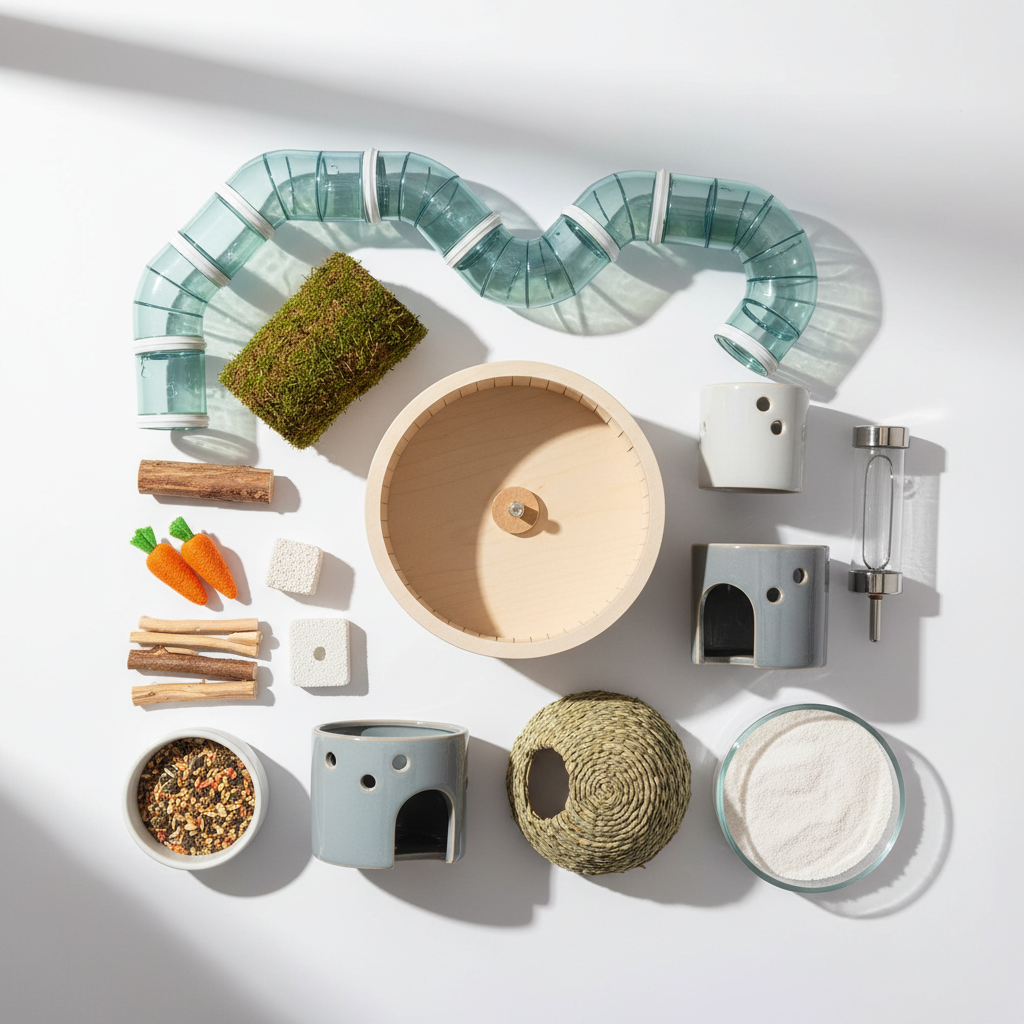
This guide walks through what a “complete set” should include, how to tell if a bundle fits your cage and hamster, and practical setup tips that make day-to-day care easier, not harder.
What a “Complete” Accessories Set Should Cover (Not Just Include)
A bundle can look complete and still miss the essentials. I like to think in zones, movement, shelter, enrichment, and maintenance. If a set supports all four, you’re usually in good shape.
- Movement: a safe wheel and/or enough open floor space to run and explore
- Shelter: at least one hide house, plus nesting options
- Enrichment: chew items, tunnels, and foraging toys that encourage natural behavior
- Maintenance: food bowl, water setup, and accessories that don’t trap odor or moisture
According to the ASPCA, small mammals need appropriate housing and enrichment to support normal activity and reduce stress, which is why “more items” is less important than “right items in the right layout.”
Why Hamster Accessory Bundles Go Wrong (Common Real-World Reasons)
Most disappointment comes from mismatch, not bad intentions. The packaging shows a tidy little cage scene, but your cage, your hamster, and your cleaning routine are different.
- Wheel problems: wheels included in sets are often too small or have unsafe rungs, both can be an issue depending on species and build.
- Materials that don’t age well: soft plastics scratch, hold odor, and become hard to sanitize, some wood items soak urine and warp.
- “Cute but useless” clutter: tiny ladders, decorative fences, or miniature furniture eat floor space without improving welfare.
- Not designed for deep bedding: many hamsters do best with deeper substrate for burrowing, but some sets assume shallow bedding trays.
One more thing people don’t expect, the more surfaces and corners you add, the more spot-cleaning turns into a daily scavenger hunt.
Quick Self-Check: Is This Set Right for Your Hamster and Cage?
Before buying, do a quick fit check. This takes two minutes and saves a lot of returns and “why is my hamster ignoring everything” frustration.
1) Your hamster type
- Syrian: needs bigger hides, wider tunnels, and typically a larger wheel than dwarf species.
- Dwarf (Campbell’s/Winter White/Roborovski): can use smaller hides, but still benefits from roomy tunnels and open running space.
2) Your cage constraints
- Do you have space for a wheel without blocking the main travel path?
- Can you keep at least one corner open for a sand bath or litter spot?
- Will the set still work if you use deeper bedding (burrowing-friendly setups)?
3) Your cleaning tolerance
- If you hate taking things apart, avoid sets with lots of multi-piece tunnels and tiny accessories.
- If odor bothers you, prioritize smoother, washable materials and fewer “absorbing” parts.
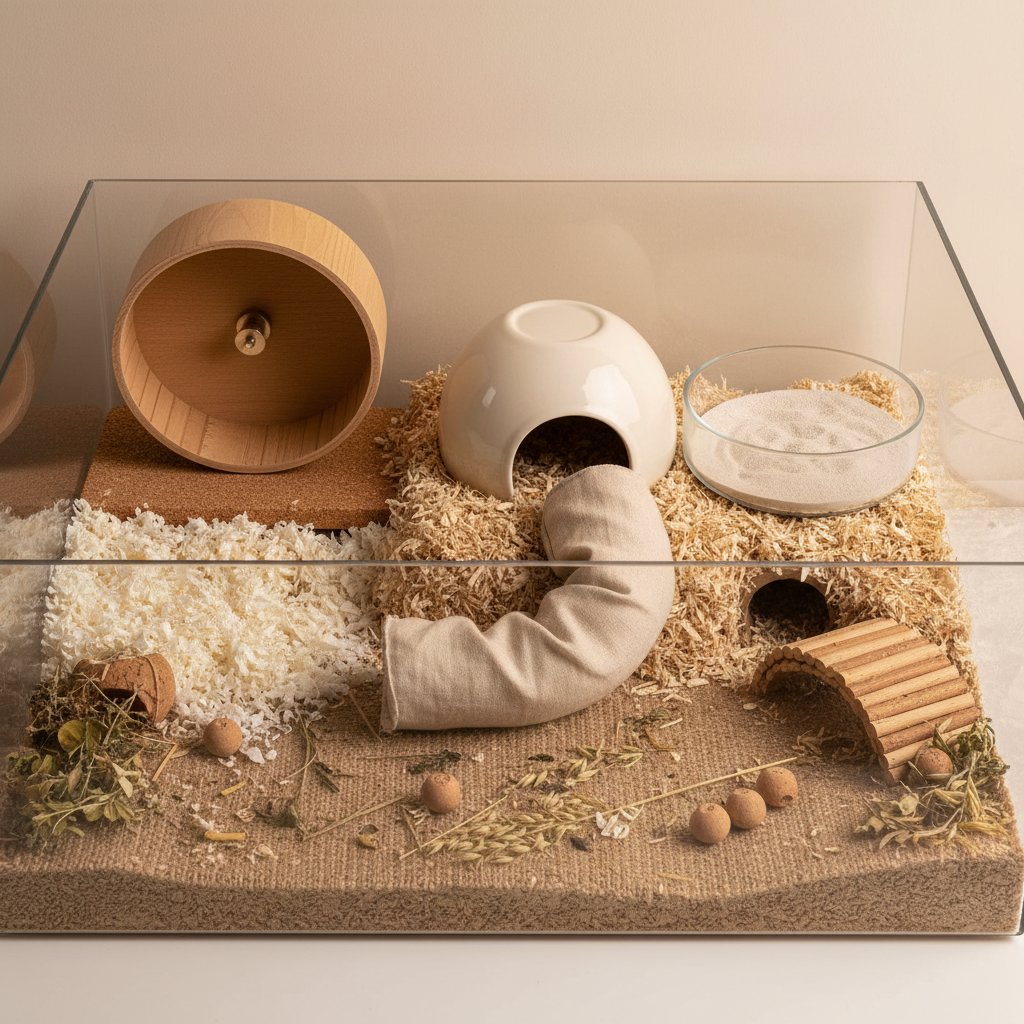
Core Pieces Most “Hamster Cage Accessories Set” Bundles Should Include
Not every set needs every item, but if you want a true baseline, these are the pieces that usually earn their space.
- Solid running wheel: stable, quiet enough for your home, and sized to your hamster to avoid awkward back arching.
- Hideout (at least one): a simple enclosed house with one entrance is fine, two entrances can reduce “cornered” stress in some setups.
- Tunnel(s): useful for exploration and for connecting zones, better if they can be partially buried.
- Chew items: safe chew wood or chew toys to support natural gnawing behavior.
- Food dish + water option: many owners use a bottle, some prefer a bowl, either way, pick what you can keep clean and stable.
- Foraging enrichment: a simple treat ball, scatter-feeding tools, or a dig box insert.
Key point: if a set skips a good wheel or a proper hide, it’s not really a complete solution, it’s décor.
Compare Common Set Types (Table)
Sets tend to fall into a few patterns. This quick table helps you pick based on how you actually keep your cage.
| Set type | Usually includes | Good for | Watch-outs |
|---|---|---|---|
| Starter bundle | Small wheel, bowl, bottle, 1 hide | Temporary setups, budgeting | Wheel sizing often off, enrichment thin |
| Enrichment-focused set | Tunnels, chews, foraging toys, 1–2 hides | Upgrading an existing cage | May still require buying a wheel separately |
| Natural-wood style set | Wood hides/bridges, chews, platforms | Natural look, burrow-friendly layouts | Absorbs moisture, can be harder to sanitize |
| Plastic “theme” set | Bright tunnels, small huts, accessories | Easy wipe-down, kid-friendly look | Scratches hold odor, ventilation can be poor in enclosed parts |
Setup Steps: How to Arrange a Complete Accessories Set Without Overcrowding
Even a well-chosen hamster cage accessories set can feel chaotic if you place everything at once. A calmer approach is to build the cage like a floor plan, not a toy box.
- Start with bedding depth and one “quiet corner”: place the main hide on the deeper bedding side so your hamster can nest and burrow nearby.
- Anchor the wheel on a stable surface: keep it level, avoid wobble, and leave clearance behind it for safe movement.
- Create one travel corridor: hamsters like predictable paths, don’t block every route with bridges and stairs.
- Add tunnels with intention: one main tunnel between hide and wheel area works better than five random pieces.
- Keep feeding predictable: food dish and water go in a spot you can reach fast for refills and checks.
- Introduce enrichment gradually: rotate chews and foraging toys weekly so the cage stays interesting without constant rearranging.
If your hamster starts “bar climbing” or constantly trying to escape, it can be a sign of stress, boredom, or a setup that doesn’t match space needs. It’s not always the accessories, but the layout often plays a role.
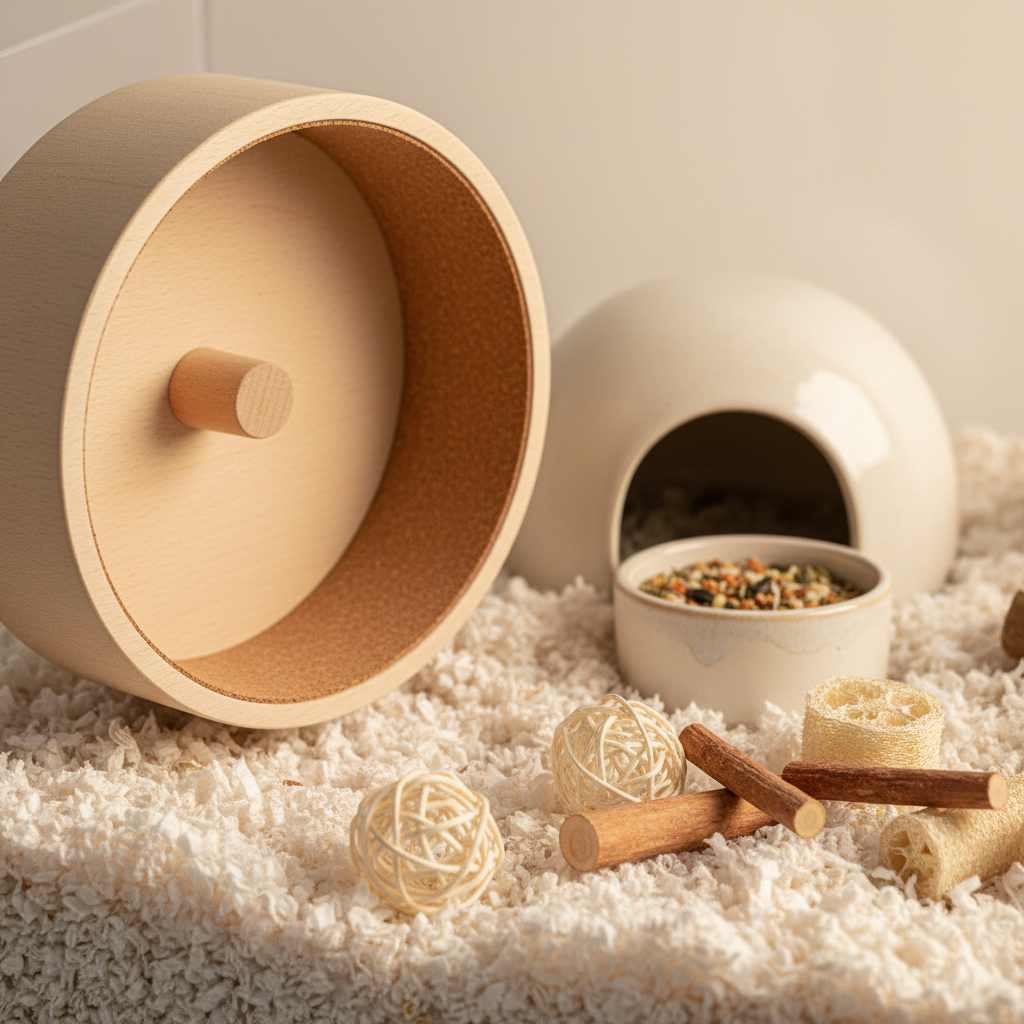
Safety and Material Notes (What to Skip or Replace)
Some accessories are popular because they photograph well, not because they hold up in real cages. When in doubt, choose items that are easy to clean, hard to tip, and hard to swallow.
- Avoid sharp wire floors and steep ladders: foot injuries are a common concern in small pets, and safer, flatter surfaces are usually easier on paws.
- Be cautious with fluffy nesting material: stringy fibers can tangle around limbs, many owners prefer plain paper-based nesting options. If you’re unsure, ask a vet who sees small mammals.
- Watch tiny parts: decorative pieces that can be chewed into fragments may become a choking or blockage risk.
- Check paint and coatings: if a wood item has heavy paint or an unknown finish, consider swapping it for untreated, pet-safe materials.
According to the American Veterinary Medical Association (AVMA), choosing appropriate husbandry and monitoring for signs of illness or injury are key parts of small animal care, which includes making sure habitat items don’t create avoidable hazards.
When a “Set” Isn’t Enough: Signs You Should Add or Upgrade
Sometimes the set is fine, but your hamster’s behavior tells you what’s missing. These are practical clues many owners notice.
- Chewing bars or obsessively chewing plastic: may point to boredom, stress, or not enough appropriate chew options.
- Wheel avoidance: can happen when the wheel is too small, unstable, or placed in a cramped spot.
- Always sleeping in the open: may suggest the hide is too small, too exposed, or too hot.
- Messy wet corner spreading: might mean you need a better spot for a litter tray, a sand bath, or just fewer absorbent items.
If you see limping, persistent diarrhea, labored breathing, sudden weight loss, or ongoing lack of appetite, it’s smarter to consult an exotics vet. Cage tweaks help comfort, but health issues can look like “behavior” at first.
Key Takeaways (So You Can Buy With Confidence)
- A complete bundle should cover movement, shelter, enrichment, and maintenance, not just look full.
- Wheel quality and sizing matter more than most “bonus” accessories.
- Layout beats quantity, one good tunnel route and a calm hide zone often work better than clutter.
- Choose materials you can realistically clean, your routine is part of your hamster’s wellbeing.
Picking a hamster cage accessories set gets easier when you treat it like building a simple habitat system, not collecting tiny objects. Start with the essentials, set up clean zones, then add enrichment in rotation so your hamster stays curious without you constantly rebuilding the cage.
If you want an easy next step, measure your cage footprint, identify your hamster species, then shortlist sets where the wheel and hide look genuinely usable, everything else is a bonus.
FAQ
What should be included in a hamster cage accessories set for beginners?
A beginner-friendly set usually works best when it includes a safe wheel, a simple hideout, a chew item, and stable feeding and watering pieces. If the set is heavy on décor and light on function, you’ll end up replacing most of it.
Are hamster accessory sets safe for Syrian hamsters?
Some are, many aren’t, mainly because Syrians need roomier accessories. If the tunnels and hides look “tiny,” assume they’re aimed at dwarf hamsters and double-check sizing before buying.
Is a water bottle better than a water bowl in an accessories set?
Either can work. Bottles reduce spills but can clog or drip, bowls are more natural for some hamsters but can tip or get bedding kicked in. Pick the option you’ll check and clean consistently.
How many accessories is too many in a hamster cage?
If your hamster can’t move smoothly between the wheel, hide, and feeding area, it’s probably too crowded. A cage can look “fun” to us while feeling like an obstacle course to them.
Do I need a sand bath if my set doesn’t include one?
Many dwarf hamsters use sand for coat care, and lots of owners find it helps with keeping a “bathroom corner” contained. Sand choice matters, though, so avoid dusty products and consider asking a small-mammal vet what’s appropriate.
What’s the fastest way to improve a cheap accessories set?
Upgrade the wheel if needed, add one good hide, and swap in a couple of higher-quality chews or foraging options. Those changes usually improve daily life more than adding extra tunnels.
How do I know if my hamster dislikes an accessory?
Ignoring something for a day is normal, but repeated avoidance, frantic climbing, or stress behaviors after a layout change can be a hint. Try removing one item at a time and simplify the cage before adding new pieces.
If you’re trying to choose a hamster cage accessories set and want a more “done-for-you” approach, make a short list of your must-haves (wheel, hide, easy cleaning) and compare sets against that list, it’s the quickest way to avoid buying a bundle that looks complete but functions like clutter.