
Choosing a Stable Indoor Cat Tree for Large Cats
Finding an indoor cat tree for large cats usually comes down to one thing: stability under real, slightly chaotic use, not “looks sturdy” in a product photo. Big cats jump harder, land heavier, and use posts like leverage bars, so a tree that feels fine for a 9-pound cat can start rocking with a 16–20 pounder.
If you’re shopping right now, you’re probably balancing three annoyances at once: limited floor space, a cat that wants height, and a budget that doesn’t love “solid wood furniture” prices. This guide keeps it practical, what to look for, how to sanity-check specs, and how to set it up so it stays quiet and steady.
I’ll also point out a common trap: buying for “maximum height” first. For most heavy cats, the best purchase is the tree that feels planted and climbable, even if it’s a little shorter on paper.
Why big cats topple flimsy cat trees (and why it’s not your cat’s fault)
A stable tree is a basic physics problem. When a larger cat jumps, the force increases, and any flex in the base, joints, or posts turns into wobble. Wobble becomes avoidance, and then your cat ignores the expensive tower and returns to the couch arm.
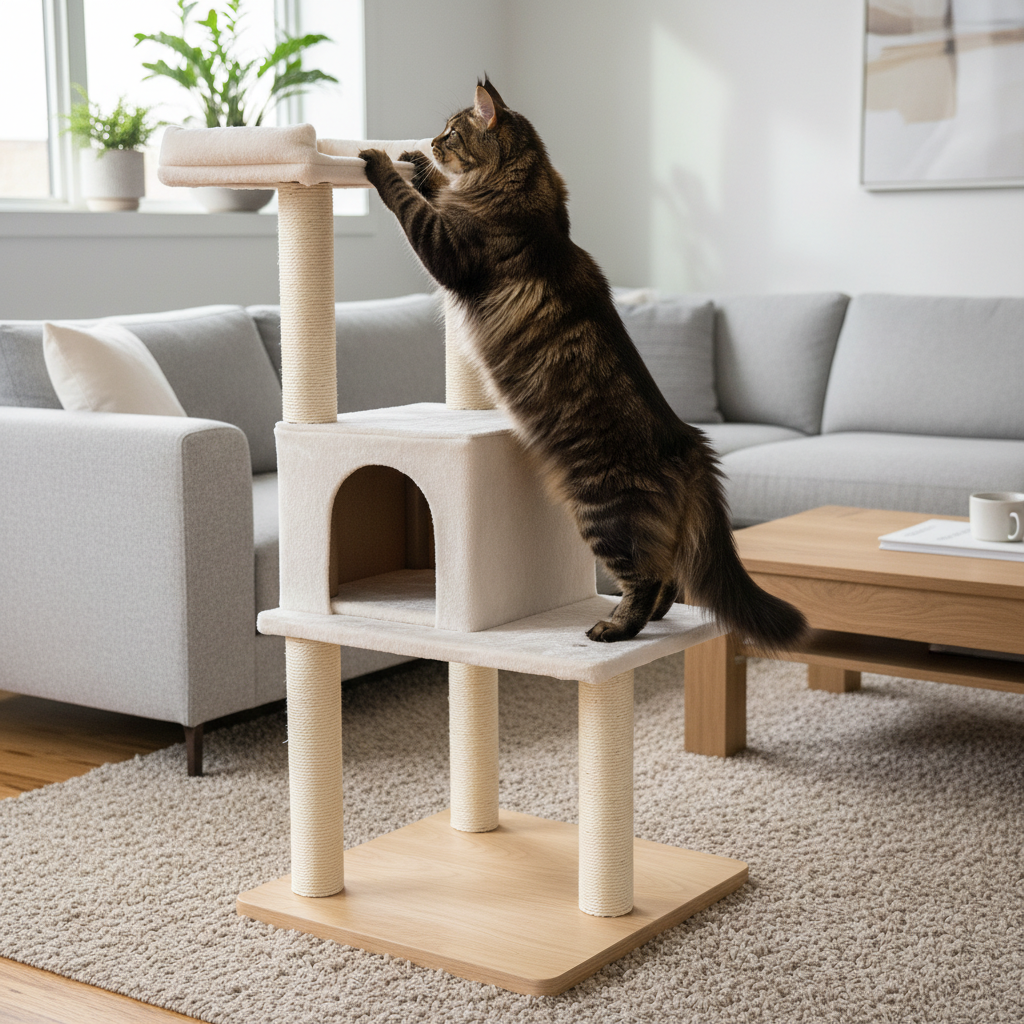
In the real world, these are the most common stability killers:
- Narrow base + tall height: a high center of gravity makes tipping easier, especially when the cat launches sideways.
- Thin posts: slimmer posts twist, even when the base looks decent.
- Lightweight particle board: it can work, but many units loosen over time if hardware isn’t reinforced.
- Single “main trunk” design: one vertical spine with platforms attached often wobbles more than multi-post frames.
- Bad placement: plush carpet, uneven floors, or leaving a gap from the wall can amplify movement.
According to the American Veterinary Medical Association (AVMA), environmental enrichment matters for indoor cats, and climbing/perching is a common component. Stability is part of safety and usability, not a luxury feature.
Quick self-check: what “stable enough” means for your cat and your home
Before you compare models, it helps to classify your situation. A 14-pound long-bodied cat that climbs slowly needs something different than a 19-pound jumper who treats platforms like parkour.
Use this checklist and keep score honestly:
- Cat weight and build: over ~15 lb, long torso, or heavy shoulders usually needs thicker posts and larger platforms.
- Behavior: sprint-and-leap cats need a wider footprint than “careful climbers.”
- Floor type: thick carpet increases wobble; hard floors need anti-slip pads to prevent sliding.
- Available anchor points: can the tree sit against a wall, corner, or near a stud for optional anchoring?
- Vertical goal: is your cat seeking a window perch at 3–4 ft, or ceiling-adjacent height?
If you check three or more “high demand” items above, prioritize base width and frame rigidity over extra condos and toys.
What to look for in a stable build (without getting tricked by marketing)
Product pages love phrases like “heavy-duty” and “extra stable,” but a stable tree for bigger cats usually shows it in the hardware and geometry. Here’s what tends to translate into less wobble.
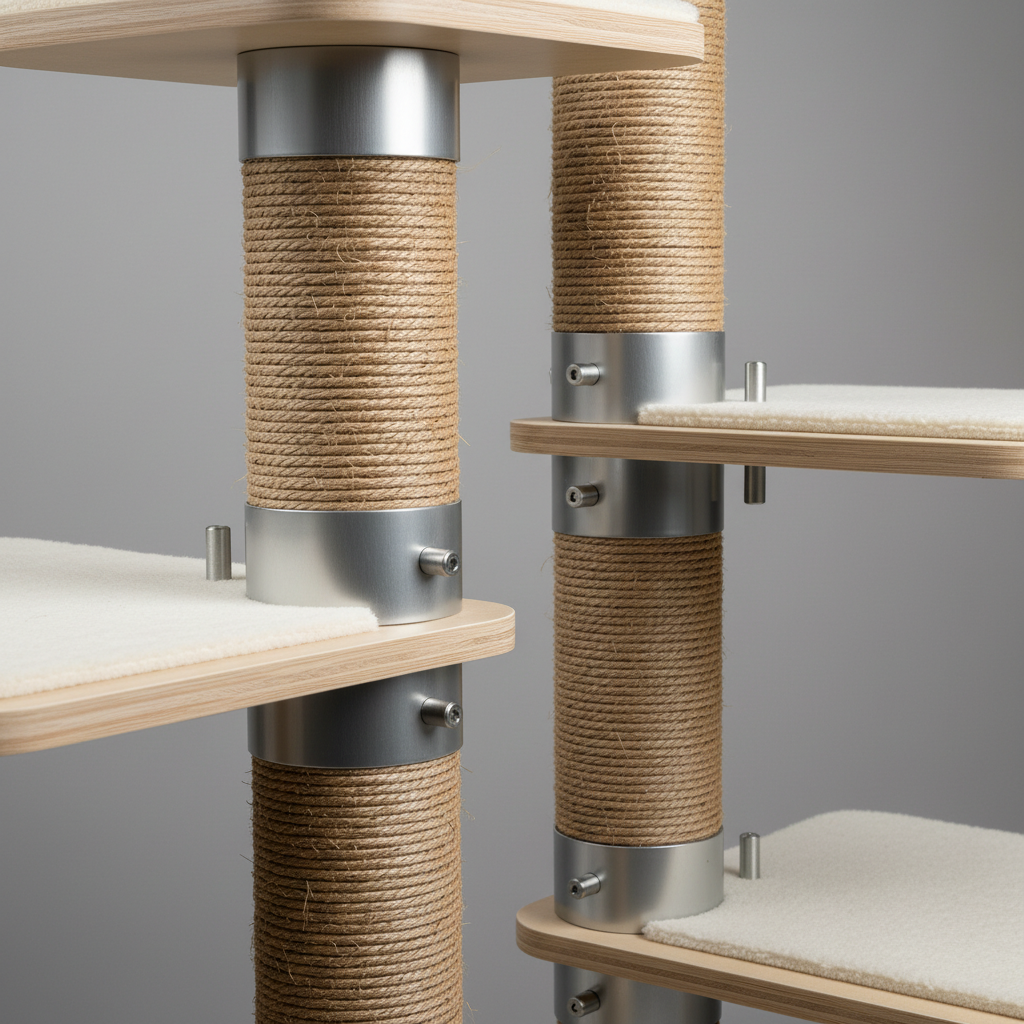
Stability features that usually matter most
- Wide, heavy base: look for a footprint that feels generous relative to height.
- Thicker posts: bigger diameter posts tend to flex less and feel more “tree-like” under load.
- Multiple support points: designs with two or more posts supporting key platforms reduce twisting.
- Reinforced joints: metal brackets, large washers, and well-machined inserts usually outlast tiny wood screws.
- Appropriate platform size: if your cat can’t turn around comfortably, they’ll jump off awkwardly, which increases tipping forces.
Quiet signal to watch for: if the product photos avoid showing the base or only show it on a rug, be a little skeptical and read assembly reviews.
Pick the right layout: tower, wall-adjacent, corner, or modular
The “best” layout often depends on how you plan to use the wall. Many households get the most stability by letting the tree share load with a wall or corner, even without drilling anything.
Common layouts and who they suit
- Wall-adjacent tower: good for big cats if the base is wide and the back can sit close to a wall, wobble drops fast.
- Corner tree: often the easiest way to get height without feeling tippy, corners naturally limit sway.
- Low-and-wide “condo” style: underrated for heavy cats that want security, great for multi-cat homes where crowding happens.
- Modular + wall shelves: best when you want height but don’t trust one tall freestanding piece, requires planning and (often) drilling.
According to the American Association of Feline Practitioners (AAFP), cats benefit from vertical space and predictable resting areas. If your big cat avoids the top, the issue is often access and confidence, not “lack of interest.”
A practical comparison table you can use while shopping
Use this as a filter, not as a rigid rulebook. Different brands describe specs differently, and some sturdy trees simply weigh more than you expect to carry upstairs.
| Feature | Why it matters for large cats | What to aim for | Red flags |
|---|---|---|---|
| Base footprint | Controls tipping and side sway | Wider relative to height, corner/wall placement friendly | Very narrow base on tall tower |
| Post thickness | Reduces flex when pulling/scratching | Thick posts on main load paths | Thin posts supporting big platforms |
| Hardware & joints | Loosening creates wobble and noise | Reinforced brackets, solid inserts, included washers | Small screws directly into board |
| Platform size | Comfort affects how cats jump on/off | Roomy perches, larger beds/hammocks rated for heavier cats | Tiny top perch for a big body |
| Overall weight | Heavier units tend to feel planted | Heavier than typical “apartment cat tree” | Very light tower marketed as “extra tall” |
Set it up to stay stable: small tweaks that make a big difference
Even a good indoor cat tree for large cats can feel shaky if it’s assembled loosely or placed on the wrong surface. The goal is “no surprise movement” when your cat commits to a jump.
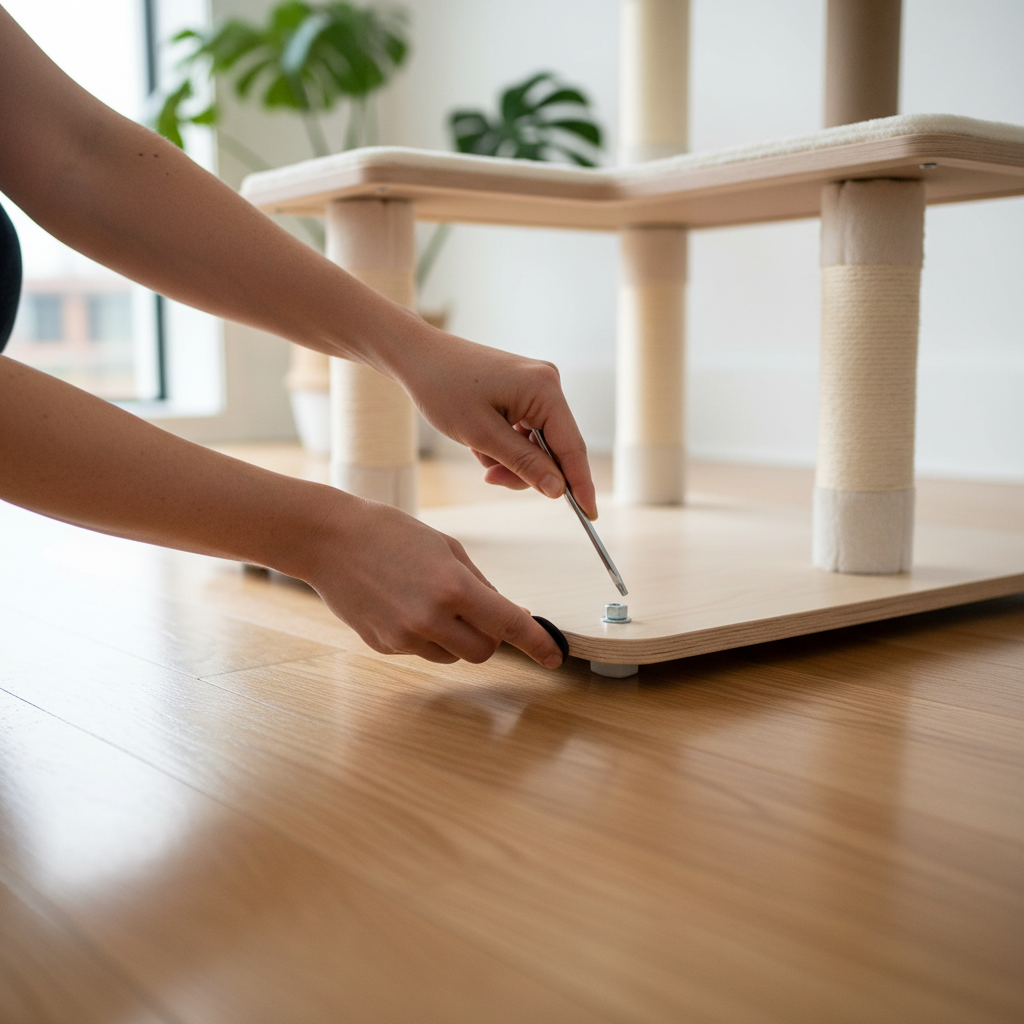
Assembly and placement steps that usually help
- Re-tighten after 24–48 hours: many trees “settle” once weight is on them, a second tighten reduces future wobble.
- Put the heaviest side toward the wall: align the tallest section so any sway hits the wall direction, not open space.
- Use anti-slip pads: especially on hardwood or tile to stop sliding, which feels unstable even if it won’t tip.
- Stabilize on carpet: a firm board or furniture mat under the base can reduce the sponge effect.
- Keep jump spacing reasonable: if the first step is too high, big cats launch harder and shake the unit more.
Quick stability test: with one hand on the top perch, apply a gentle side push. Minor movement is normal, but if the base lifts or the whole tower “walks,” it’s not ready for a heavy jumper.
Safety notes and common mistakes people keep repeating
Most issues show up as small warnings first: squeaks, loosening joints, frayed fabric around a load-bearing seam, or a cat that hesitates mid-climb. Treat those like maintenance prompts, not background noise.
- Don’t over-trust suction cup toys attached to posts, they can encourage hard sideways yanks.
- Avoid placing beside fragile shelves, if a tree shifts, the landing area matters.
- Watch hammock ratings, some hangers stretch over time; if the fabric sags, the jump off becomes awkward.
- Skip “one giant leap” layouts, multiple smaller steps are easier on joints for many cats, especially older or heavier ones.
If your cat has arthritis signs, recent injury, or chronic pain concerns, it’s safer to choose lower climbs and wider steps, and it may help to ask a veterinarian what heights and surfaces are appropriate.
Key takeaways (so you don’t overthink it)
- Stability beats height for most big cats, confidence matters more than an extra foot of elevation.
- Look for wide base, thick posts, and multi-post support under main platforms.
- Plan placement near a wall or corner, and re-tighten hardware after the first day or two.
- If your cat jumps aggressively, choose a layout with shorter gaps between levels.
Conclusion: choose the tree your cat will actually use
A stable indoor cat tree for large cats isn’t about buying the most expensive model, it’s about buying the one that matches how your cat moves and how your room supports it. When the base feels planted, platforms feel spacious, and the path up looks easy, big cats tend to commit quickly and use it daily.
If you want one action step today, measure the spot where the tree will live, then shop backward from base footprint and platform size, height comes after. Your cat will tell you the rest.
FAQ
What size cat tree is best for a 15–20 lb cat?
Many cats in that range do better with a wider footprint and larger perches than “extra tall” towers. Look for thick posts and platforms your cat can fully sit and turn on without hanging off the edge.
How do I stop a cat tree from wobbling on carpet?
Carpet can act like a cushion that amplifies sway. A firm board or low-pile mat under the base often helps, and re-tightening bolts after a day of use usually reduces movement too.
Is it safe to anchor a cat tree to the wall?
In many homes, anchoring can improve stability, but it depends on wall type and whether you can hit studs. If you’re unsure, a handyman or someone comfortable with wall anchors can help you avoid weak drywall-only installs.
Do heavier cat trees always mean more stable?
Often, but not always. Weight helps, yet geometry matters just as much. A heavy but very tall, narrow tower can still feel tippy compared with a slightly lighter unit with a wider base and better support points.
What if my big cat won’t use the top perch?
It’s commonly an access issue. If the jump up is awkward or the perch feels small, cats hesitate. Adding intermediate steps, moving the tree closer to a wall, or choosing a wider top platform can change usage quickly.
Are hammocks okay for large cats?
They can be, but check the construction and how the hammock attaches. If the fabric stretches or the frame flexes, big cats may bail mid-settle. A flat perch sometimes works better for heavier bodies.
How often should I re-tighten and inspect a cat tree?
A quick check every few weeks is reasonable in many households, and sooner if you hear new squeaks or notice wobble. High-use scratch posts and joints deserve the most attention.
If you’re trying to pick a stable setup but product specs feel vague, it can help to list your cat’s weight, jump style, and the exact floor type, then compare a few models side by side with the table above, it’s a faster path than guessing from photos.