
sugar glider cage toys should do three jobs at once: encourage climbing, offer safe chewing and grabbing textures, and keep your gliders busy when you are not right there entertaining them.
If you have ever watched a sugar glider pace the same route, bark at night, or ignore yet another “cute” toy, you already know the frustrating part, not every toy works in a glider cage, and some “small pet” items are straight-up risky in practice.
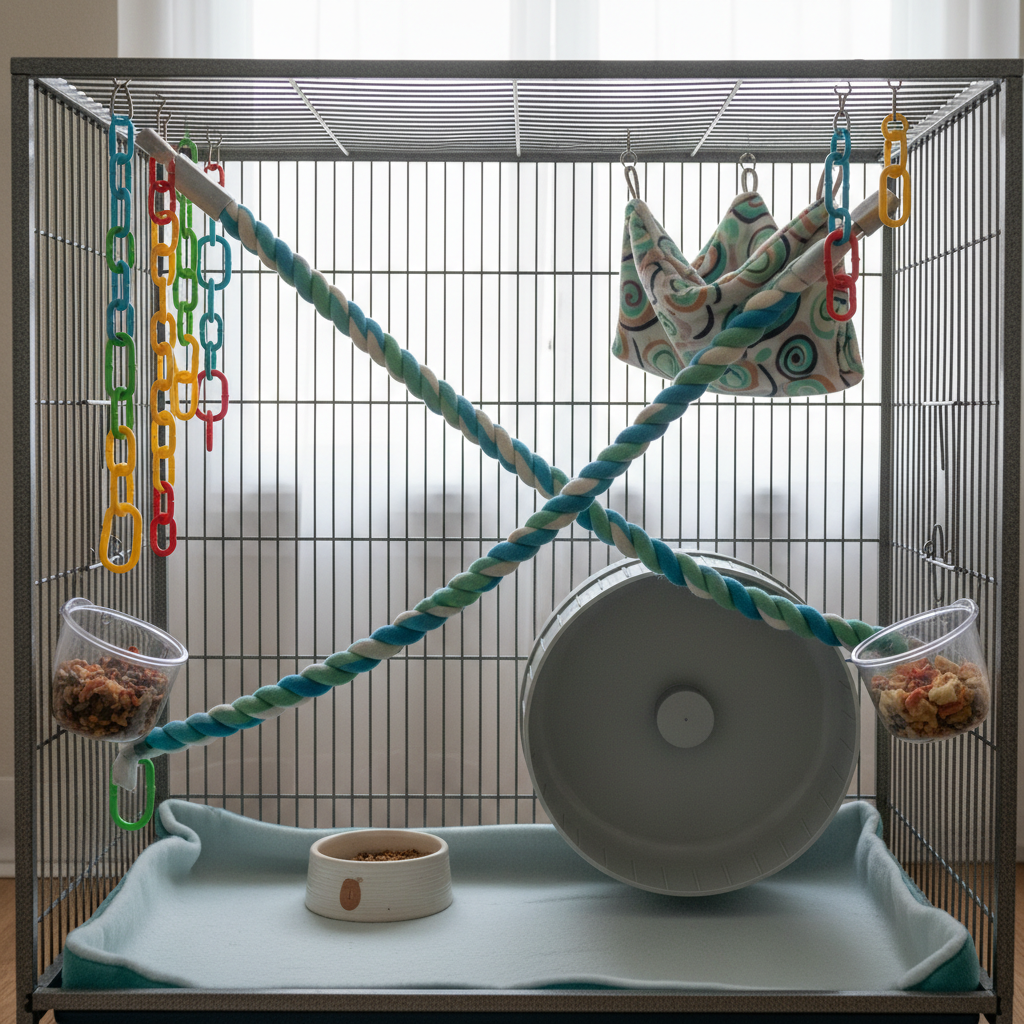
This guide focuses on what tends to matter most for U.S. owners: safe materials, smart variety, and a rotation plan that keeps play interesting without turning your cage into a cluttered hazard. You will also get a quick checklist, a comparison table, and a simple “build-your-layout” approach.
What sugar gliders need from cage toys (it is not just “stuff to climb”)
Sugar gliders are arboreal, social, and busy at night, so toys work best when they match natural behaviors: climbing, leaping, foraging, and problem-solving. A toy that only dangles can be fine, but a setup that supports routes and choices tends to keep them engaged longer.
- Climbing pathways: multiple routes across the cage, not one “main rope” everyone fights over.
- Grip-friendly textures: fleece, safe plastic links, and natural-feeling surfaces that are not abrasive.
- Foraging opportunities: tiny challenges that make treats or meal components “earned.”
- Rest-to-play flow: toys placed so gliders can leave a pouch, climb, play, and return without awkward jumps.
According to the American Veterinary Medical Association (AVMA), environmental enrichment supports animal welfare by improving mental and physical stimulation. For sugar gliders, enrichment also reduces the chance you mistake boredom behaviors for “attitude.”
Common reasons toys get ignored (or cause problems)
When people say “my glider won’t play,” a few patterns show up repeatedly. Fixing these usually changes the outcome more than buying another random toy.
The cage is either too empty or too crowded
Too empty means there is no route to explore, too crowded means movement becomes awkward and stressful. Gliders do best when you can see clear lanes for climbing and gliding between points.
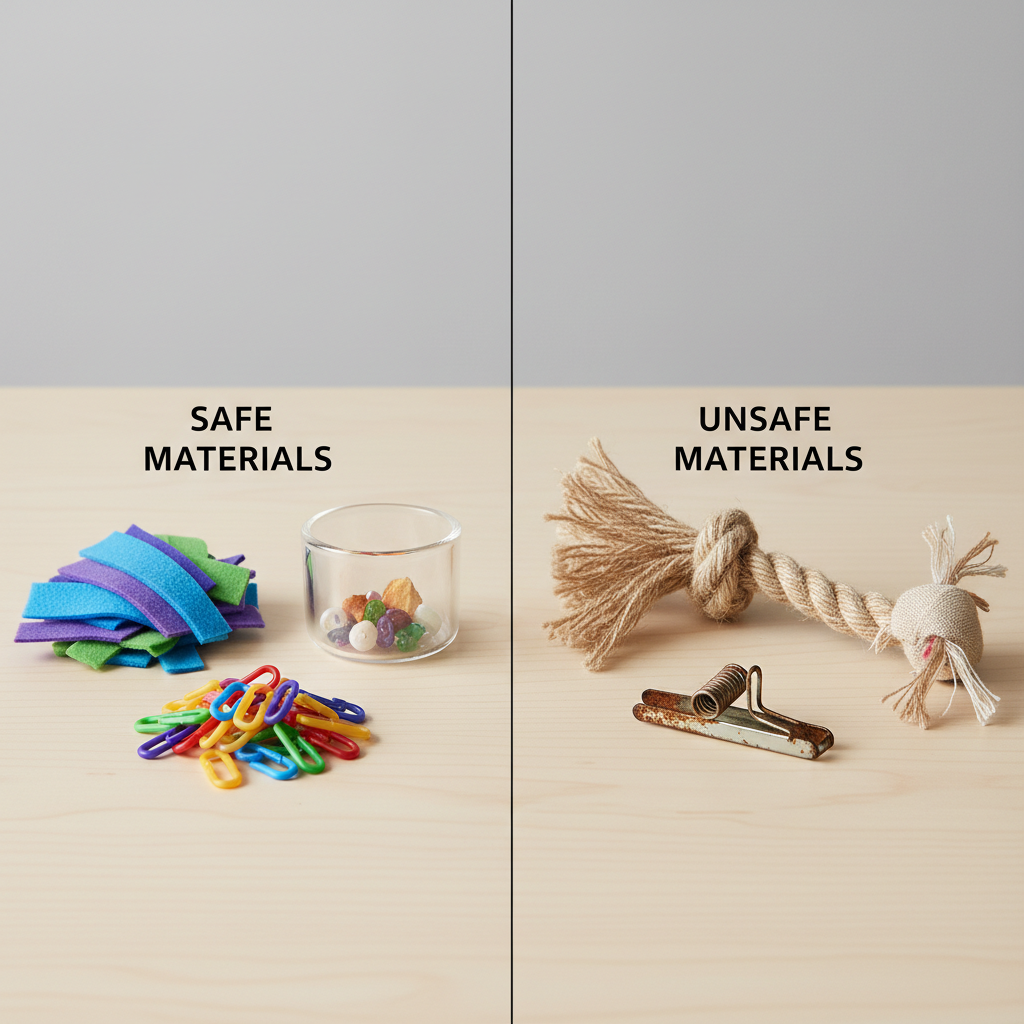
Materials feel wrong to them
Hard, slick items can be ignored because they are not satisfying to grab. On the other side, rough rope, frayed fabric, or exposed stitching can snag nails. Many “bird” and “small animal” toys were not designed with glider nails and thin skin in mind.
Toys are placed where gliders do not want to be
Gliders often prefer higher zones for active play and mid zones for travel. If everything fun sits low, it can go untouched, especially in a tall cage.
They are stressed or under-stimulated outside the cage
Sometimes toy “disinterest” is actually a bigger picture issue: not enough safe out-of-cage time, changes in routine, or social needs. If you suspect health or behavioral concerns, it is reasonable to check with an exotic veterinarian, since appetite and activity shifts can overlap with medical issues.
Quick self-check: what kind of toy setup do you have right now?
Use this to diagnose your current situation in two minutes, and decide what to change first.
- Route test: can a glider travel from pouch to food to wheel without big leaps or dead ends?
- Height balance: do you have at least two active play items in the upper half of the cage?
- Snag check: any loose threads, frayed rope, or split rings that could catch nails?
- Hardware check: any open S-hooks, sharp edges, or small gaps that could pinch?
- Rotation reality: have the same toys hung in the same spots for more than 2–3 weeks?
- Cleaning practicality: can you wash or wipe most items weekly without destroying them?
If you answered “no” on route/height, start there. If you answered “yes” but toys still get ignored, focus on rotation and adding foraging.
Best types of sugar glider cage toys (and what each is good for)
Think in categories rather than individual products, because a balanced mix tends to work better than five toys of the same style.
| Toy type | What it supports | What to watch |
|---|---|---|
| Fleece vines, braided fleece ropes | Climbing routes, confident movement | Loose threads, seams, worn spots |
| Plastic chain links (C-links), hanging ladders | Modular pathways, quick re-layout | Cracks, sharp mold edges, small pinch points |
| Foraging cups, treat drawers, puzzle feeders | Mental stimulation, slower eating | Tiny parts, hard-to-clean crevices |
| Safe wheel (glider-appropriate) | High-output exercise, nightly routine | Correct size/design, stable mounting, tail safety |
| Hanging tunnels, bridges, cargo nets | Exploration, multi-route travel | Net size and snag risk, secure attachment |
A note on wheels: designs vary a lot, and safety depends on size, running surface, and the absence of center bars or gaps that can catch tails. If you are unsure whether a wheel is appropriate, ask an exotic vet or a reputable rescue, and do not rely on “fits small pets” labeling.
How to set up a climb-and-play layout (simple steps that usually work)
You do not need a designer cage, you need a layout that gives choices. Here is a practical build that fits many common tall cages.
Step 1: Create a “top loop” travel route
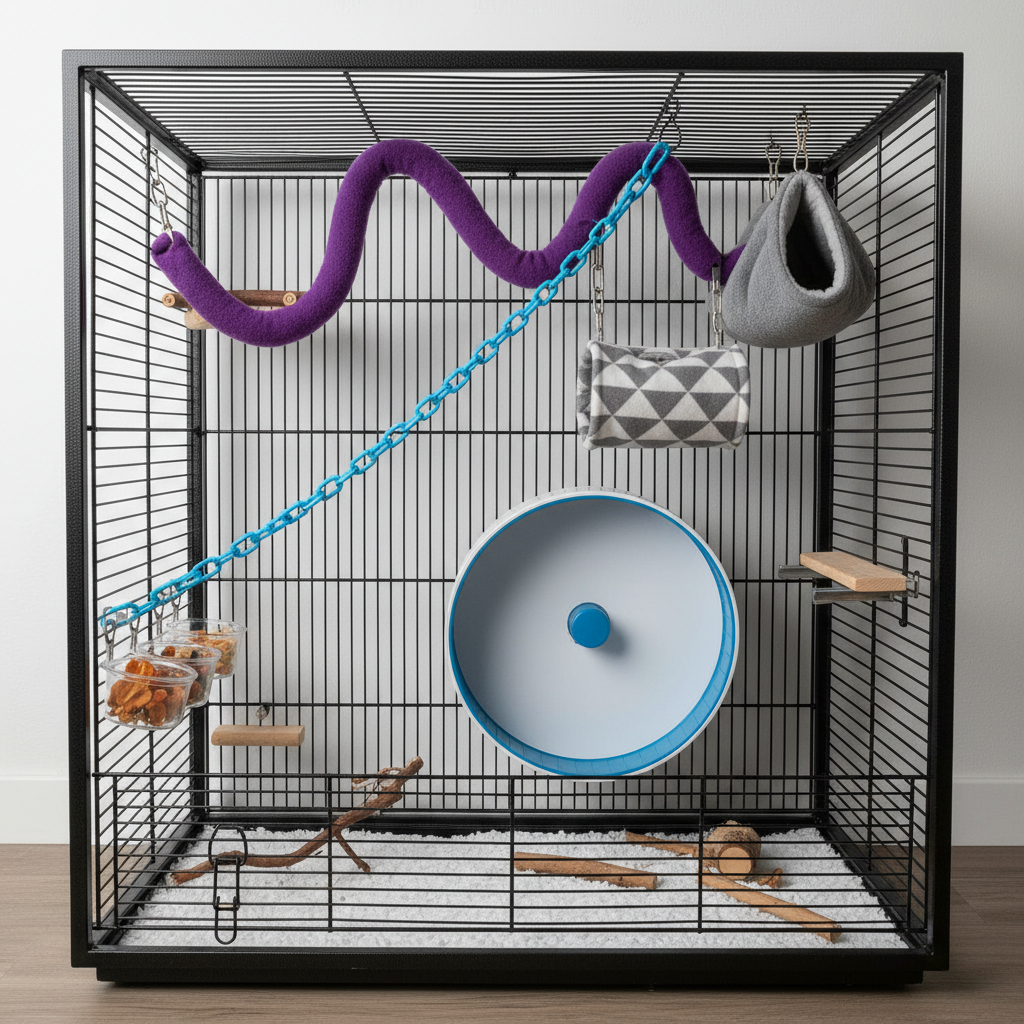
Hang one fleece vine or plastic-link chain across the upper third of the cage, then connect a second route diagonally so there are at least two ways to move. This reduces traffic jams and encourages more movement.
Step 2: Add one active station and one quiet station
- Active station: a small foraging toy or hanging cup near a route intersection.
- Quiet station: a tunnel or soft bridge near the sleeping pouch, so they can peek out, climb, return.
Step 3: Place the wheel where it does not block routes
Many cages end up with the wheel acting like a wall. If possible, mount it so gliders can approach from two sides, and keep a clear landing zone around it.
Step 4: Use rotation, not constant adding
Keep about 30–40% of toys “off cage,” then swap 1–2 items weekly. The cage stays familiar, but novelty returns. This is where sugar glider cage toys start working better without extra spending.
Practical toy ideas you can do this week (low drama, high payoff)
If you want quick wins, these tend to get interaction in many homes, assuming the materials are safe and attachments are secure.
- Foraging strip: hide a few tiny treat bits inside a folded fleece strip clipped in two places, so it becomes a “pocket.”
- Three-point bridge: hang a short fleece bridge with three attachment points to reduce swinging, nervous gliders often prefer stability.
- Textured pathway: alternate plastic links and soft fleece knots along one route to make movement more interesting.
- Two-zone feeding: place a small foraging toy away from the main food dish so they travel.
When you add something new, watch the first two nights. If a glider avoids an area, remove the item and reintroduce later in a different spot, sometimes the placement is the real issue.
Safety notes and common mistakes (where people accidentally create risk)
Safety is the part nobody wants to read until something goes wrong, so here are the real-world trouble spots that show up often.
- Fraying and loose threads: fleece and fabric toys wear out, retire them early rather than “one more week.”
- Open hooks and cheap clips: gaps can snag toes, nails, or fur. Use secure, closed hardware sized for the cage bars.
- Small hard pieces: if it can be chewed off and swallowed, treat it as a potential hazard.
- Too much vertical drop under a toy: gliders can fall, and awkward landings happen, especially with crowded layouts.
- Over-washing without inspecting: cleaning is good, but check seams and attachment points after drying.
According to the U.S. Food & Drug Administration (FDA), consumers should be cautious with products that contain small parts or materials that could be hazardous if ingested, even when marketed for pets. For sugar gliders, it is sensible to apply that caution broadly, because they explore with mouth and hands.
Conclusion: a good toy plan looks more like a system than a shopping list
The best sugar glider cage toys are the ones that fit into a layout: clear travel routes, a few “stations” that reward exploration, and a rotation rhythm you can actually maintain. Start by fixing pathways and snag risks, then add one foraging item, and swap items weekly instead of piling more into the cage.
If you want a simple next step, pick one area to improve tonight: build a top-loop route, or add a stable bridge near the pouch, then watch what your gliders choose. Their choices will tell you what to buy next, and what to stop wasting money on.
FAQ
What are the safest materials for sugar glider cage toys?
Many owners lean toward fleece, smooth plastic links, and sturdy acrylic components because they are easier to clean and usually reduce snag risk. Still, any material can become unsafe once it cracks, frays, or loosens, so inspection matters as much as material choice.
How many toys should be in a sugar glider cage?
Enough to create 2–3 travel routes plus a couple of activity stations, without blocking movement. In many cages, that ends up feeling “moderate,” not minimalist and not packed tight, because gliders need space to jump and turn.
How often should I rotate sugar glider cage toys?
Weekly swaps of 1–2 items is a practical pace for most households. If your gliders get bored quickly, you can rotate more often, but keeping some items stable prevents stress from constant change.
Why does my sugar glider only use the wheel and ignore everything else?
A wheel is a high-reward activity, so it can dominate. Add a foraging station near a common route and place a bridge or tunnel that makes it easy to “detour” from wheel to toy, rather than putting toys in a separate, low-traffic corner.
Are bird toys safe for sugar gliders?
Some can work, but many have risky hardware, bells, frayed rope, or gaps that snag nails. If you adapt bird toys, swap the clips for safer attachments and remove small parts, and if you are unsure, ask an exotic vet or experienced rescue for input.
What is a good foraging toy for beginners?
Start simple: a washable cup with a small lip, or a fleece pocket that holds tiny treat bits. The goal is “a little challenge,” not frustration, especially for shy gliders.
My glider seems stressed after I add new toys, what should I do?
Remove the new item and reintroduce later in a different location, keeping the rest of the cage familiar. If stress signs continue, or you notice appetite and sleep changes, consider checking with an exotic veterinarian because behavior and health can overlap.
If you are trying to build a cage that encourages climbing and play without constantly second-guessing safety, it can help to choose toys designed specifically for gliders and set them up as a rotating system, not a one-time decoration project.